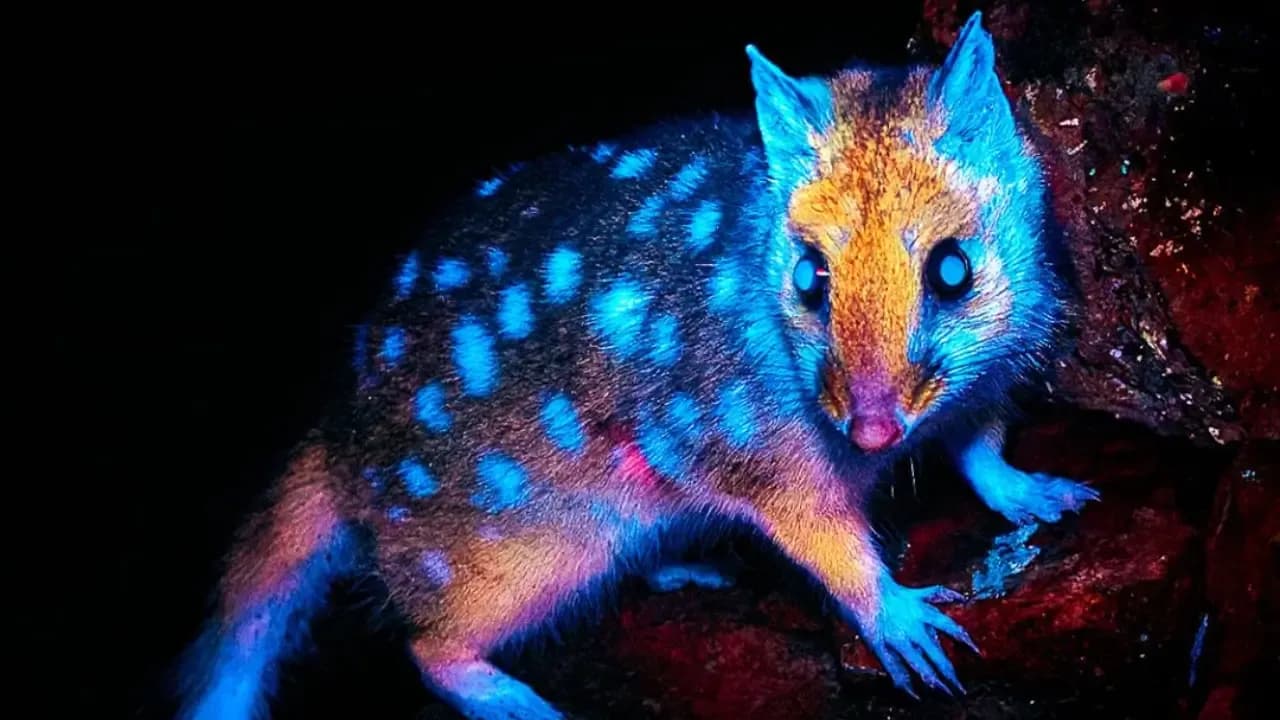
A remarkable new photograph taken in Tasmania’s Wilderness World Heritage Area has revealed an Eastern quoll (Dasyurus viverrinus) glowing in vivid pink hues under ultraviolet light, a striking display of biofluorescence rarely seen in mammals.
Captured by photographer Ben Alldridge and shared by the Australian Museum, the image shows what the human eye cannot normally detect: proteins or chemicals in the quoll’s pale fur absorbing UV radiation and re-emitting it as visible color.
This phenomenon, distinct from bioluminescence where organisms produce their own light, is found in over 100 mammal species, often among nocturnal animals like the Eastern quoll, which is about the size of a small cat and found only in Tasmania.
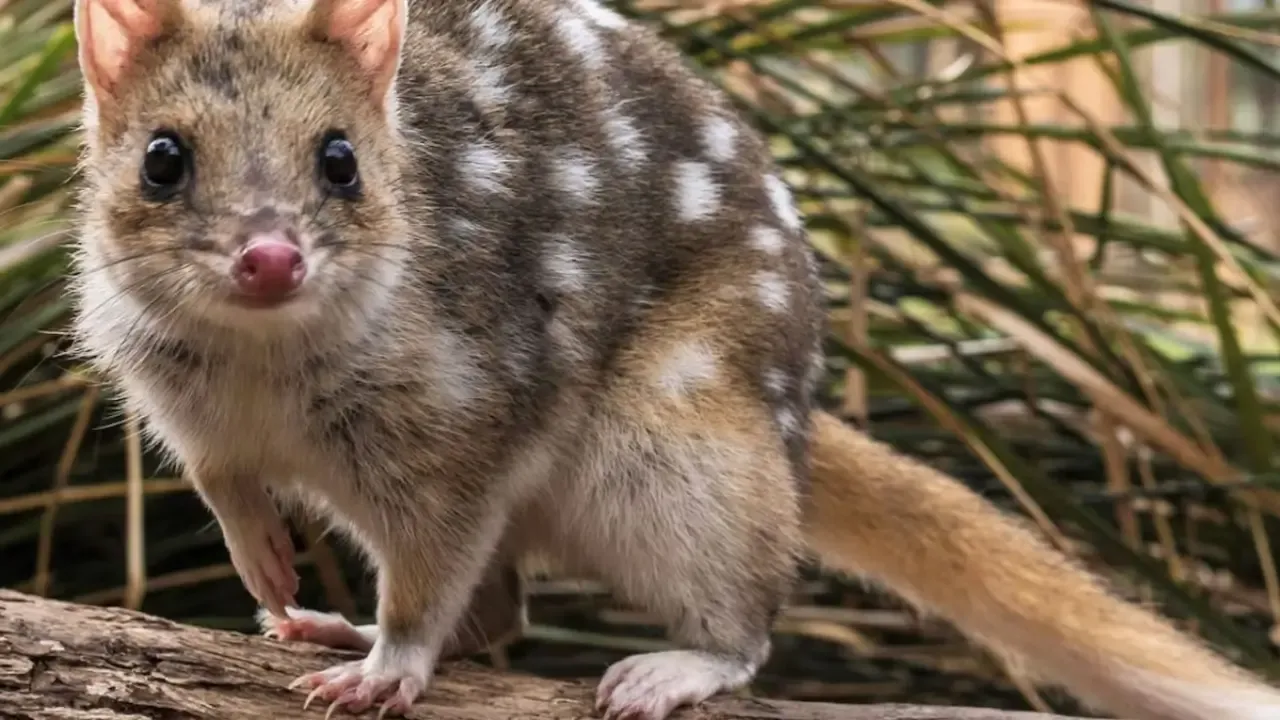
Researchers believe the intense glow may aid in communication, camouflage, or signaling under moonlight, although its exact purpose remains unclear. The finding follows similar discoveries in other Tasmanian species, such as the platypus, wombat, thylacine, and Tasmanian devil, and is opening new avenues in the study of visual ecology and ultraviolet perception in mammals.
As this glowing marvel fascinates both scientists and the public, Alldridge and wildlife experts are reminding photographers to act responsibly limiting UV exposure to avoid disrupting natural behaviors. The glowing Eastern quoll is not only a visual wonder but also a reminder of how much remains hidden in the natural world until science and curiosity bring it to light.