In the early 1820s, when much of the American West was still wild and unmapped, a young explorer named Dr. Edwin James set out across the Colorado territory as part of the Long Expedition. His group was among the first U.S. scientists to study the region’s geology and wildlife. But according to a long-whispered tale passed down in Colorado Springs, what James allegedly saw near a strange sandstone outcrop would baffle generations.
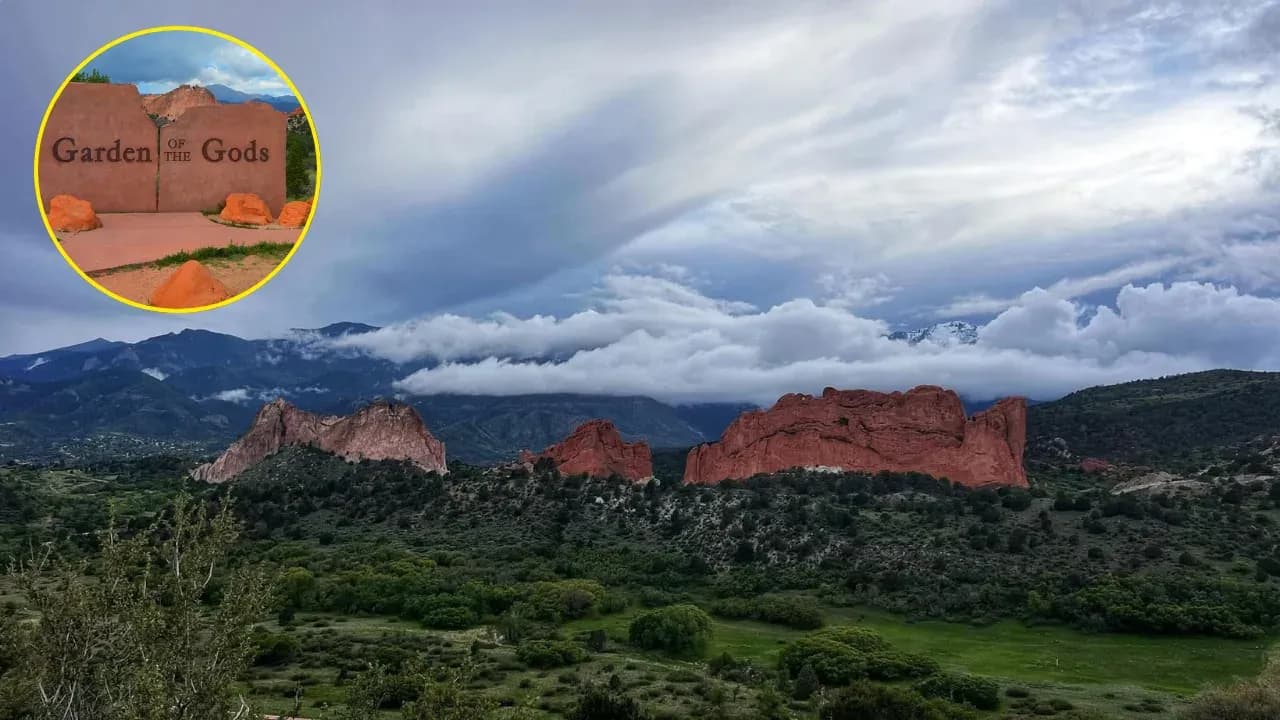
The story begins as James ventures into what would later be called the Garden of the Gods, a surreal stretch of jagged red rock rising from the plains like nature’s own cathedral. Locals had long spoken of unusual animal shapes among the stones, but James supposedly took it further. He described a creature so enormous, so unlike anything he’d seen, that it defied explanation.
A turtle. Not just any turtle, one the size of a wagon, with a domed shell and ridged back, resting motionless among the formations. Some said it looked fossilized, others claimed it was alive. James reportedly sketched it but never officially published his findings, fearing ridicule or disbelief. Over time, the “Tall Turtle” rock formation became a local curiosity, with visitors pointing out its shell-like shape nestled between the Siamese Twins and Balanced Rock.
Skeptics argue it was nothing more than pareidolia, the brain’s way of turning rock into reptiles. But believers insist that something ancient once moved across those rocks. Was it a giant snapping turtle frozen in time? A prehistoric fossil exposed by erosion? Or simply a natural trick of light and stone?
Today, the Garden of the Gods draws millions of visitors each year, but few know to look for the “turtle” hidden in plain sight. Some still leave offerings by the fountain. Others bring their kids to see the “creature” their great-grandparents whispered about. And though science has yet to prove the legend, one thing’s certain: In a place where dinosaurs once walked and red cliffs scrape the sky, a giant turtle doesn’t feel so far-fetched after all.