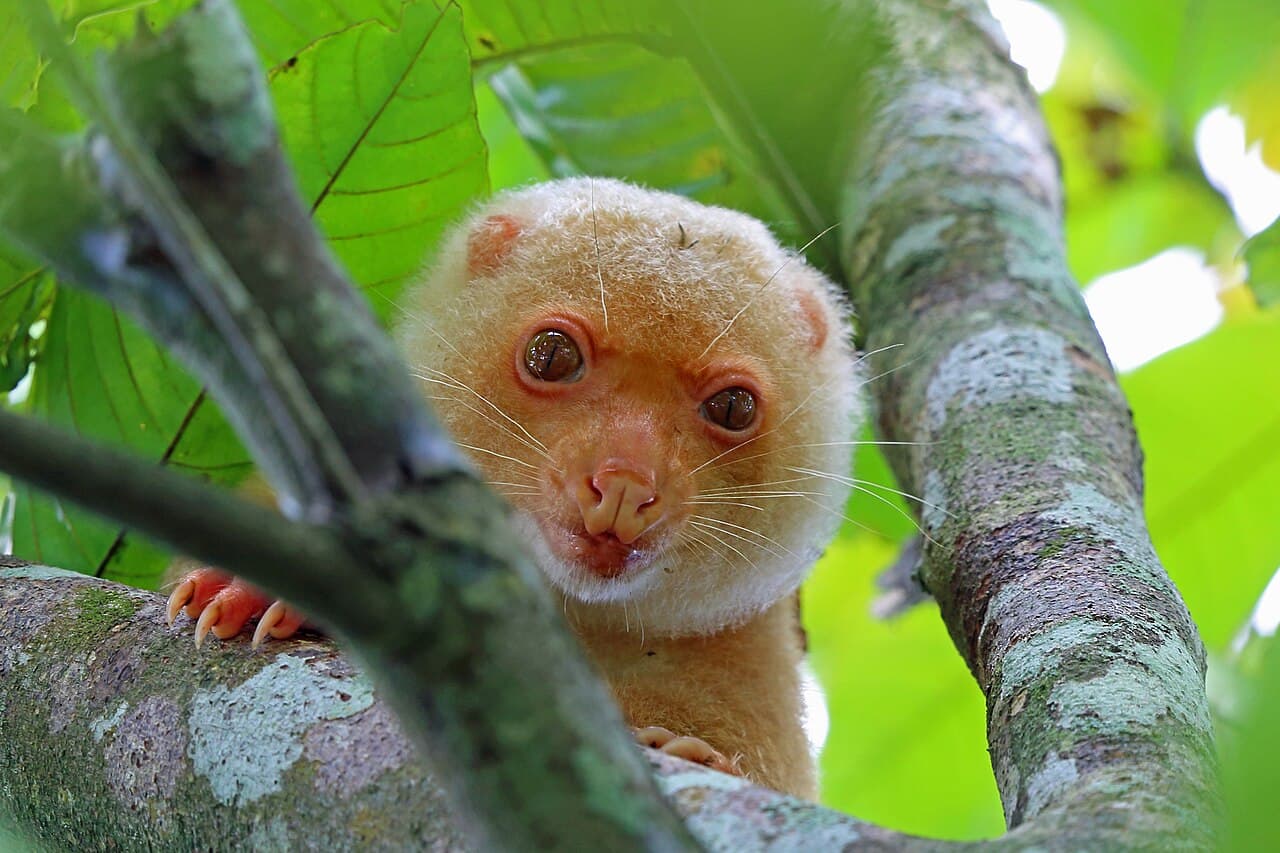
A common spotted cuscus can wrap its tail around a branch. That gripping ability gives this tree-dwelling mammal an extra point of support as it moves through the canopy.
Thick fur and a rounded face may draw attention first. The tail reveals something more practical: a body fitted to life above the ground.
A marsupial of the forest
The common spotted cuscus is Spilocuscus maculatus. It is a marsupial associated with New Guinea and nearby islands, including parts of Indonesia.
Animal Diversity Web's species profile describes its climbing adaptations, diet, and appearance. Older sources can use broad common names and geographic groupings, so identifying the scientific name helps avoid mixing related cuscuses together.
A gripping tail and careful feet
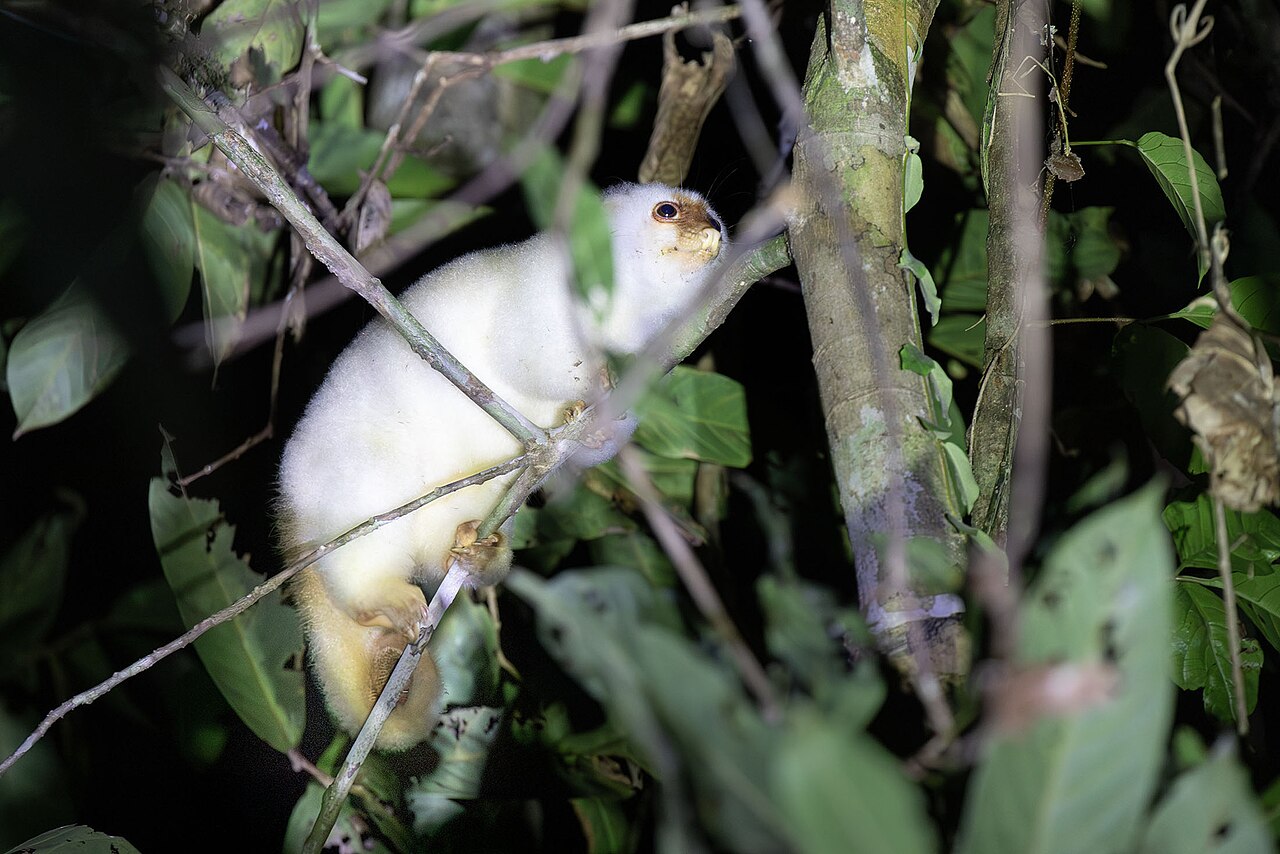
A prehensile tail can curl around a support. On a cuscus, the less-furred gripping surface near the end is an important part of that equipment.
Its feet also help it hold branches. Together, these features suit deliberate movement among trees.
The tail is useful, but it should not be imagined as a replacement for every other limb or proof that an animal can safely hang in any position.
Not every coat looks alike
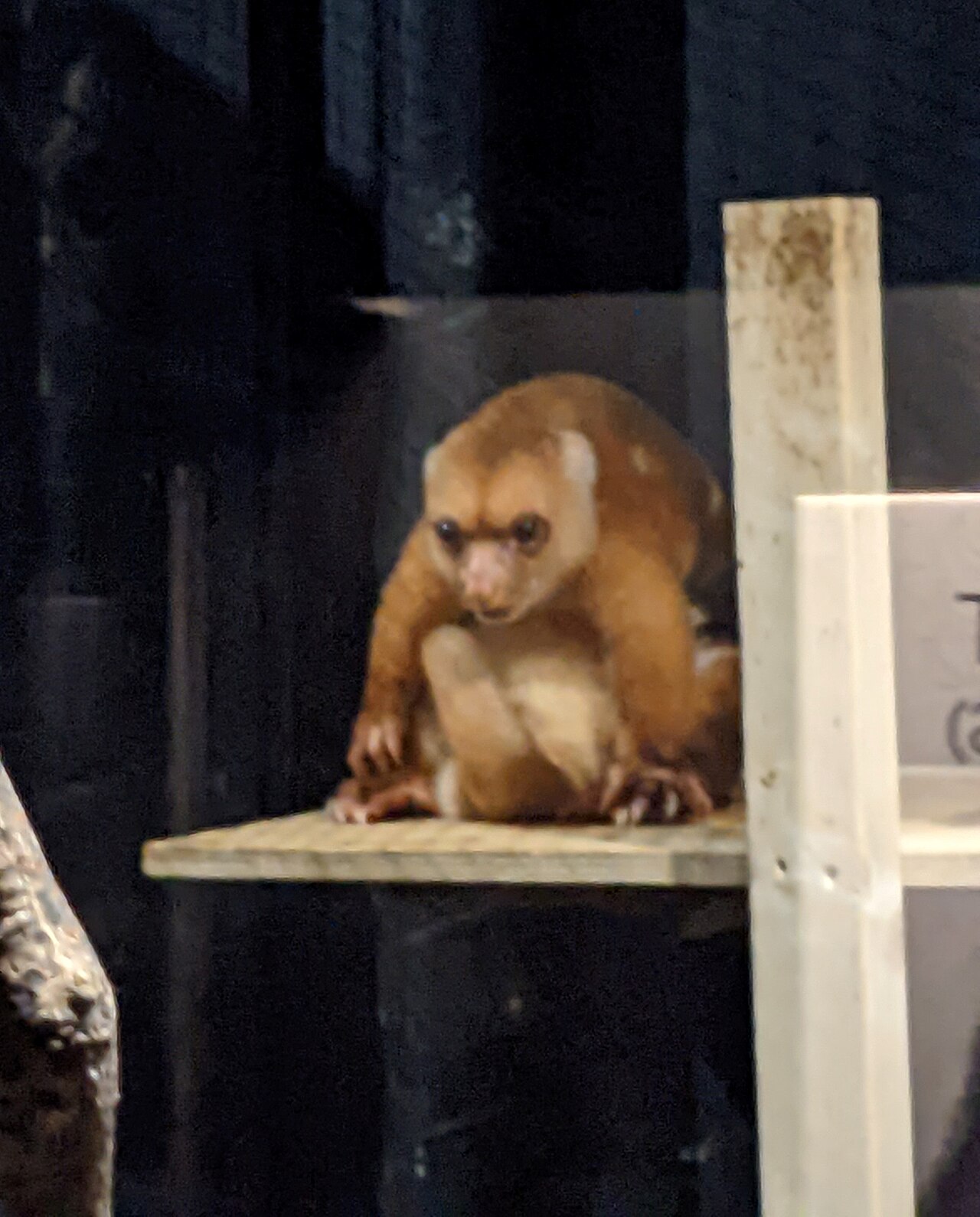
The name “spotted” does not mean all individuals have the same pattern. Coat color and markings can differ with sex and age.
This variation is one reason a single photograph cannot show every possible appearance. Scientific identification uses more than whether an animal happens to look spotted.
Forest life deserves patient attention
An Australian Museum study of mammals in Papua New Guinea documents cuscuses within a wider forest mammal community. These animals belong to living ecosystems, with local differences that broad labels can hide.
The common spotted cuscus rewards a patient look. Its deliberate climb, gripping tail, and changing patterns show how much there is to notice in an animal that does not hurry to reveal itself.
Photo credits
Featured image: Nigel Voaden; Source; CC BY 4.0. Resized for web display.

Body image 1: Kristof Zyskowski; Source; CC BY 4.0. Resized for web display.

Body image 2: FakirNL; Source; CC BY-SA 4.0. Resized for web display.
