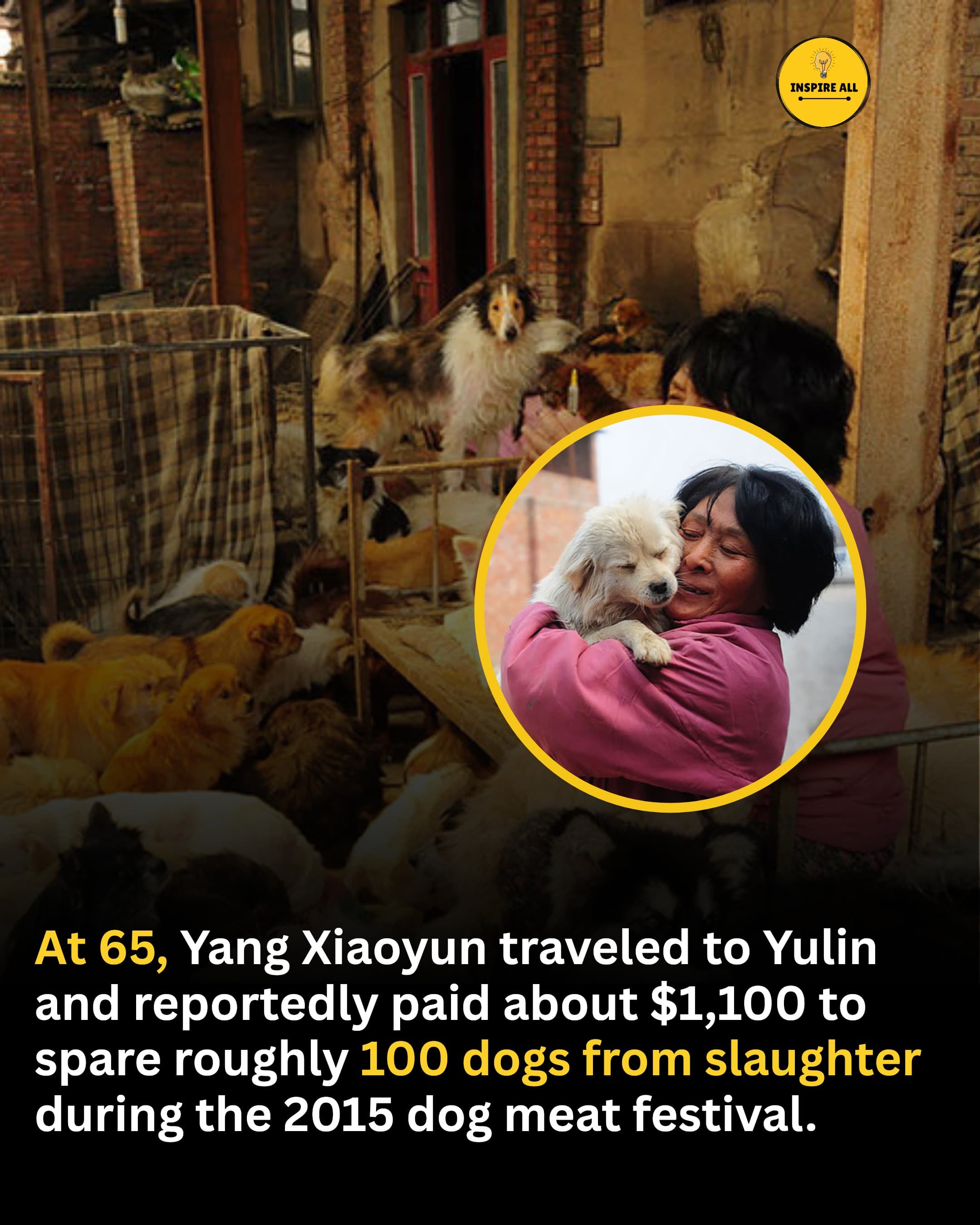
Yang Xiaoyun traveled from Tianjin to Yulin in June 2015 because she wanted to stop dogs being killed for meat. Then 65, she became internationally known for buying animals from traders during the period surrounding the city’s summer-solstice dog meat trade.
Contemporary reports put one purchase at about 100 dogs, for approximately 7,000 yuan, or roughly US$1,100 at the time.
Her intervention drew attention to an immediate question: what could one person do for the animals in front of her?
A purchase that drew worldwide attention
ABC Australia’s June 2015 report, credited to AFP, cited Chinese outlet Netease for the rescue figures. The South China Morning Post also reported the purchase.
The numbers describe a reported transaction at that time. They should not be expanded into a claim that she rescued hundreds on that particular trip, or that the long-term fate of every dog was established.
Yang already operated animal shelters. Her journey became a widely shared example of someone trying to intervene directly in the dog meat trade.
But the familiar account of the purchase leaves out a later chapter.
Rescue was followed by questions about care
In September 2015, China News Service carried a report, drawing on New York Times reporting, describing criticism from Chinese animal welfare groups about Yang’s shelter conditions, fundraising transparency and differing animal counts.
Yang disputed accusations against her and attributed the attacks to rivalries. Those allegations should not be presented as a legal finding. They do, however, make it inappropriate to describe her shelters as a verified safe haven for every rescued animal.
The same reporting described a disagreement over buying dogs from traders: critics argued that payments could sustain the trade, while Yang argued that the animals she did not buy would be killed.
Her 2015 intervention remains a documented rescue story, with important limits to what the reporting establishes. It also illustrates why the work after a rescue matters: animals need continuing food, veterinary treatment, space and accountable care.
This is a retrospective on events reported in 2015. Purchase figures are attributed to contemporary news reports; later shelter allegations were disputed by Yang.