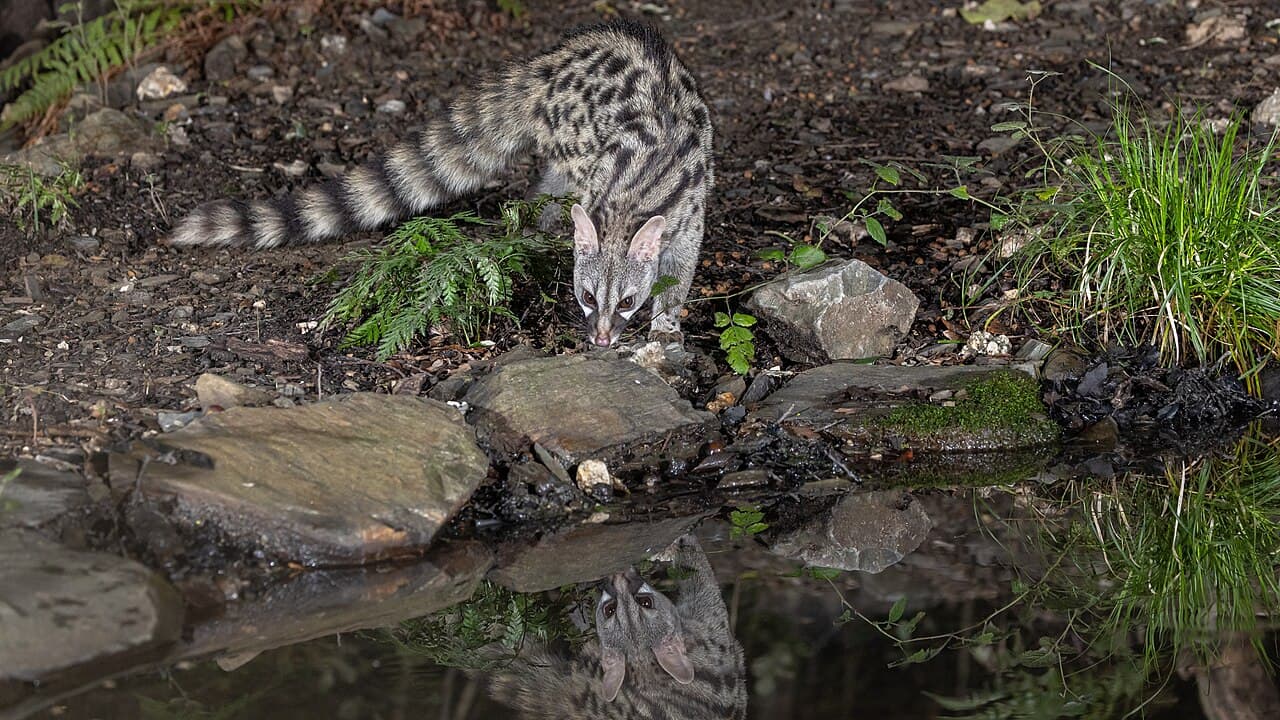
A spotted body slips past, followed by a long tail marked with dark rings. At first glance, you might think you have seen an unusual cat. The common genet belongs to a different mammal family, and its nighttime life is full of its own surprises.
The common genet, Genetta genetta, is a viverrid, a relative of civets. It combines a slender body, pointed face, and flexible movements into an effective small hunter.
A catlike shape with its own identity
The University of Michigan's Animal Diversity Web describes genets as lean carnivores with long tails and partly retractable claws. Those claws help with climbing and catching prey.
The spotted coat and ringed tail are striking features. However, several genet species look similar, so a pattern alone is not always enough for identification.
A quiet life after sunset
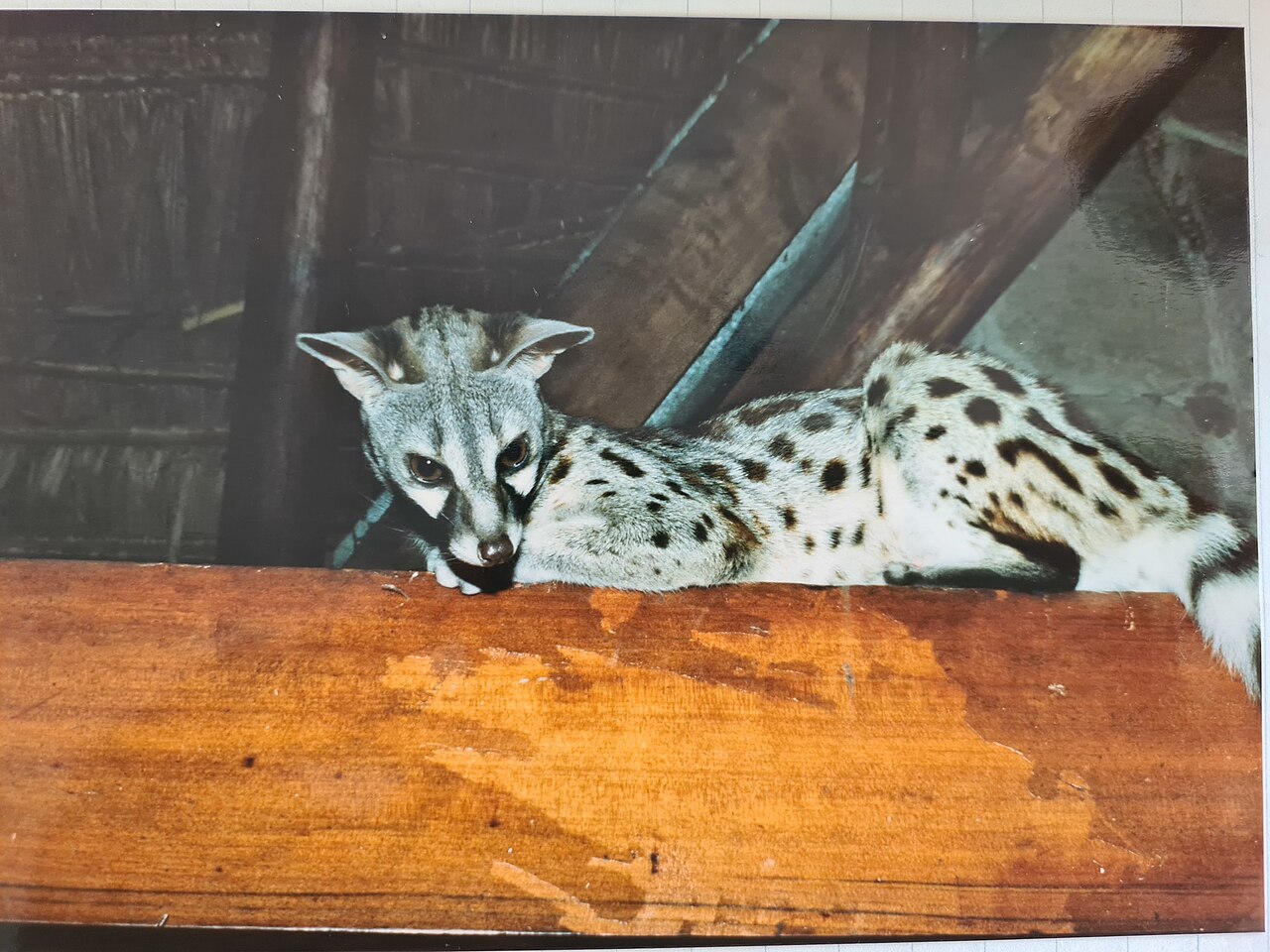
Common genets are mainly nocturnal. They rest in sheltered places during daylight, then emerge to search for food.
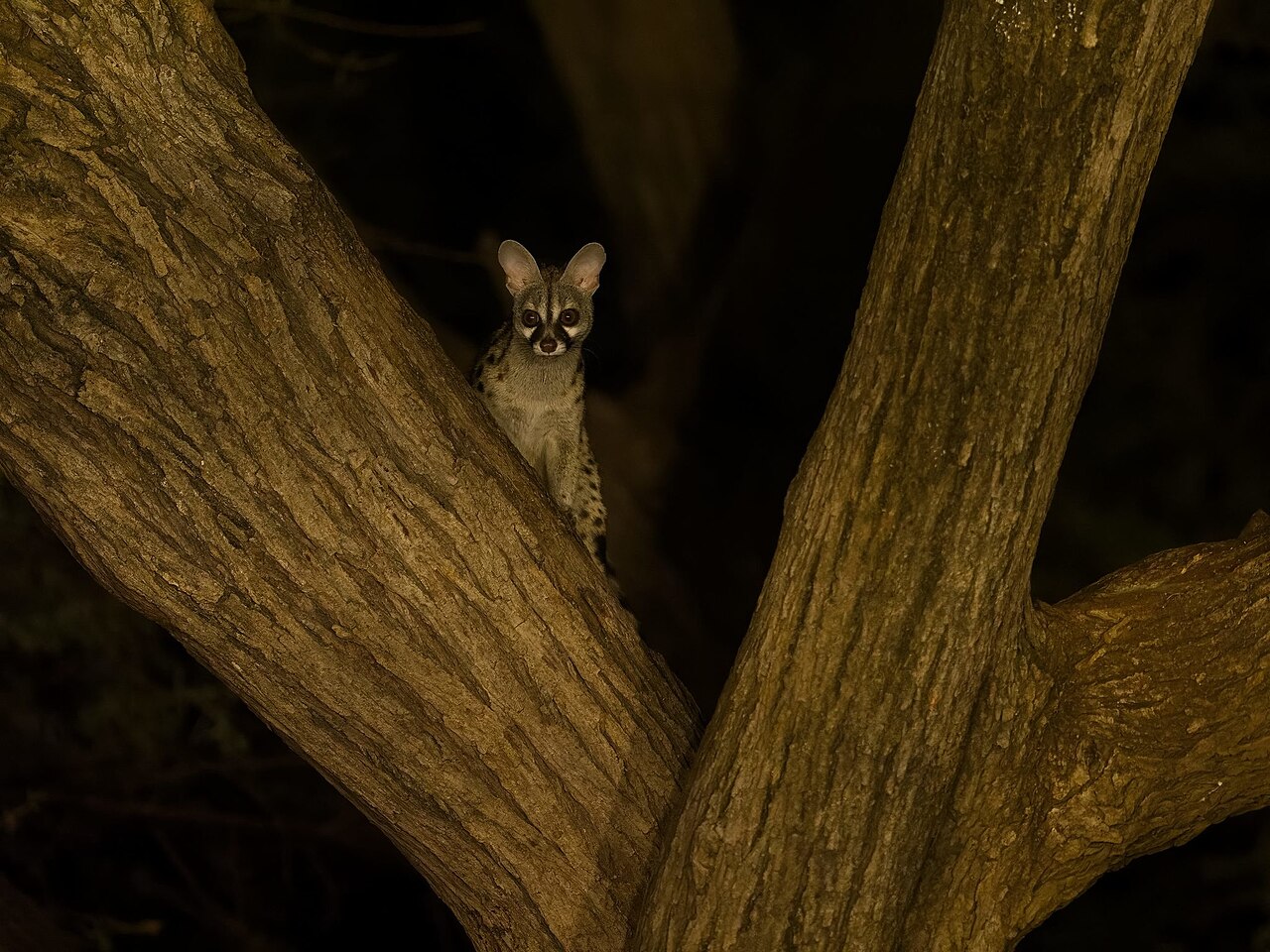
According to the Mpala Research Centre field guide, they are capable climbers but spend much of their time on the ground. Trees provide escape routes and feeding opportunities, while hollow logs, undergrowth, and rocks can offer daytime shelter.
They usually live alone, although neighboring home ranges may overlap. That makes communication useful even when two animals rarely meet face to face.
Messages left in scent
A genet can leave information through scent glands and urine marking. Those signals can remain after the animal has moved away.
It can also communicate through posture. Raising the hairs along its back and showing its teeth can make a threatened genet look more imposing.
For people, a dark path may seem empty. For a genet, it can contain food smells, traces of neighbors, and signs of danger.
A hunter worth making room for
Common genets eat small animals such as rodents, insects, reptiles, and birds. Rodent hunting can bring them close to human communities, though taking poultry can also lead to conflict.
They are widespread, but roads, persecution, and habitat changes still matter locally. Keeping shelter and treating these animals as wildlife helps preserve their place in the landscape.
The common genet shows how much life we miss when we only look during daylight. Its ringed tail is a glimpse of a busy world continuing after sunset.
Photo credits
Featured image: Kleinfleck-Ginstekatze (Genetta genetta).jpg — Scarabinol, CC BY-SA 4.0.

Body image 1: Genetta genetta 167406787.jpg — Simon Tonge, CC0.

Body image 2: Genetta genetta 174004906.jpg — Peter Archdale, CC BY 4.0.

Images supplied at up to 1,280 pixels wide for web display; smaller originals are retained at their original size. Crops or rotations are identified in their credits and captions.