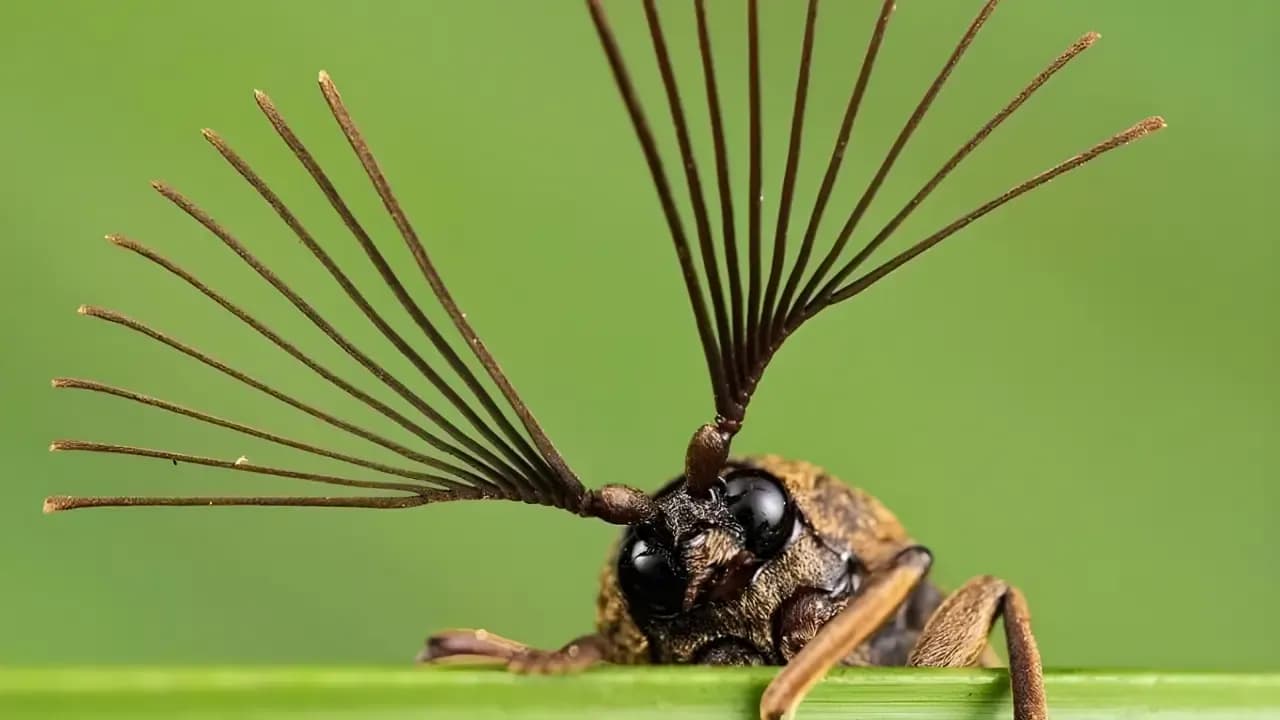
In a remarkable encounter during a night walk, a photographer captured a rare macro photograph of the Cedar Beetle (Callirhipis marmorea), showcasing its intricate, fan-like antennae in full display, a sight seldom witnessed in the wild.
The photographer recounted the experience: “I only saw it once, but then, unbelievably, spotted two on the same night. As I tried to snap a photo, one flew and landed right on my left hand. Taking a macro shot with a DSLR using one hand was definitely a challenge!”
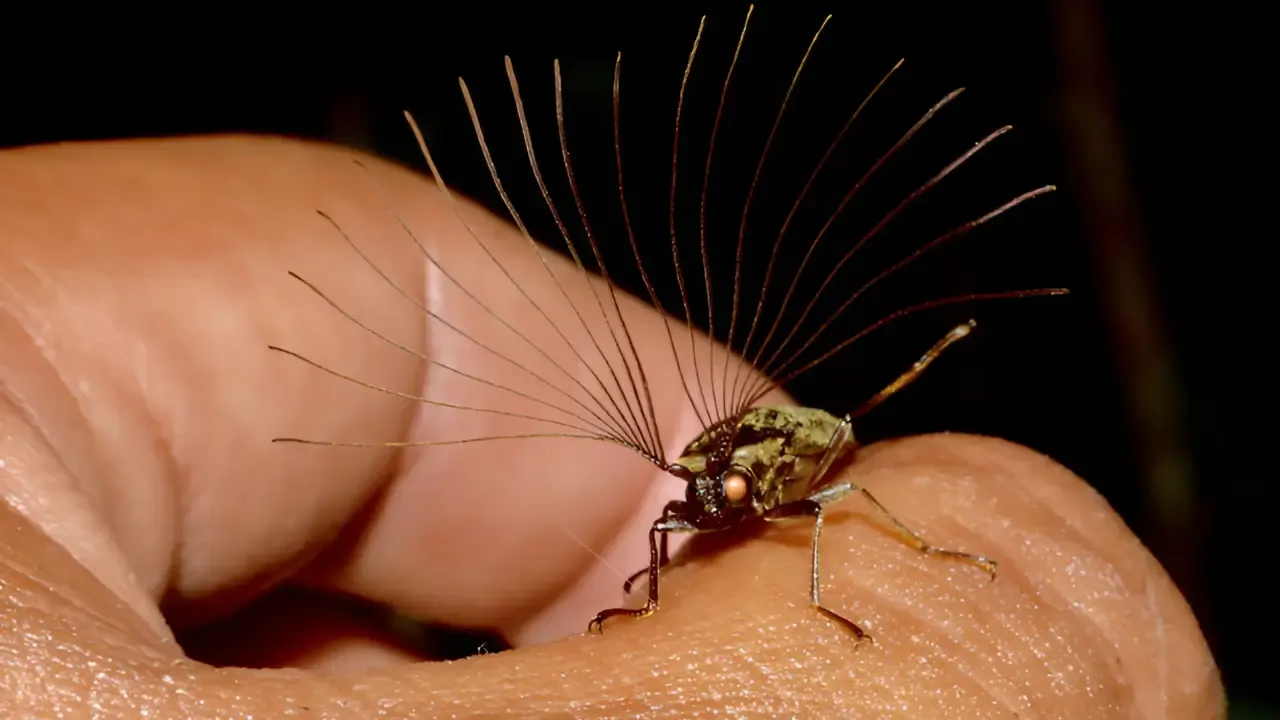
This captivating image highlights the male beetle’s flabellate antennae, which are typically folded and hidden from view. These elaborate structures are not merely ornamental; they serve as vital sensory tools, enabling the beetle to detect pheromones and locate potential mates.
Despite their striking appearance, Cedar Beetles are relatively small, measuring approximately 1 inch in length. Their enlarged antennae contribute to a more prominent visual presence.
The Cedar Beetle belongs to the family Callirhipidae, a group of beetles found across Asia, Africa, and the Americas. They are often associated with decaying wood, where their larvae develop.
Observations have noted that males possess antennae at least five times longer than those of females, a feature believed to enhance their ability to detect female pheromones.
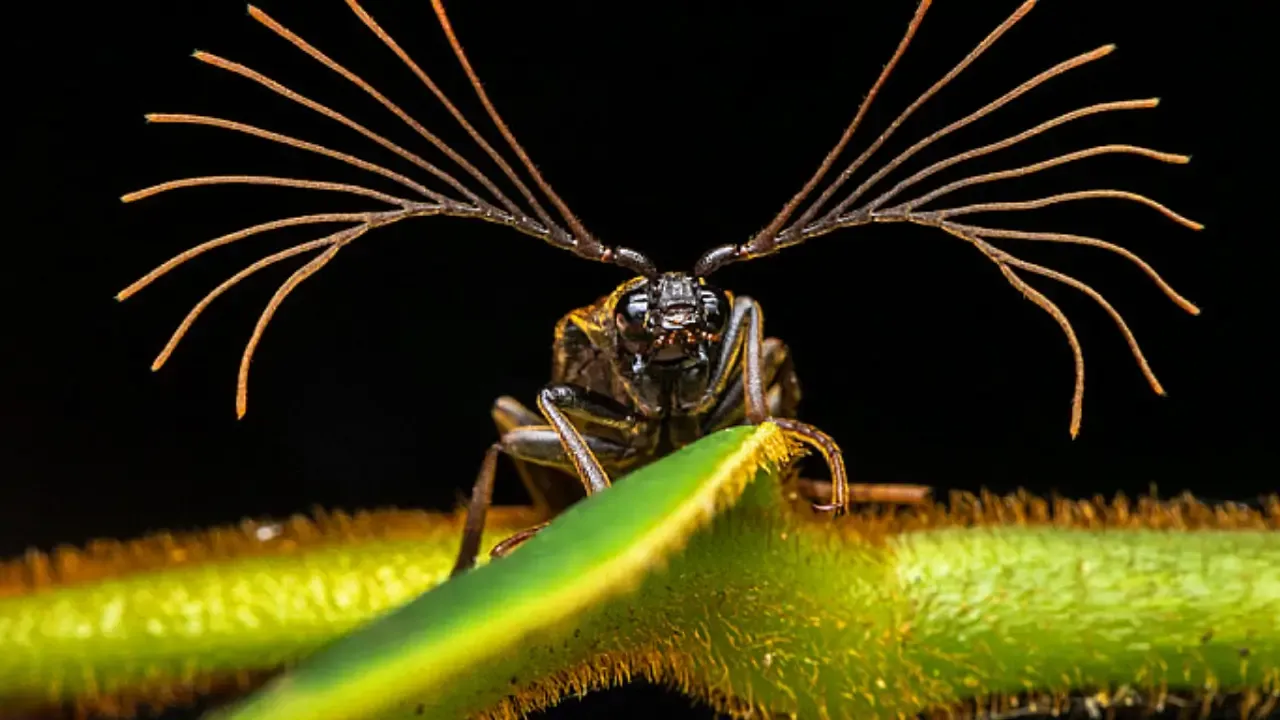
The larvae of Callirhipidae are known to feed on dead wood, which may explain why adult beetles are frequently observed on decaying tree trunks and stumps.
This extraordinary photograph offers a glimpse into the intricate world of beetle anatomy and behavior, reminding us of the wonders that can be discovered in nature’s subtle details.