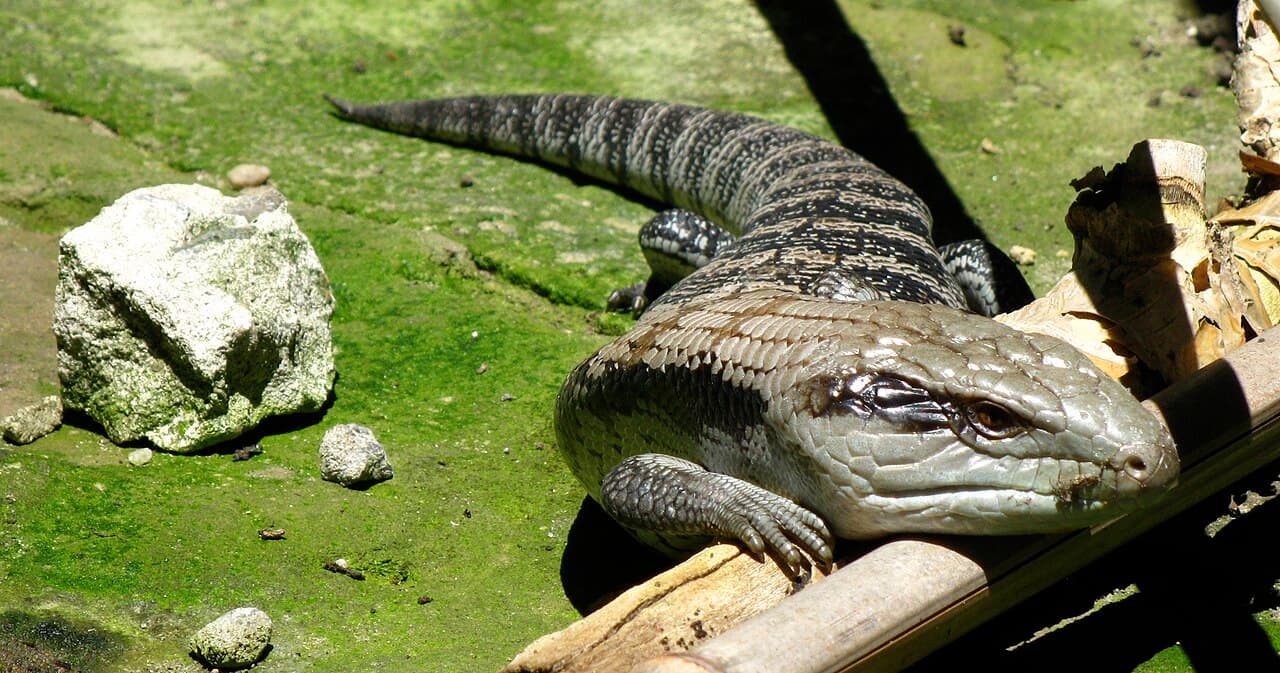
A brown-and-gray lizard opens its mouth, and suddenly there is a flash of bright blue. The eastern blue-tongued skink carries one of nature's most surprising warning displays.
That tongue is the feature everyone remembers. The rest of its life is just as worth discovering.
Why Show a Blue Tongue?
When threatened, a blue-tongue can face the danger, open its mouth, and extend its broad tongue. The blue stands out sharply against the pink inside of the mouth.
The Australian Museum explains that this display may frighten predators. Hissing and flattening the body can make the warning more dramatic.
It is a defense display, so there is no need to provoke a wild lizard to see it.
Which Blue-Tongued Skink Is This?
“Blue-tongued skink” covers several species. This article focuses on the eastern blue-tongue, Tiliqua scincoides scincoides.
It has short legs, a broad head, and dark bands across its body and tail. A large individual can approach 60 centimeters in total length.
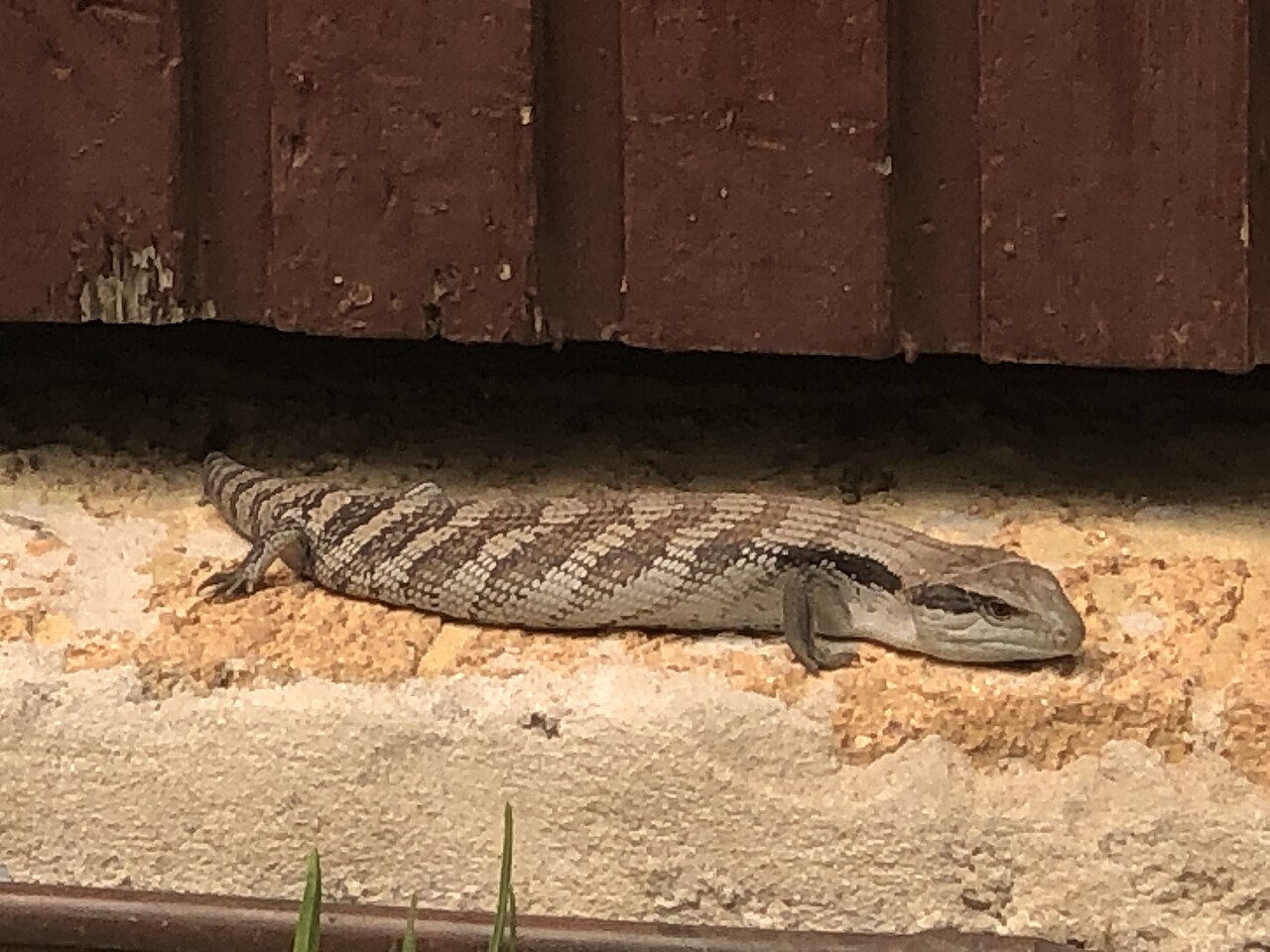
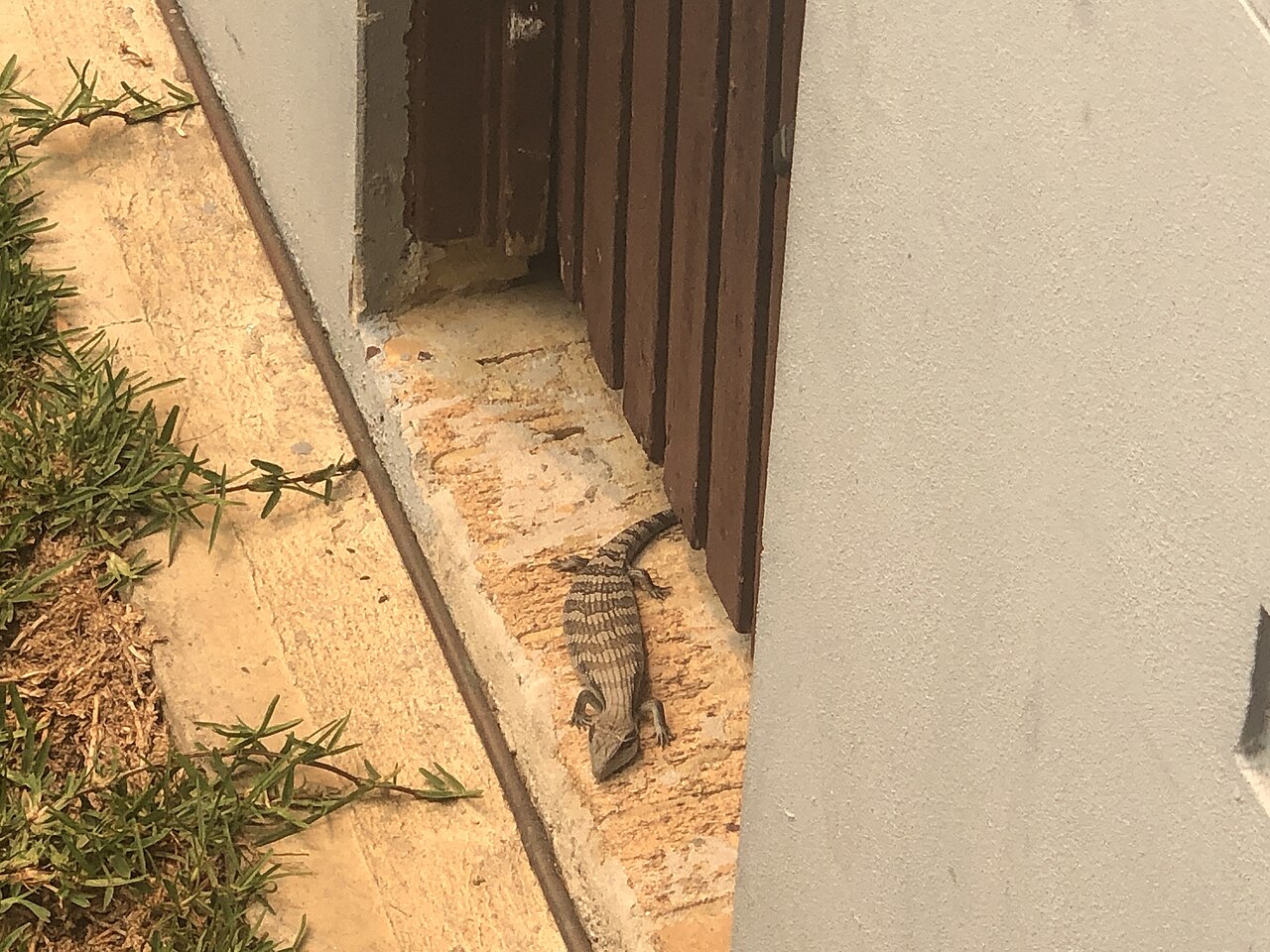
The photographs show blue-tongues in Sydney gardens, a familiar setting for this Australian reptile.
A Day Built Around Warmth
Blue-tongues use warmth from their surroundings to become active. They may bask in the morning before searching for food.
The Victorian Government's wildlife fact sheet describes daytime activity and nighttime shelter under logs, leaf litter, or other cover. Cold weather brings much less activity.
A sunny patch and a sheltered hiding place can both be important parts of the same small territory.
Strong Jaws and a Varied Menu
These skinks eat plant material as well as animals. Foods include insects, snails, flowers, and fruit.
Their strong jaws can crush snail shells. They also use chemical information to find food, with a sensory organ in the roof of the mouth helping detect those signals.
The blue tongue therefore belongs to an animal doing more than sending warnings. It is also making its way through a world of scents.
Tiny Lizards, Born Alive
Eastern blue-tongues give birth to live young. The Australian Museum describes newborns as able to care for themselves soon after birth.
That is a useful reminder of how varied reptile lives can be. The familiar picture of a nest of eggs does not fit every lizard.
Making Room in the Garden
Garden chemicals, road traffic, and machinery can harm blue-tongues. Check long grass before mowing, keep pets from disturbing wildlife, and preserve suitable cover where practical.
If you find one, give it room to move away. A blue-tongue is not venomous, but it can bite when handled.
Its bright tongue may be a warning to a predator. To us, it can be an invitation to notice the remarkable wild life sharing an ordinary backyard.
Photograph Credits
Featured image: Azabranska, public domain. Resized for display. Eastern blue-tongued skink in Sydney.

Body image 1: Joditran, CC BY-SA 4.0. Resized for display. Blue-tongued skink photographed in a Sydney backyard.

Body image 2: Joditran, CC BY-SA 4.0. Resized for display. A second view of a Sydney backyard blue-tongue.
