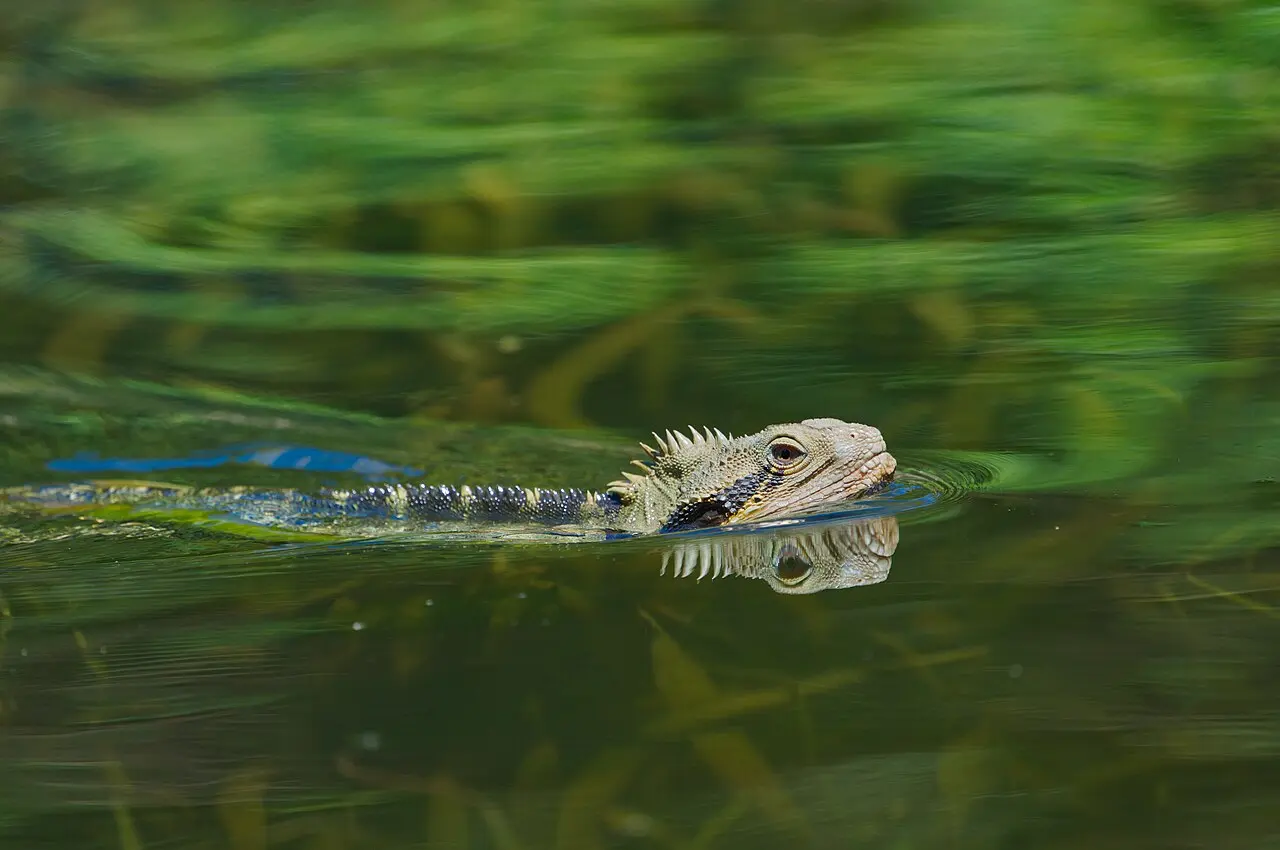
An Australian water dragon can leave a sunny perch and disappear beneath the water. For a lizard with a spiky crest and a long tail, swimming is part of everyday survival.
Intellagama lesueurii is Australia's largest dragon lizard. Its bold outline is easy to admire, but the relationship between this reptile and its waterside home is just as interesting.
A crest from head to tail
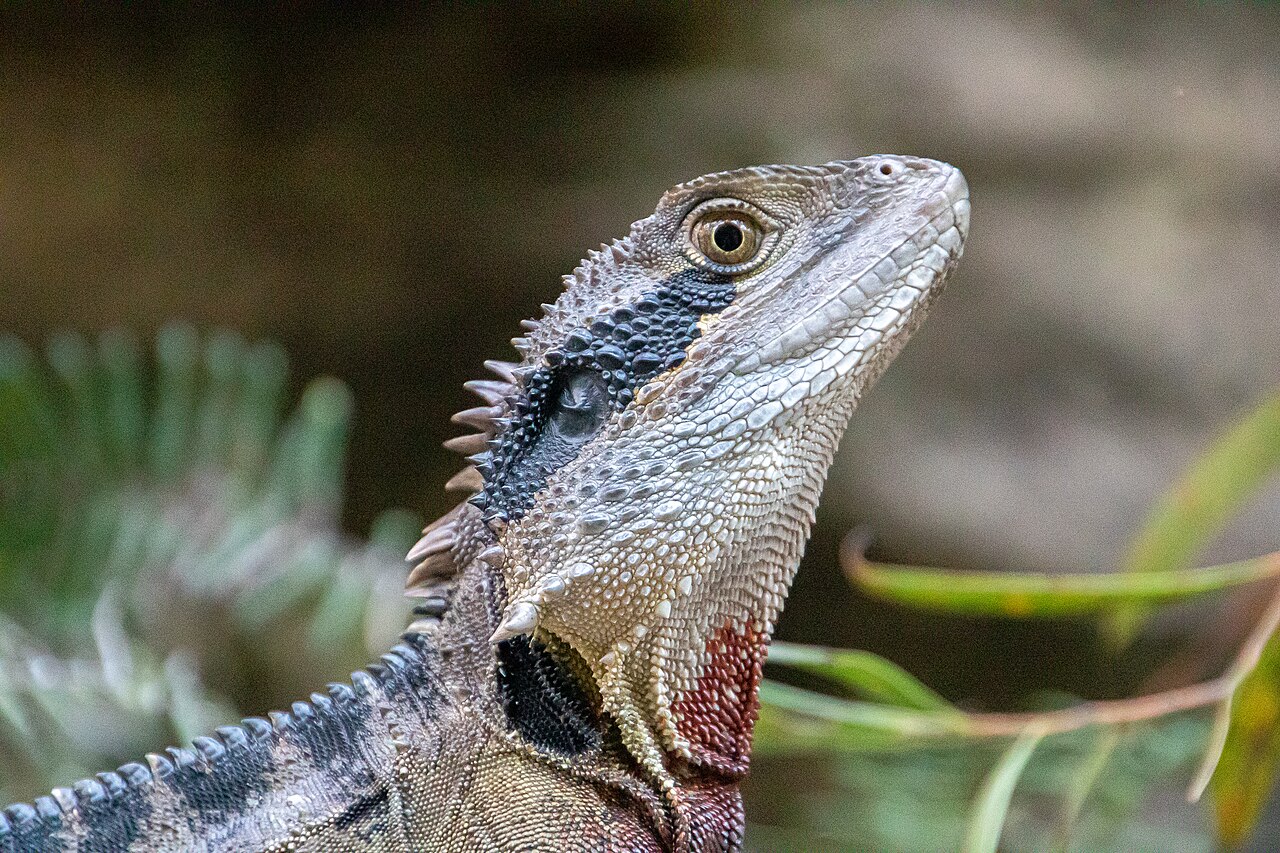
Pointed scales form a crest behind the head and along the back. The angular head and long body complete the dragon-like appearance.
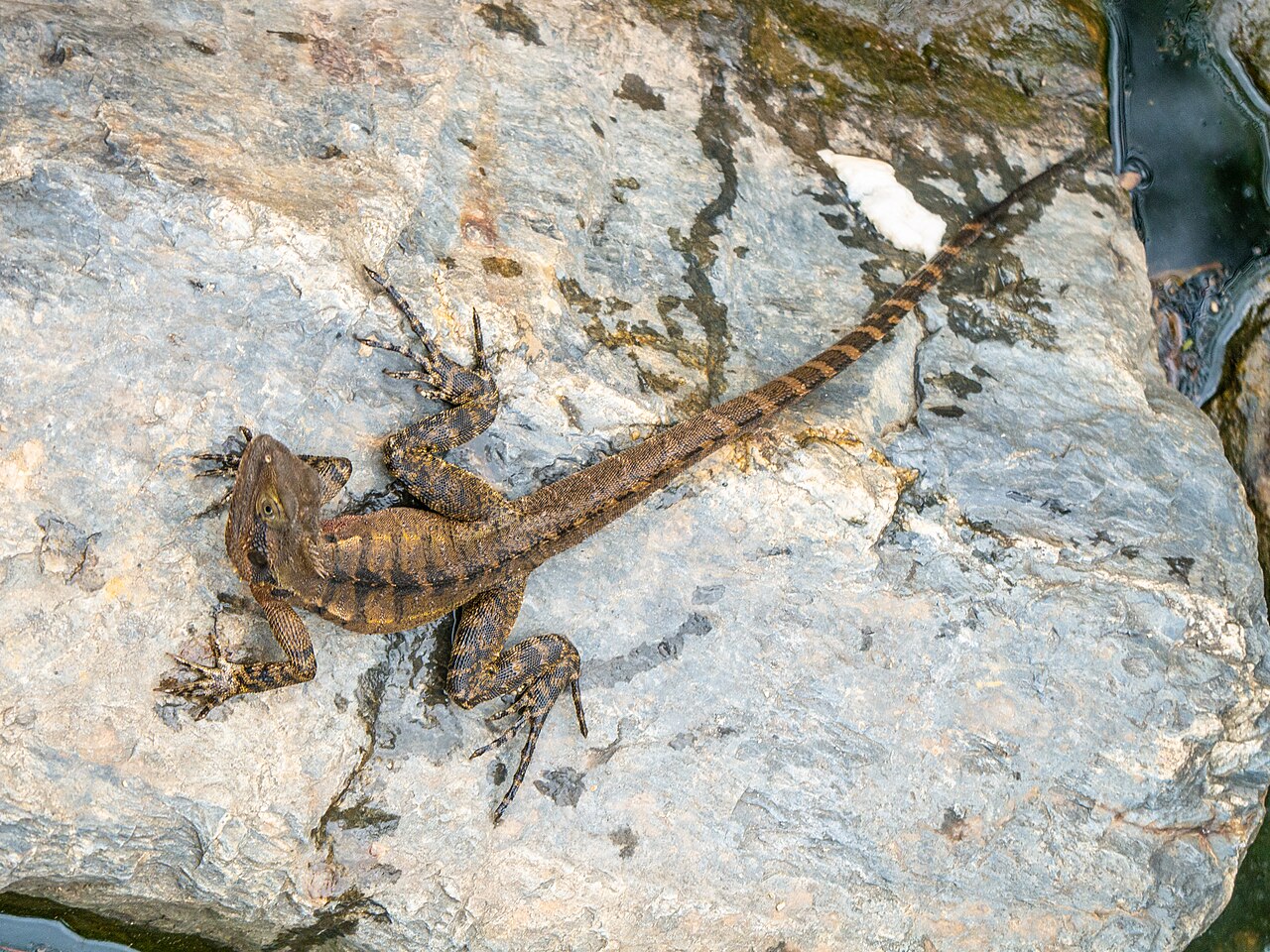
Adults can reach roughly 80–90 centimeters in total length, including the tail. These are substantial animals, yet their surroundings offer several kinds of resting places: rocks, tree branches, and sunny ground.
A life beside the water
Water dragons live along waterways in eastern Australia. They are active by day, when they can bask and search for food.
Their menu includes both plants and animals. If danger approaches, water provides an escape route. The Australian Museum explains their appearance, distribution, and behavior.
A stream bank is therefore more than a convenient sunbathing spot. It brings feeding areas, shelter, and a swimming refuge close together.
Keeping a dragon's world healthy
Protecting riverside vegetation and water quality helps maintain the places these lizards use. Even a familiar waterway can support wildlife with a surprisingly complex daily routine.
Watch a water dragon basking quietly, and it may seem like a sculpture. Remember its swimming abilities, and that still moment becomes something more: a pause in the life of a remarkable waterside reptile.
Photo credits
Featured image: Intellagama Lesueurii - AndrewMercer - DSC00253.jpg — Andrew Mercer; CC BY-SA 4.0.

Body image 1: A head of a water dragon in Blue Mountains National Park, New South Wales.jpg — Gökhan Tolun; CC BY-SA 4.0.

Body image 2: Australian Water Dragon Intellagama lesueurii Downfall Creek 7th Brigade Park Chermside P1090024.jpg — John Robert McPherson; CC BY-SA 4.0.

Photographs resized for web display where available. Existing crops are identified in their source filenames; captive animals and landscape context are identified in the captions.