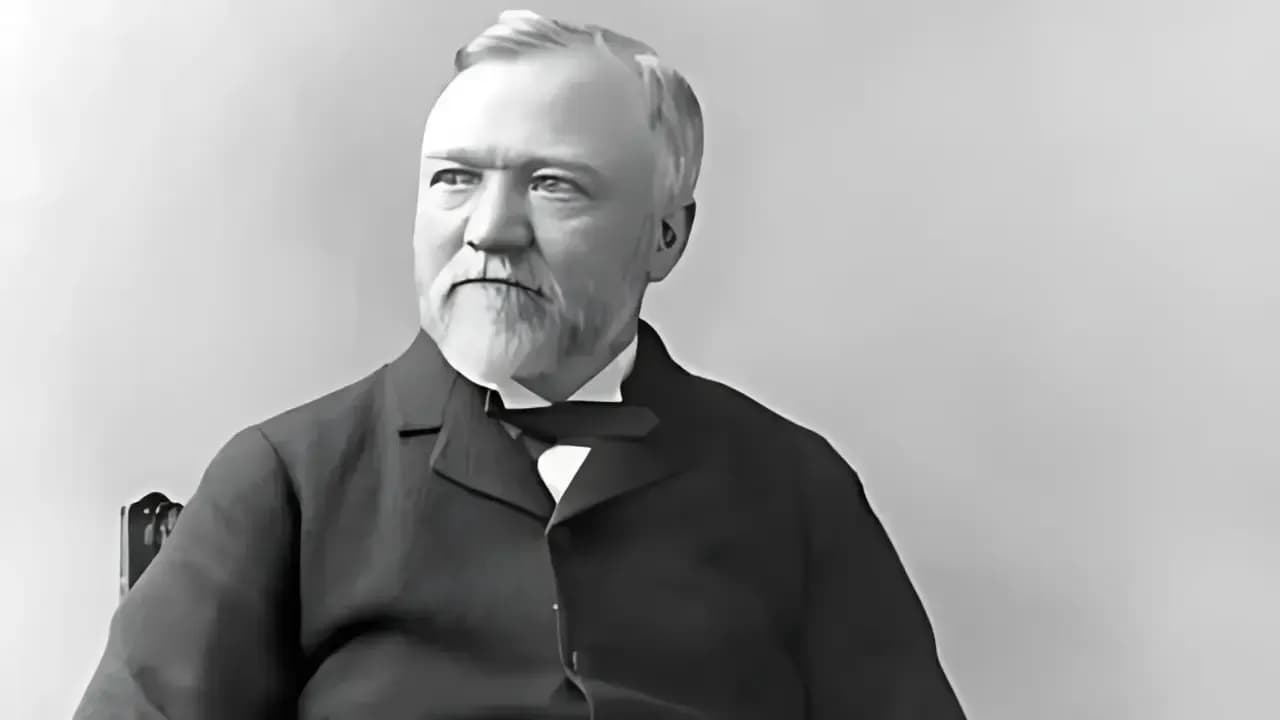
He started at 13 as a bobbin boy, earning just 1.20 dollars a week in a cotton mill. Forty years later, he sold his steel empire for 480 million dollars. But that was not the end of Andrew Carnegie’s story. It was the beginning of a new chapter built on giving, learning, and legacy. This is the real American Dream as lived by Andrew Carnegie.
Fast Facts
- Origin: Born in Scotland, Andrew Carnegie immigrated to the U.S. and began working at age 13.
- Breakthrough: Built the largest steel company in the U.S. before selling it to J.P. Morgan for $480 million.
- Philanthropy: Donated over $350 million, funding 2,800+ libraries, universities, and global peace initiatives.
- Famous Quote: “The man who dies thus rich dies disgraced.”
- Legacy: Carnegie Hall, Carnegie Mellon University, and countless public institutions bear his name.
Humble Beginnings in Scotland and America
Andrew Carnegie was born on November 25, 1835, in Dunfermline, Scotland. He was the second son of Will Carnegie, a handloom weaver, and Margaret Carnegie, who sewed shoes to support the family. In 1848, the Carnegies moved to Allegheny, Pennsylvania, hoping for a better life.
Young Andrew had only a few years of formal schooling, but he loved reading. He borrowed books from a local benefactor’s private library, which deeply influenced him.
At age 13, he took his first job in a cotton mill, tying bobbins for 12 hours a day and earning 1.20 dollars a week. Later, he worked as a telegraph messenger and then as a telegraph operator.
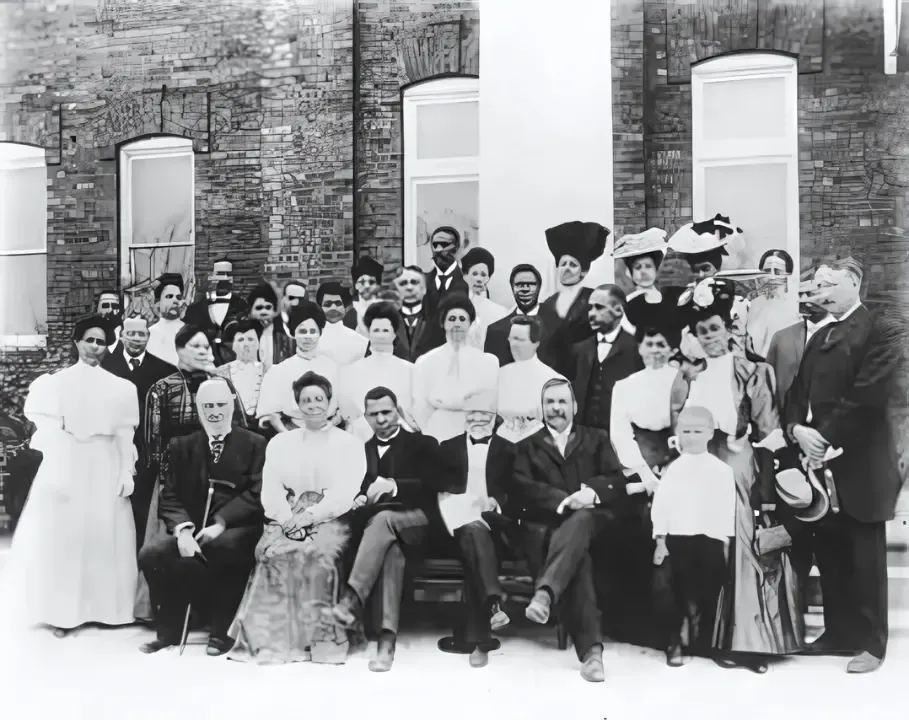
Library of Congress, Washington, D.C.
Rising Through the Railroad Ranks
In 1853, Carnegie joined the Pennsylvania Railroad as a secretary and telegraph operator under Thomas A. Scott.
By 1859, he had become the superintendent of the Pittsburgh division. His experience in the railroad industry taught him about investing and running large operations.
During this time, he began investing in sleeping cars, iron, oil, and telegraph companies. These smart investments made him wealthy even before he entered the steel industry.
The Steel Empire
In the early 1870s, Carnegie co-founded his first steel company near Pittsburgh. He used the Bessemer process, which made steel faster and cheaper to produce.
He bought out suppliers, coal mines, railroads, and ships. This method of owning every part of the process is called vertical integration. It helped him reduce costs and beat competitors.
By 1892, he had combined his holdings into Carnegie Steel Company. It became the largest steel company in the world. His steel built railroads, skyscrapers, and bridges across America.
The Homestead Strike
Despite his success, Carnegie’s legacy was also marked by labor conflict.
In 1892, his Homestead plant cut wages. Workers protested. While Carnegie was vacationing in Scotland, his manager Henry Clay Frick locked out the workers and hired 300 armed Pinkerton guards.
A violent clash followed. At least ten people died. The state militia was called in, and the strike ended in defeat for the union. Many blamed Carnegie for the outcome, even though he was not present. This event hurt his image as a friend of the working class.
The Big Sale and a New Mission
In 1901, Carnegie sold Carnegie Steel to financier J.P. Morgan for 480 million dollars. The company was merged into U.S. Steel, the world’s first billion-dollar corporation. At age 65, Carnegie became one of the richest men in the world and decided to retire from business.
But he was not done. Instead of keeping his fortune, he focused on giving it away. He had already written an essay in 1889 called “The Gospel of Wealth,” where he stated, “The man who dies thus rich dies disgraced.”
A Life of Philanthropy
Carnegie gave away more than 350 million dollars, which would be billions today. He believed the rich had a moral duty to help others help themselves. His donations included:
- Funding more than 2,800 public libraries around the world
- Giving 5 million dollars to the New York Public Library for new branches
- Donating over 7,600 church organs
- Founding Carnegie Mellon University in 1904
- Building Carnegie Hall in 1891
- Creating the Carnegie Endowment for International Peace in 1910
- Establishing the Carnegie Foundation for the Advancement of Teaching
Carnegie’s gifts supported science, peace, education, and the arts. He was the largest individual supporter of public libraries in American history.
Personal Life and Final Years
Carnegie remained close to his mother until her death in 1886. The next year, he married Louise Whitfield. He was 51, and she was 30. They had one daughter, Margaret, born in 1897. The family lived in a mansion in Manhattan and spent summers at Skibo Castle in Scotland, which sat on 28,000 acres of land.
He spent his final years writing, meeting world leaders, and supporting global peace. Carnegie died on August 11, 1919, in Lenox, Massachusetts, at age 83. He was buried at Sleepy Hollow Cemetery in New York.
Carnegie’s Message Today
Andrew Carnegie’s life holds valuable lessons. He believed in self-education, hard work, and responsibility. He once said, “Put all your eggs in one basket and then watch that basket.”
Though his businesses helped shape modern America, his true impact came through giving. He proved that wealth could be a tool for good. Many of his institutions, like Carnegie Hall and Carnegie Mellon University, still thrive today.
Carnegie rose from poverty, built a steel empire, and gave most of it away. His story reminds us that success is not just what we earn, but what we leave behind for others.
Also read: The Brooklyn Bridge Memorial You Won’t Believe Exists