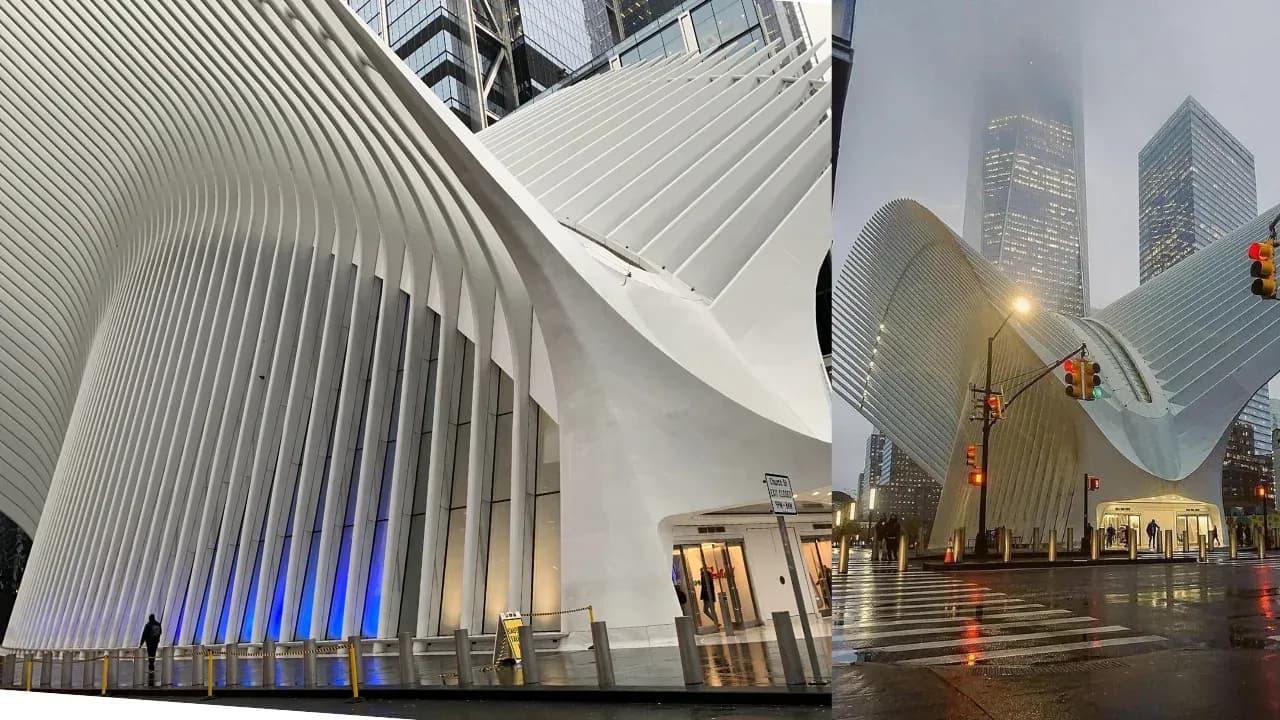
When you gaze upon the Oculus at the World Trade Center, you can’t help but wonder: Is this architectural marvel a breathtaking tribute to hope or just a quirky design gone wrong? Santiago Calatrava envisioned this striking hub as a dove taking flight, a powerful symbol of peace rising from the ashes of 9/11.
Calatrava’s design has historical significance; it stands as a beacon of renewal in the heart of New York, aiming to uplift spirits following the tragedy of September 11. However, the public reaction has been mixed. Critics have harshly dismissed it as resembling everything from “beached whale carcasses” to “kitschy stegosauruses.” Are these criticisms fair, or just emblematic of our struggle to appreciate bold artistry?
“It stands as a reminder that hope can emerge from the deepest despair,” said one local architecture enthusiast.
Even prominent architectural critics weighed in, with reactions ranging from admiration for its elegance to harsh condemnation for its perceived pretentiousness. One tweeted, “It’s a beautiful idea, but can we call it a functional hub?”
The Oculus evokes emotions, wonder, awe, and sometimes confusion. It reminds us that beauty in architecture can ignite conversations, even as it divides opinion. What does the Oculus mean to you? Is it a testament to Amsterdam’s finest or a misfired concept? Only time will tell.