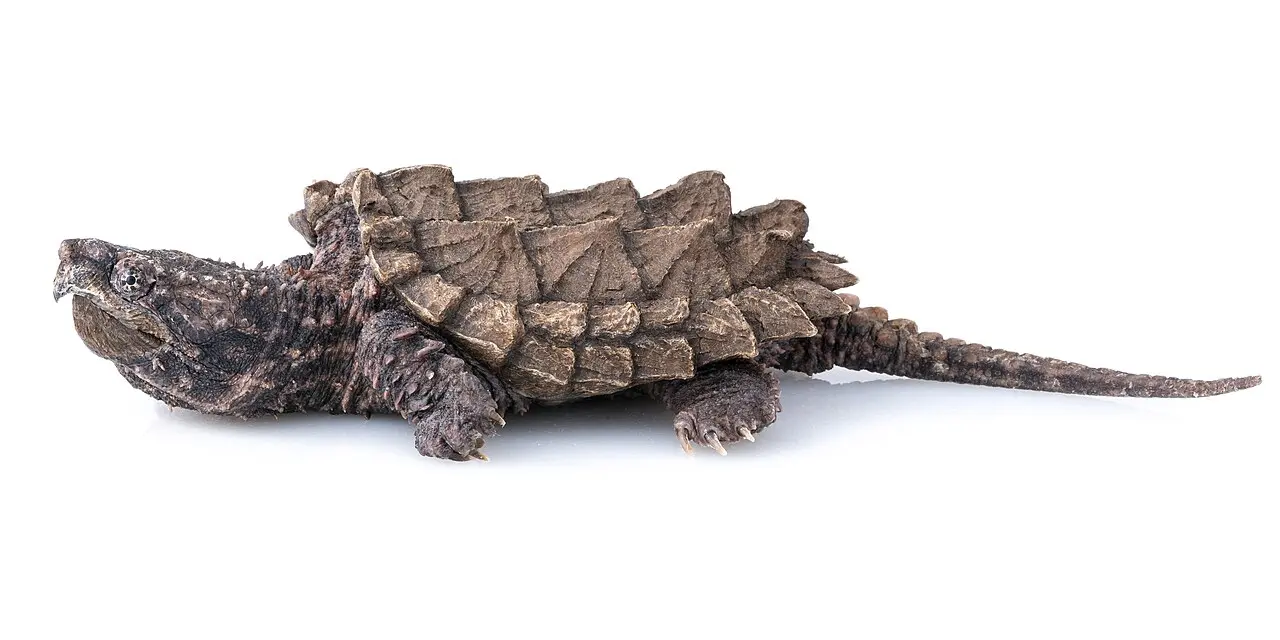
An alligator snapping turtle can wait with its mouth open while a small, worm-like lure moves inside. A curious fish may approach what looks like food—and enter a predator's reach.
That lure is a specialized part of the tongue. It is one of the most remarkable features of Macrochelys temminckii, a freshwater turtle with an equally unforgettable appearance.
Camouflage with a rugged outline
A broad head, hooked beak, and ridged shell give this turtle a powerful look. Three raised ridges run along the upper shell, and algae can grow on its surface.
Underwater, those rough textures help the animal blend into its surroundings. A turtle resting on the bottom may resemble part of the riverbed more than an active hunter.
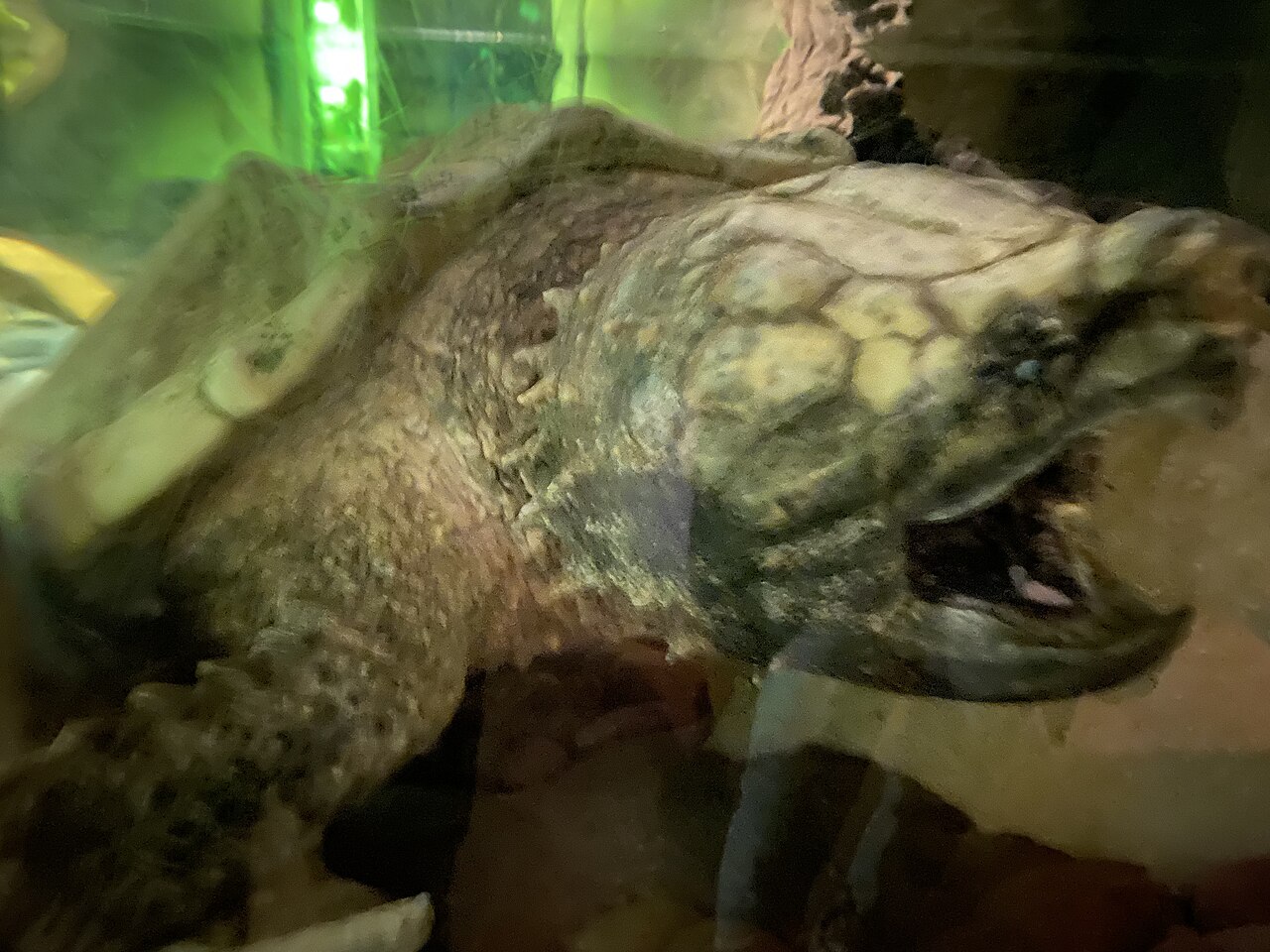
Fishing by staying still
Instead of chasing every meal, the turtle can use its mouth lure to draw prey close. Patience becomes a hunting tool.
It is also an opportunistic eater, taking a range of animal foods rather than depending on a single kind of fish. Smithsonian's National Zoo explains its lure and feeding behavior.
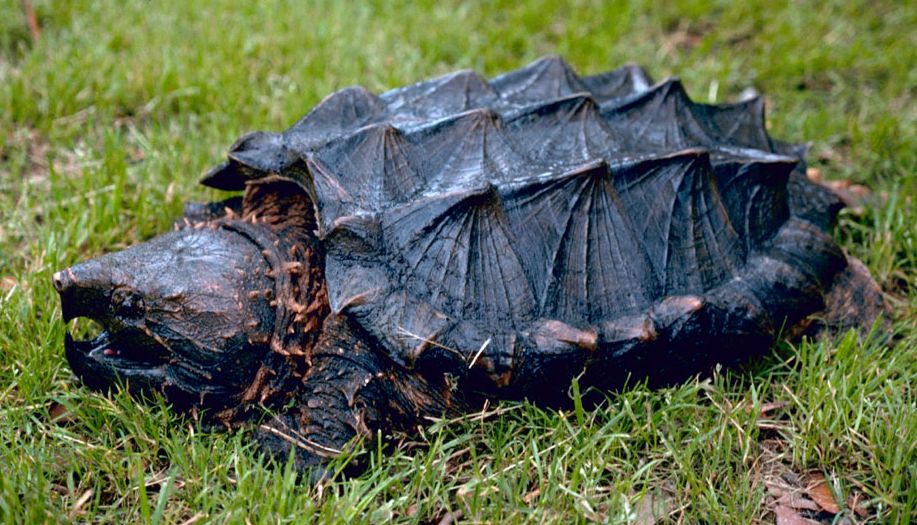
Rivers are part of the story
Alligator snapping turtles live in freshwater systems of the southeastern United States. Their future depends on suitable waterways and protection from pressures such as overharvesting.
An impressive shell cannot protect a turtle from every change to its home. Caring for rivers helps safeguard the quiet places where these animals feed and rest.
The next time a river seems still, imagine the activity hidden below: a patient turtle, a moving lure, and a fish deciding whether to look closer.
Photo credits
Featured image: Alligator snapping turtle (Macrochelys temminckii) by Sam Stukel, USFWS (52459090278).jpg — U.S. Fish and Wildlife Service Headquarters; Public domain.

Body image 1: Alligator snapping turtle yawning.jpg — Thebenjaminhuynh; CC BY-SA 4.0.

Body image 2: Alligator snapping turtle.jpg — Gary M. Stolz/U.S. Fish and Wildlife Service; Public domain.

Photographs resized for web display where available. Existing crops are identified in their source filenames; captive animals and landscape context are identified in the captions.