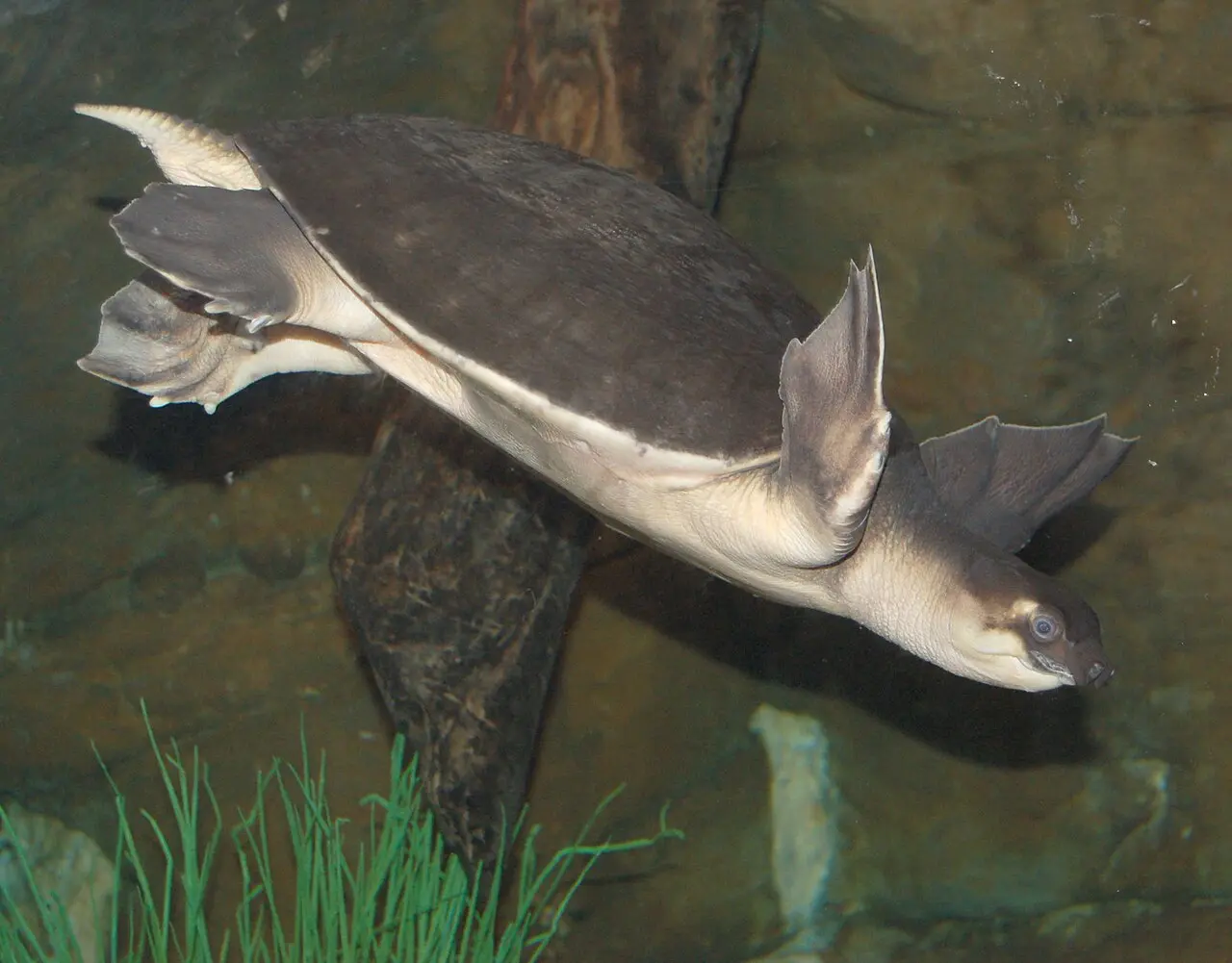
The pig-nosed turtle combines a tiny pig-like snout with limbs that look like flippers. Swimming past underwater, it can seem like an unexpected meeting between a river turtle and a sea turtle.
Yet Carettochelys insculpta is a freshwater species with its own distinctive design. It lives in northern Australia and southern New Guinea.
A nose made for life in water
The fleshy snout carries the nostrils at its tip. It helps the turtle reach the surface for air while keeping much of its body submerged.
Its limbs are broad and paddle-like, making swimming the main attraction when watching this species. The upper shell has a leathery covering instead of the obvious hard plates seen on many other turtles.
A river menu with variety
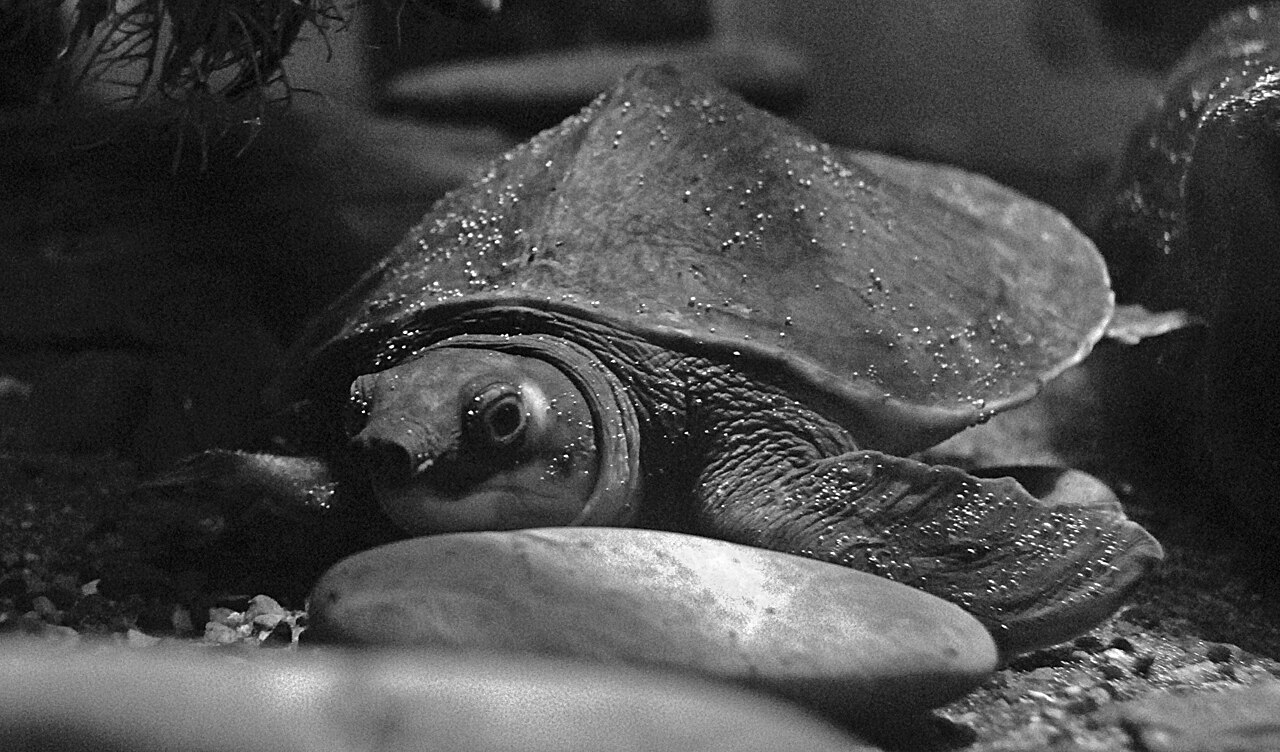
Pig-nosed turtles eat both plant and animal material. Fruits, leaves, and aquatic foods help form a varied diet in their natural surroundings.
Rivers and connected waters provide more than food. Females come onto sandy banks to lay eggs, linking the turtle's underwater life with the land beside it. Animal Diversity Web describes its anatomy, diet, and nesting.
Protecting both water and shore
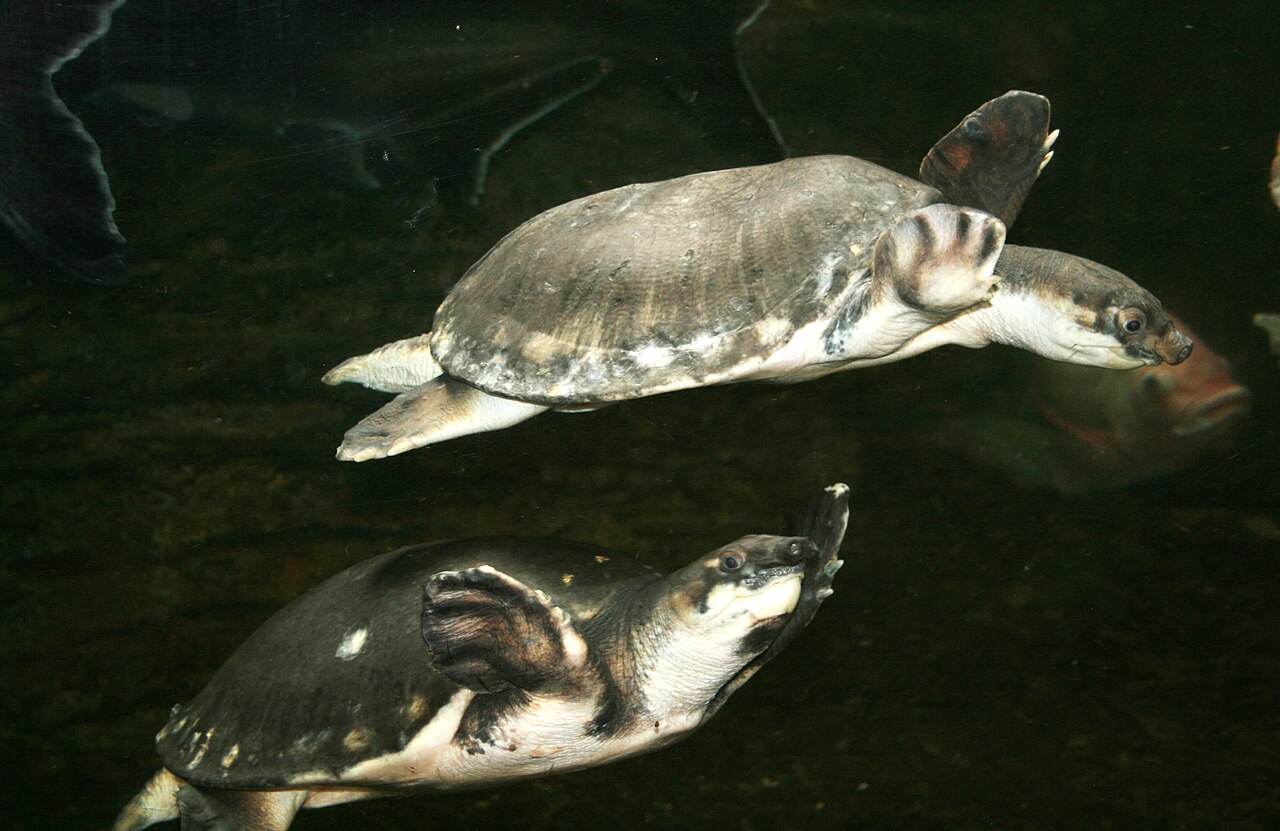
Collection and changes to habitat can put pressure on this unusual turtle. Protecting a river also means looking after its banks and the vegetation around it.
The pig-nosed turtle is a reminder that freshwater wildlife can be every bit as surprising as life on a coral reef. A snout, a pair of swimming paddles, and a leathery shell create an animal that is instantly recognizable—and hard to forget.
Photo credits
Featured image: Pig-Nosed Turtle Carettochelys insculpta Diving 2260px.jpg — Photo by Derek Ramsey (Ram-Man); CC BY-SA 2.5.

Body image 1: Pig-nosed Turtle Pengo.jpg — Photographer not identified; see source; CC BY-SA 3.0.

Body image 2: Carettochelys insculpta Dvur zoo 1.jpg — Karelj; Public domain.

Photographs resized for web display where available. Existing crops are identified in their source filenames; captive animals and landscape context are identified in the captions.