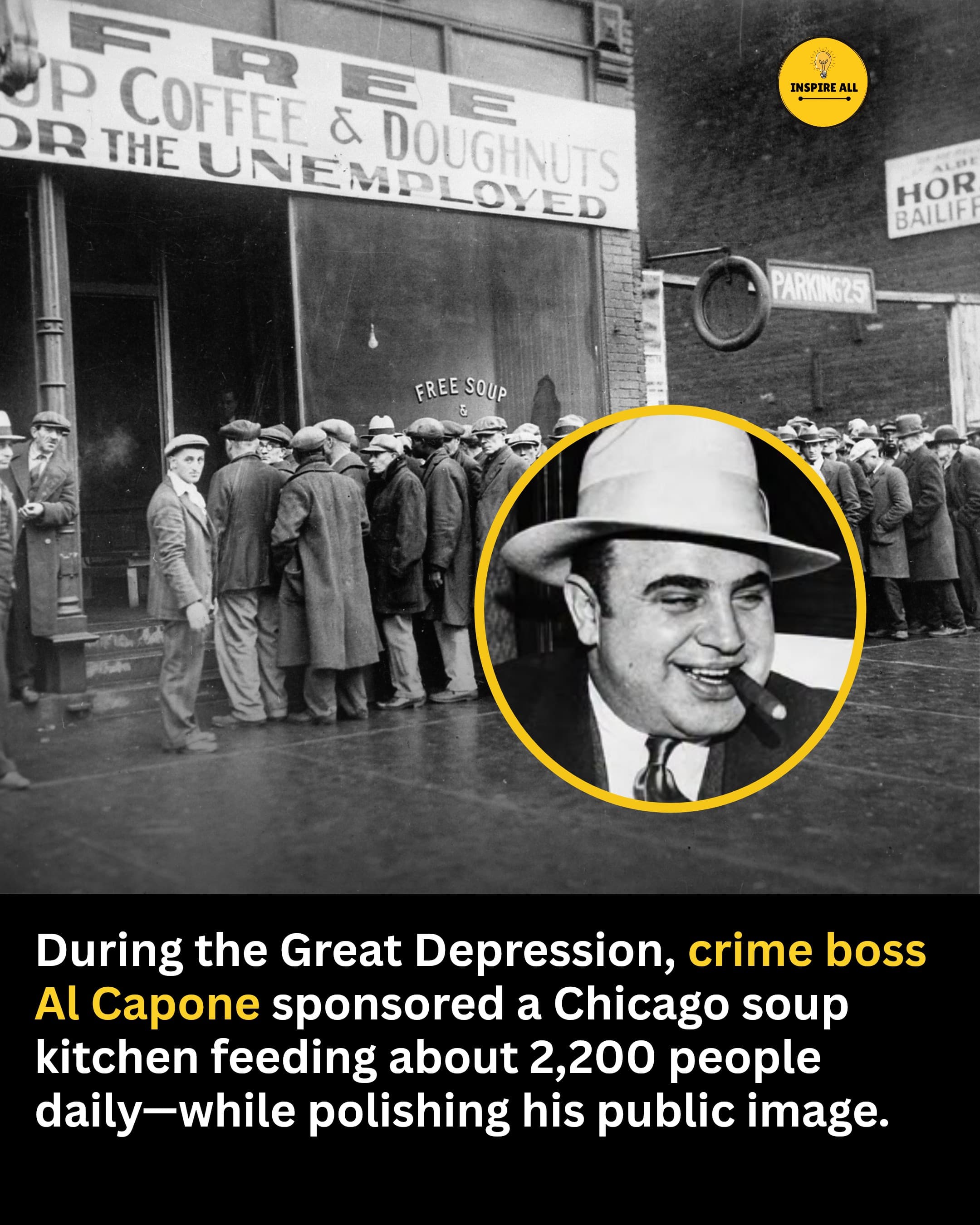
A photograph from Depression-era Chicago shows men waiting beneath a storefront sign offering free food to unemployed people. The sponsor was Al Capone, the city’s notorious organized-crime leader.
The soup kitchen was real. So was the troubling context behind its benefactor.
The Social Security Administration’s historical collection identifies Capone as the sponsor of the kitchen pictured in its archive.
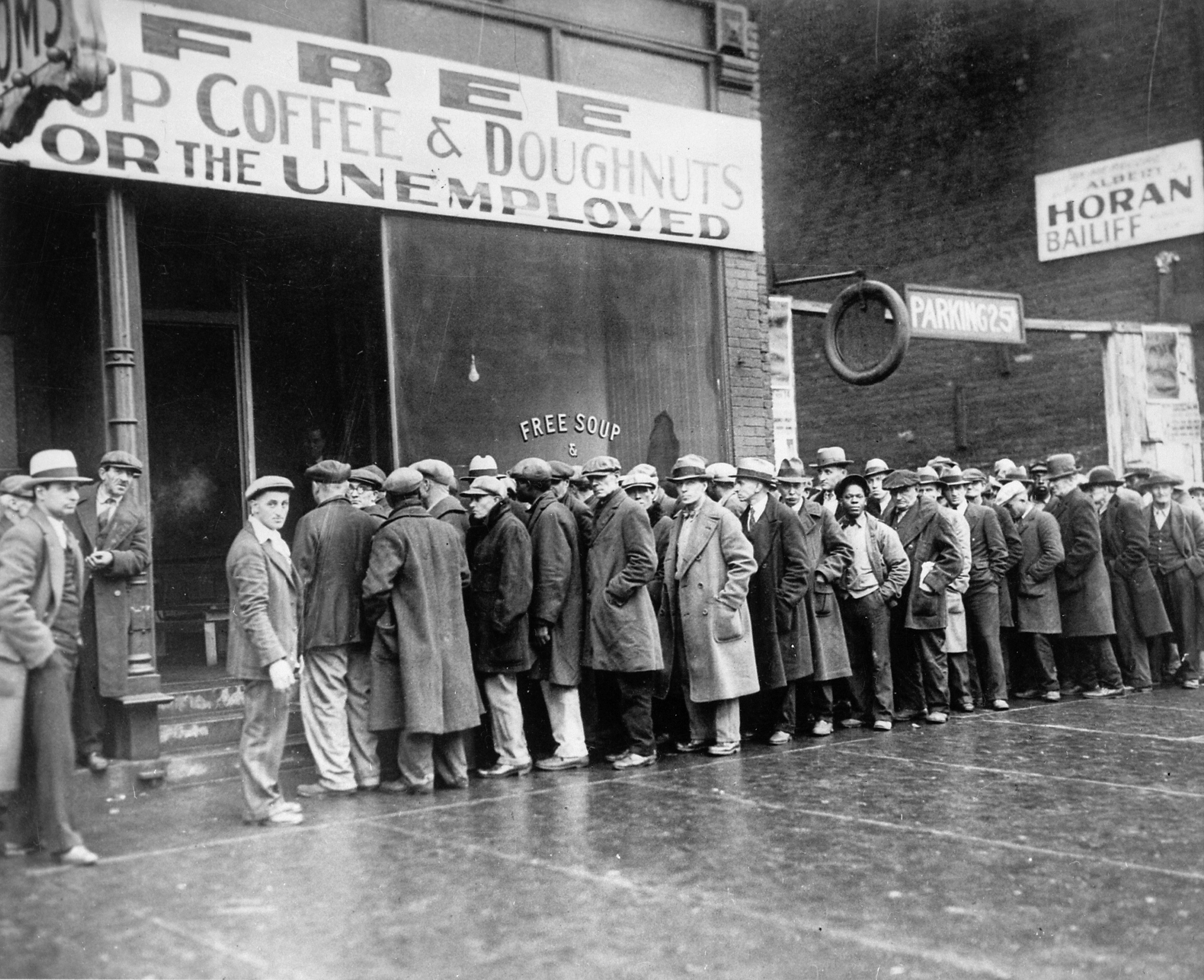
Food at a South State Street storefront
According to historian Christopher Klein’s account for HISTORY, the kitchen operated at 935 South State Street in late 1930.
It served breakfast, lunch and dinner. Klein reports an average of about 2,200 people daily, with roughly 5,000 served on Thanksgiving that year.
The meals were straightforward: coffee and rolls at breakfast, and soup and bread later in the day. These figures come from historical reporting, rather than a new audit of the kitchen’s records.
Relief and reputation
The food met an immediate need. It also helped Capone cultivate a favorable public image.
Klein describes contemporary admiration alongside criticism and questions about how supplies were obtained. His account notes evidence of goods being diverted from another charitable drive and allegations that businesses were pressured to contribute.
It would therefore be misleading to portray the enterprise simply as a wealthy donor paying for everything from his own pocket.
What the records establish
The National Archives photograph, presented by DocsTeach, is dated February 1931. It documents the queue and the offer of food, but cannot by itself establish attendance totals or motives.
Another record preserves a different part of Capone’s story: his conviction. The National Archives’ exhibit of the guilty verdict explains that a federal jury convicted him of tax evasion in 1931 over income from illegal operations.
People received food from the kitchen. That fact deserves to be recorded alongside the criminal power associated with its sponsor, rather than used to erase it.
For more on American work and invention, read about John Deere’s earlier work adapting a plow to farmers’ needs. Explore more American history through George Washington Carver’s practical agricultural research.