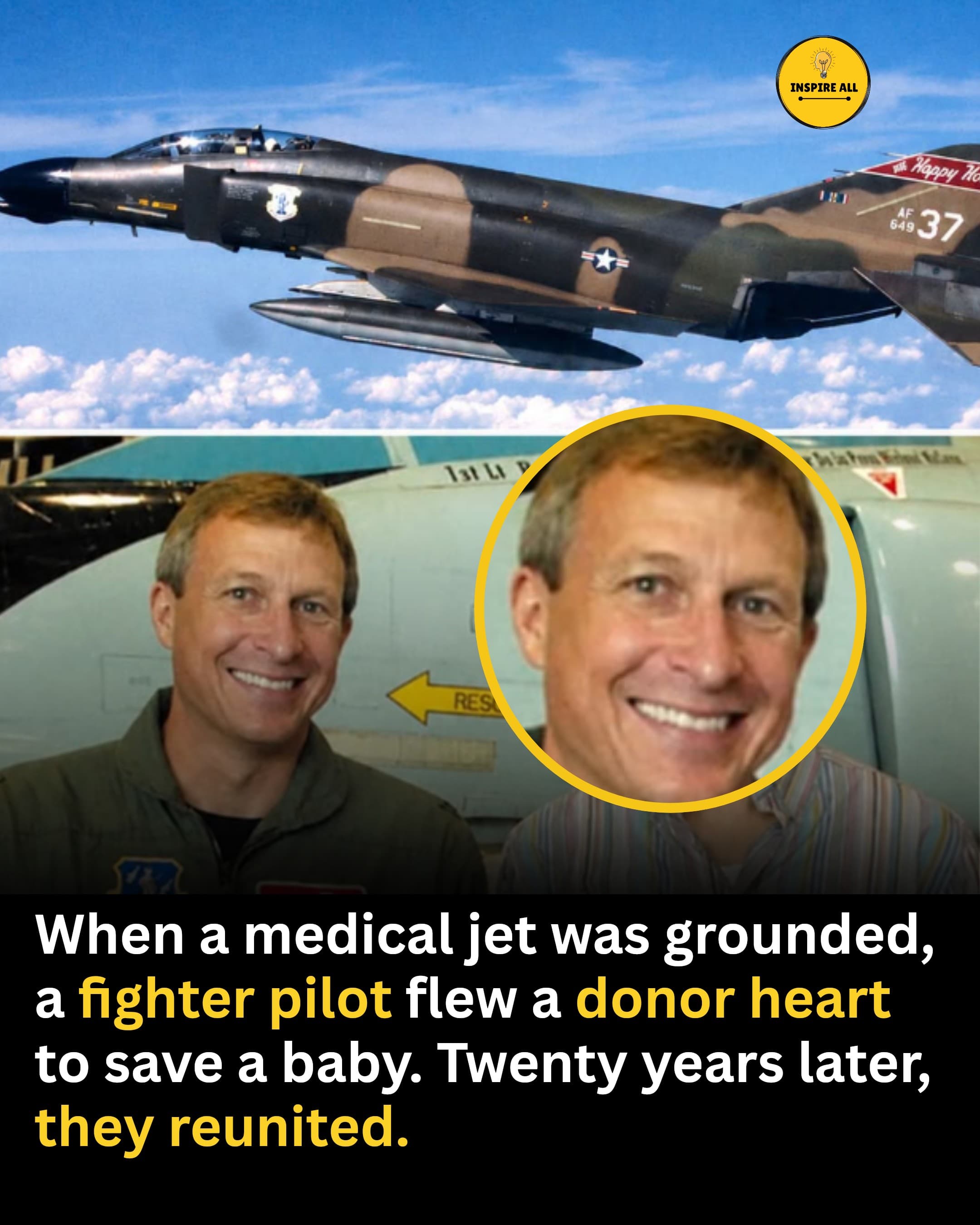
In December 1986, an F-4 Phantom fighter carried an unusual cargo from Fargo, North Dakota, to California: a donated infant heart intended for five-month-old Andrew De La Pena.
The flight helped a transplant team complete a journey that had been interrupted by an aircraft problem. More than 20 years later, Andrew met people whose decisions and work had made that transplant possible.
A donor family’s decision
The story began with Michael McCann, a four-month-old infant who died in Fargo. His parents, Steve and Karen, agreed to donate his heart.
In Stanford Nurse’s fall 2007 edition, transplant nurse Marguerite Brown recalled taking part in the team that recovered the organ for Andrew.
Her account places Michael’s death on December 22, 1986. The emergency transport unfolded around that Christmas period, with military recollections describing the mission overnight into December 23.
When the planned aircraft could not leave
LifeSource’s 2019 annual report recounts how the medical team’s Learjet was grounded in the cold. North Dakota Governor George Sinner then ordered an Air National Guard F-4 into action.
Lieutenant Robert Becklund flew with the heart packed on ice in a cooler secured in the rear seat. LifeSource records a 3:06 a.m. departure and an arrival in California just over three hours later, where the organ was handed to the Stanford team.
Those details describe this particular mission. They should not be treated as a general rule about how long a donor heart can remain outside the body.
A reunion at the Fargo Air Museum
An Air Force account published June 26, 2007 documents a May 15 reunion at the Fargo Air Museum.
Andrew, by then a college student, joined the donor family and people involved in the transport and transplant.
Brown’s Stanford reflection also describes the meeting. She stressed the contributions of nurses involved in organ recovery, surgery, intensive care and the years of care that followed.
More than a remarkable flight
The aircraft made the story memorable, but it was one part of a much larger effort. The donor parents made the decision to give. Military personnel arranged transport. Medical teams recovered the organ, performed the transplant and continued caring for Andrew.
The reunion made those connections visible again, two decades after an urgent flight brought them together.
Read more about Rishi Sharma’s work preserving veterans’ accounts and Jane Chen’s team developing an infant warmer.