Before the empty buildings, there were kitchen appliances, wartime families, and a robot that could talk.
The Westinghouse Electric factory in Mansfield, Ohio, helped shape both the city’s working life and America’s idea of a modern home. The plant closed in 1990. Later demolition and cleanup changed the site, so photographs of its abandoned buildings should not be treated as a current visitor guide.
This is the Mansfield Westinghouse complex, rather than another Ohio property associated with the company. Its story reaches beyond a single factory gate, from ordinary household purchases to one of the most memorable machines of the 1939 World’s Fair.
How Westinghouse grew in Mansfield
Westinghouse arrived in 1918, taking over a former Baxter Stove Company property. The operation eventually covered 42 acres and included 16 buildings. At its 1955 peak, it employed 8,177 people.
Local historian Timothy Brian McKee’s Mansfield timeline follows the plant from expansion through ownership changes and closure. White Consolidated Industries purchased the appliance operation in 1975, and a strike followed in 1976. When production ended in 1990, 643 workers remained.
These figures reveal the scale of the change without reducing people to statistics. A factory employing thousands affected far more than its own production floor. The loss was measured in household routines and family plans as well as vacant space.
Much of the complex was demolished in 2012. That makes the word “abandoned” only one chapter of the site’s history.
Selling a future inside the home
Mansfield did more than manufacture products. It helped present a vision of everyday life made easier by electricity.
The company’s Home of Tomorrow, introduced in 1934, demonstrated new domestic technology. Midstory’s account places the house within Mansfield’s wider role in promoting the future. Features such as electric appliances and a radio-controlled garage door turned technical ideas into things visitors could picture using.
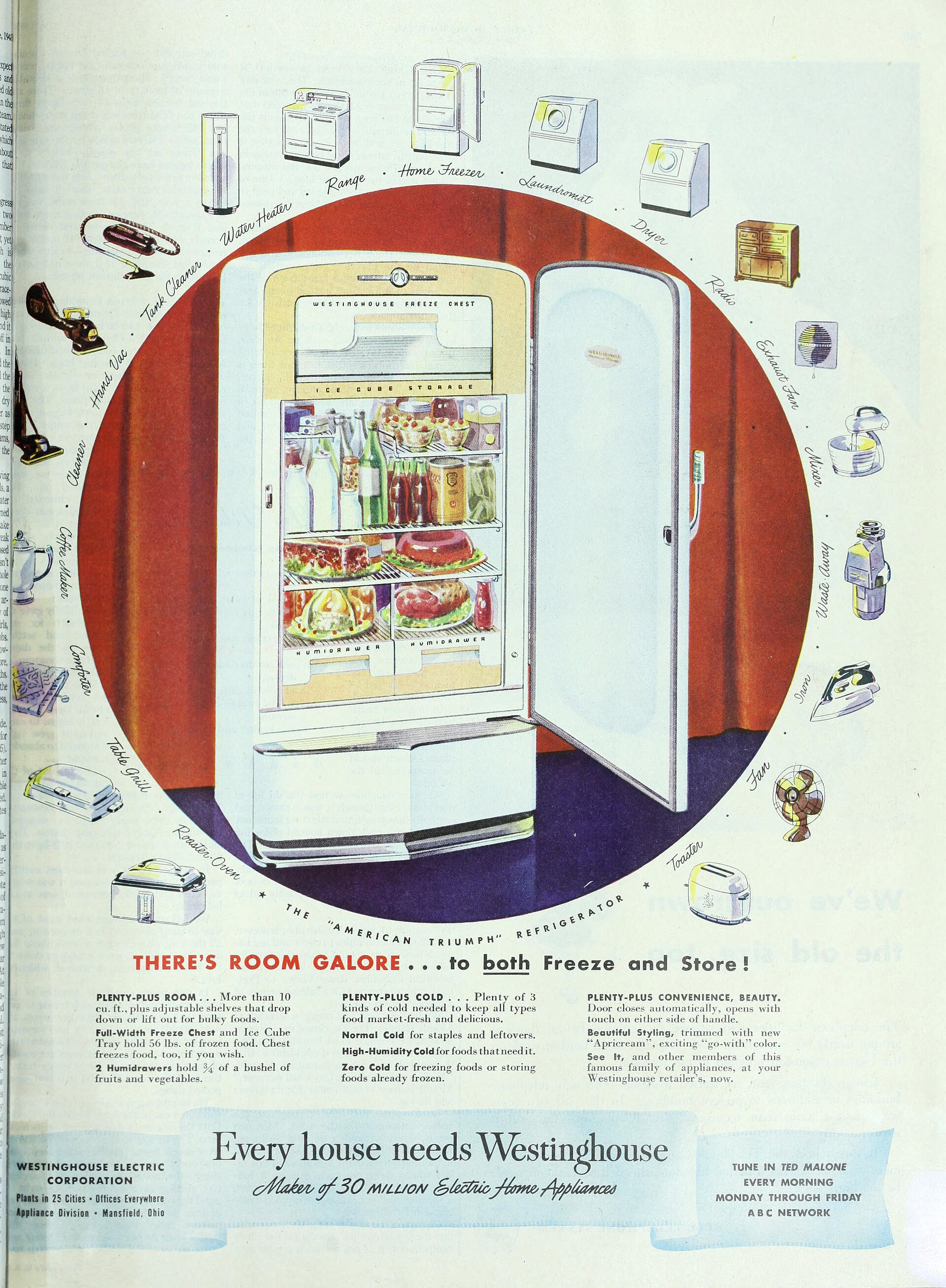
That is why a period advertisement belongs in this story. It shows how a manufacturer connected a factory town with distant kitchens. A refrigerator was sold as convenience, storage, style, and progress all at once.
The 1948 advertisement reproduced below names the company’s Appliance Division in Mansfield. It is evidence of that marketing connection, not a photograph of the factory or proof that every pictured product came from one production line.
The factory that helped give Elektro a voice
One Mansfield creation was less practical than a refrigerator but far harder to forget.
Elektro was built in 1937 and became a Westinghouse attraction at the 1939 and 1940 New York World’s Fair. According to The Mansfield Memorial Museum’s history, the machine could walk, speak, count, inflate a balloon, and perform other demonstrations.
These were staged capabilities, not human intelligence. Even so, a talking mechanical figure made an effective promise that technology would keep changing daily life.
Elektro gives the former factory an unexpected connection to popular culture. When people remember early visions of robots, they may not think of an Ohio appliance city. Mansfield deserves a place in that picture.
For anyone hoping to see related exhibits, confirm their present location and opening arrangements directly with local institutions. A historical webpage is useful evidence about the machine, but it is not a guarantee of a current display.
A quieter wartime photograph
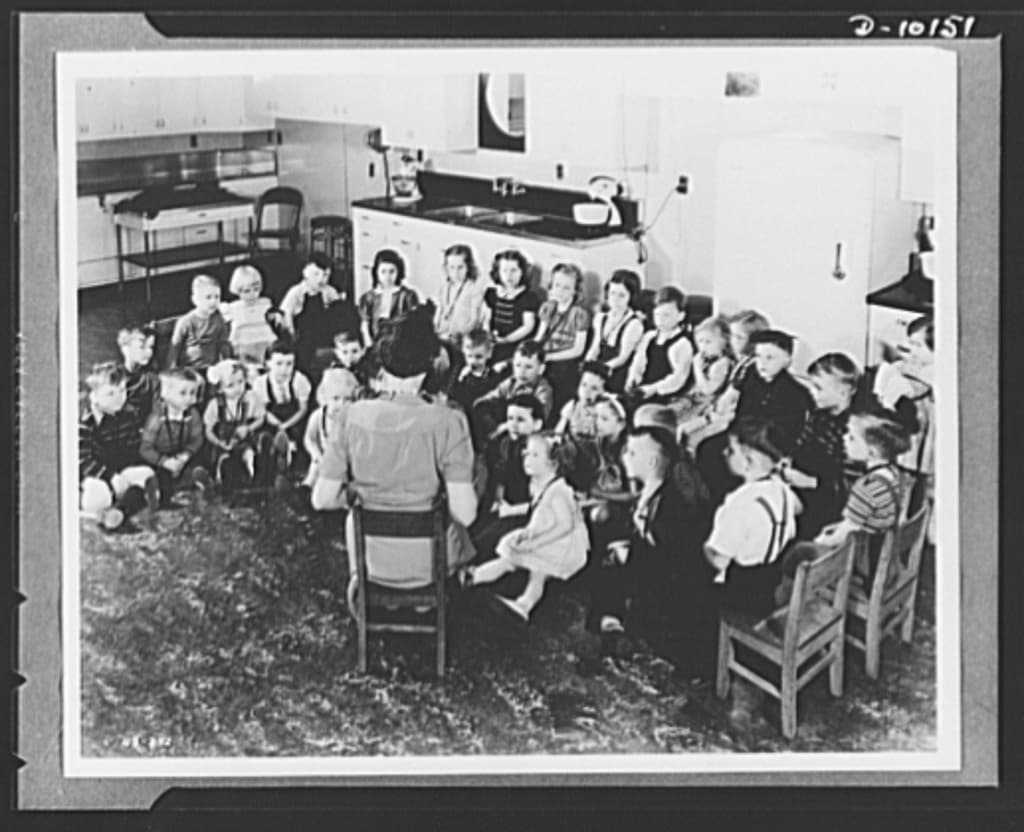
The featured image shows children, not a factory facade. Photographer Ann Rosener made it in February 1943 while documenting a nursery connected with the Westinghouse Health for Victory program in Mansfield.
The Library of Congress record explains that children learned eating habits while workers’ wives attended food classes. It places this local scene within a wartime effort to improve nutrition among industrial families.
This image changes the emotional center of the story. Behind the company name were people arranging meals, caring for children, and adapting family life to wartime production.
It also shows why archives matter after demolition. A building can preserve the size of a business. A photograph like this preserves something different: the everyday concerns of the families around it.
What remains of the Westinghouse site?
The site has moved through demolition and environmental work. Mansfield’s 2023 financial report records city and county contributions of $500,000 each alongside $4 million in state support for a 14-acre demolition and remediation project.
By February 2024, local reporting documented Building A’s demolition and continuing cleanup.
Those records support a clear travel recommendation: do not plan a visit expecting an intact, accessible abandoned factory. Cleanup parcels are working properties with their own boundaries and restrictions.
For a more useful encounter with the history, begin with local collections, archival photographs, and the published timeline. Compare each image’s date with the demolition record. That small step prevents a familiar mistake, arriving to find that a dramatic online ruin vanished years earlier.
Mansfield’s Westinghouse legacy survives in products, photographs, and memories of work. The buildings changed, but the story still connects an Ohio city to the homes it helped furnish.
Frequently asked questions
When did the Mansfield factory close?
Production ended in 1990, after decades of appliance manufacturing and changes in ownership.
Is the abandoned factory still standing?
Major portions were demolished in different phases. Do not assume older photographs show today’s site.
Can visitors explore the property?
No general public exploration access is established by the sources reviewed. Observe property boundaries and current restrictions.
What was Elektro?
Elektro was a Westinghouse demonstration robot built in Mansfield in 1937 and exhibited at the 1939 and 1940 New York World’s Fair.
Image credits
Featured image: Ann Rosener, Public domain. Body image: Westinghouse / Internet Archive, Public domain. Images retain their original framing; dates are identified in their captions or the article.

