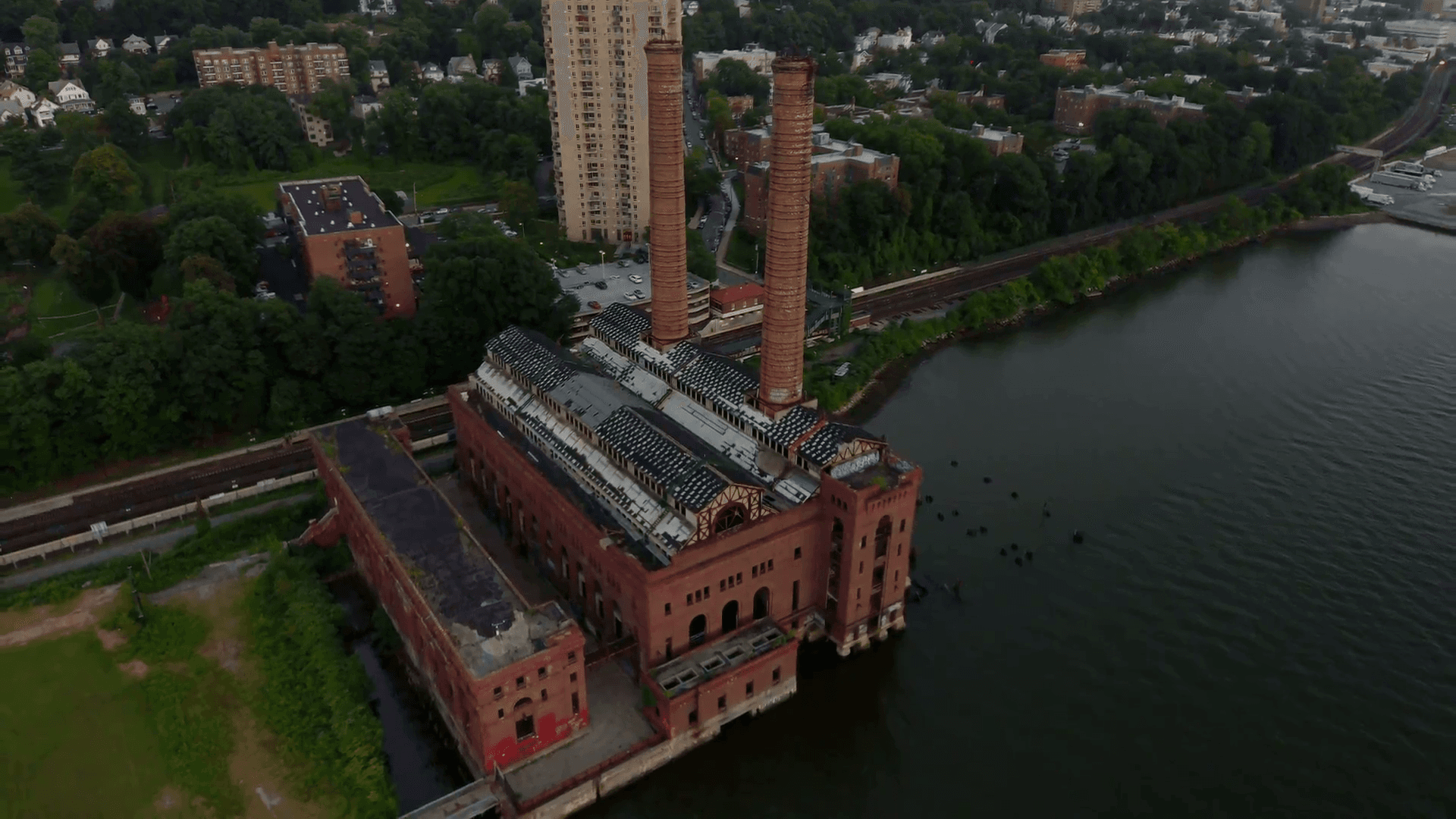
Two smokestacks mark the spot where electricity helped replace steam on a great American railroad.
Glenwood Power Station stands between the Hudson River and the railway in Yonkers, New York. Built for railroad electrification in the early 1900s, it later lost its generating role. The surviving complex has attracted preservation efforts and redevelopment plans, but those plans should not be mistaken for an open visitor attraction.
This is the Yonkers station, sometimes called the Glenwood Power Plant. It is different from the power station at Glenwood Landing on Long Island. That distinction matters when searching for directions, photographs, or information about what survives.
Why Glenwood Power Station was built
Railroad electrification required far more than replacing a locomotive. It needed a dependable supply of power and the equipment to deliver it.
Historian Rob Yasinsac’s Glenwood history dates construction to 1904–1906 and connects the plant with the New York Central Railroad’s move away from smoke-producing steam operations near Grand Central. The station later passed to a utility subsidiary in 1936 as the railroad shifted toward buying electricity.
That change helps explain the building’s setting. The river and tracks were part of its purpose, rather than a scenic backdrop added later.
Yasinsac describes a later period of standby use, followed by the end of generation in the 1960s. Some electrical functions continued afterward. As with many large industrial sites, its working life did not stop everywhere on the same day.
A machine house with architectural ambition
Preservation architect Easton Architects identifies Reed & Stem as the designers and dates the completed plant to 1907. The firm's account describes a roughly four-acre complex built on piles beside the Hudson.
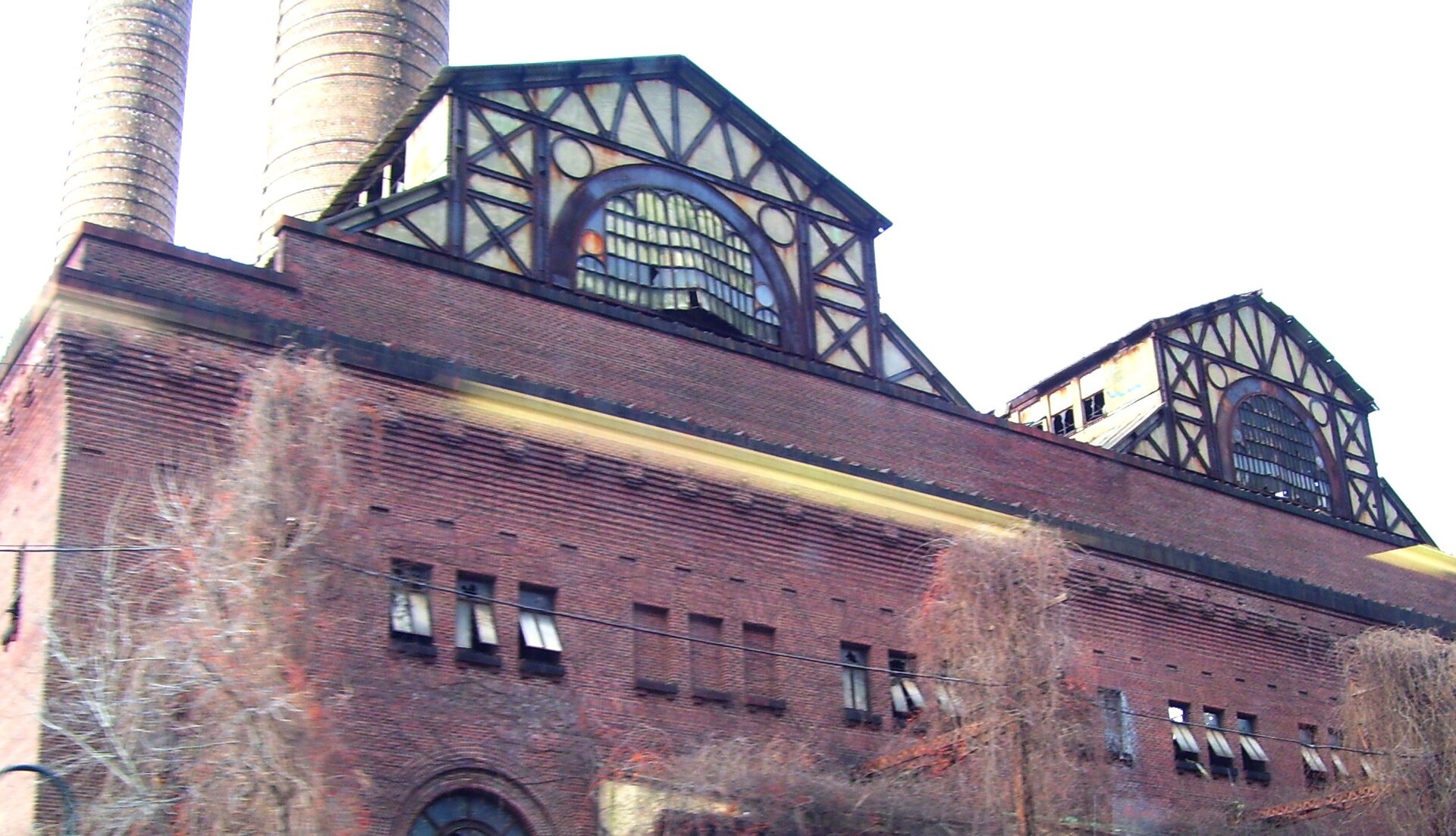
The surviving architecture makes its scale easy to understand. Brick walls frame large openings. Roofs rise in repeated gables, and paired smokestacks reach roughly 200 feet above the site. Inside, spaces once organized around heavy generating equipment required unusual height and strength.
There is a useful lesson in the different dates found in historical accounts. Construction, completion, and operation can be separate milestones. Describing Glenwood as an early twentieth-century plant avoids pretending that every source uses the same definition of an opening date.
The building’s ambition is visible even in an old exterior photograph. It presents industrial work as something substantial enough to shape the riverfront skyline.
Why reuse has taken so long
A large empty room can make redevelopment sound simple. Glenwood shows why it is not.
Easton Architects describes extensive investigation of deteriorated materials and structural conditions. Its work includes testing, documentation, and conservation planning. These are the steps that determine what can safely be retained before a new use fills a space.
Public proposals have been ambitious. In 2013, Senator Charles Schumer supported tax credits for a redevelopment intended to bring activity back to the property. Such announcements document an effort and a goal, not proof that the proposed venue subsequently opened.
That distinction is especially important here. Search results can preserve old projected opening dates long after circumstances change. A traveler who treats one of those dates as current may arrive expecting restaurants or public interiors that are not available.
What public funding records actually show
New York’s Glenwood POH Capital project record lists a $1 million award and disbursement for a first phase centered on stabilization and essential work.
That record is useful because it describes a narrower task than a finished destination. Structural needs, access, and utilities come before the public experience imagined in a rendering.
A Yonkers financial report also records a 2021 application involving renovation, office and catering uses, and related parking proposals. Again, an application establishes what was being sought, rather than what a visitor can enter today.
Read together, the records tell a story of continuing attempts to find a viable future. They do not justify calling the entire site restored. Glenwood’s next chapter depends on practical work as much as affection for its silhouette.
Can you visit Glenwood today?
Do not assume there is public access to the powerhouse interior. The sources reviewed establish preservation activity and proposals, but not a dependable, unrestricted visitor schedule.
For a visit to the surrounding area, use lawful public routes and respect property lines and railway restrictions. Check current information from the city and any announced operator before making the building the centerpiece of a trip.
The photographs here show the plant in 2010 and 2018. They help explain its form, but they cannot establish today’s construction conditions or access arrangements.
You do not need to enter the building to understand its place in the landscape. The relationship between river, rail line, and powerhouse is the central story. Electricity changed how trains reached New York, and this great brick shell remains a visible trace of the system that made that change possible.
Frequently asked questions
Where is Glenwood Power Station?
It is in Yonkers, New York, on the Hudson River beside the railway near Glenwood station.
What did the station power?
It was built for the New York Central Railroad’s electrification system before later utility ownership.
Is it a completed event venue?
The reviewed records describe proposals, funding, and preservation work. They do not establish a fully opened public venue.
Can you explore inside?
Do not enter without explicit authorization. An abandoned appearance, old photograph, or redevelopment announcement does not grant access.
Image credits
Featured image: Bwildered01, CC BY-SA 3.0. Body image: Beyond My Ken, CC BY-SA 4.0. Images retain their original framing; dates are identified in their captions or the article.

