A former steelworks can disappear from the skyline without disappearing from the city.
The Bethlehem Steel Lackawanna plant occupied a vast stretch of Lake Erie shoreline south of Buffalo, New York. Its main steelmaking operations ended in 1983, leaving a landscape that required demolition, environmental cleanup, and new uses.
Today, calling the entire property abandoned is misleading. Parts have become industrial development sites, while a public trail offers a lawful way to experience one edge of the former works. Archival photographs remain essential for understanding the machinery and buildings that once filled this immense place.
How Bethlehem Steel Lackawanna began
The works began as the Lackawanna Steel Company’s lakeside plant in 1902. Bethlehem acquired it in 1922. A regional redevelopment study places those milestones within the area’s long industrial history.
The location offered room for a large integrated operation near water and transportation routes. “Integrated” means that multiple stages of making steel happened within a connected industrial system, rather than at a single small workshop.
That scale matters when considering its closure. An entire network of specialized structures, supply routes, and working spaces had to find a future.
The 1983 shutdown was a decisive break for primary steelmaking. It should not be read as a claim that every business activity across every parcel ended at once. Large industrial properties often contract and change in stages.
Reading the vanished factory through photographs
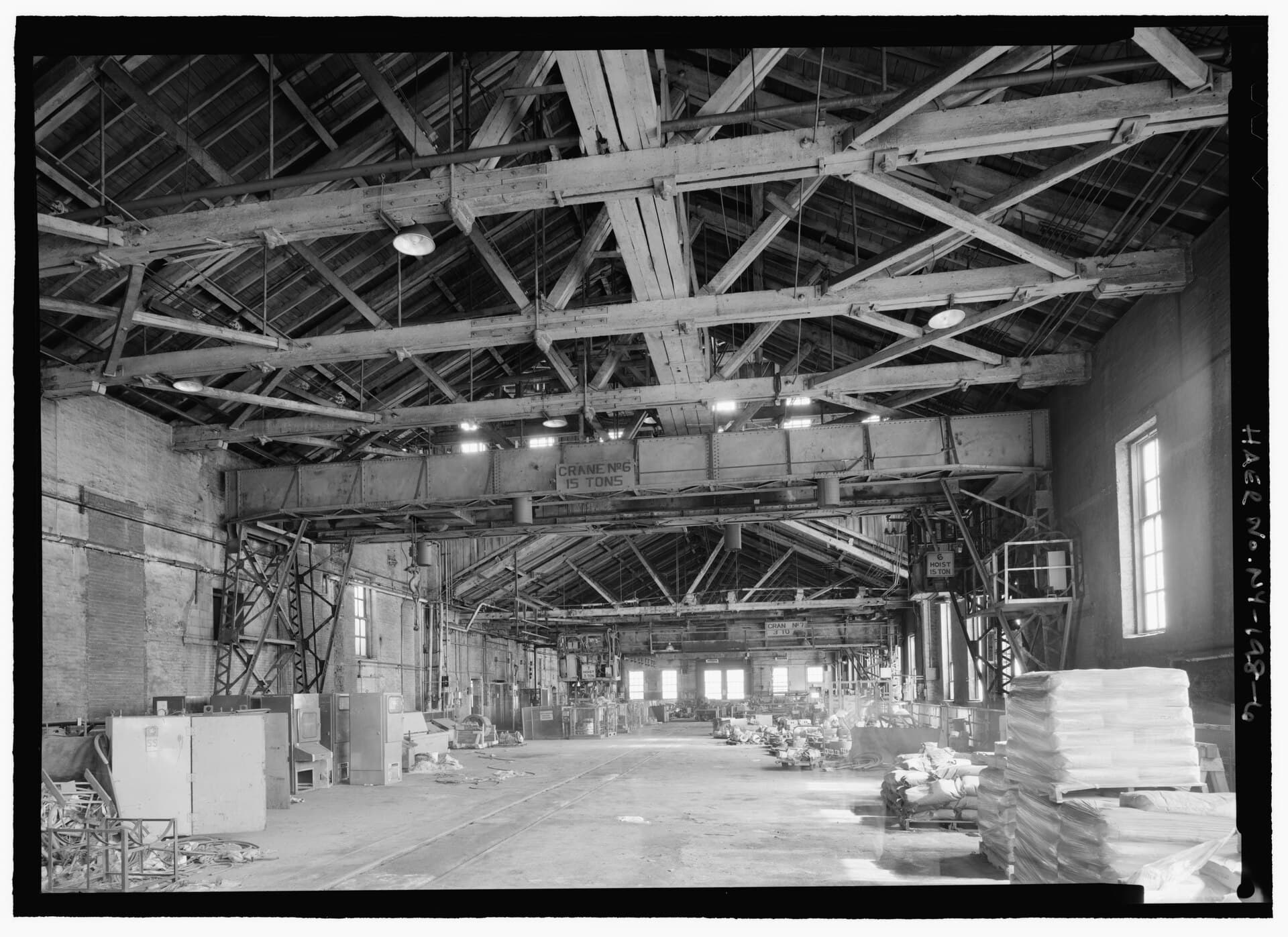
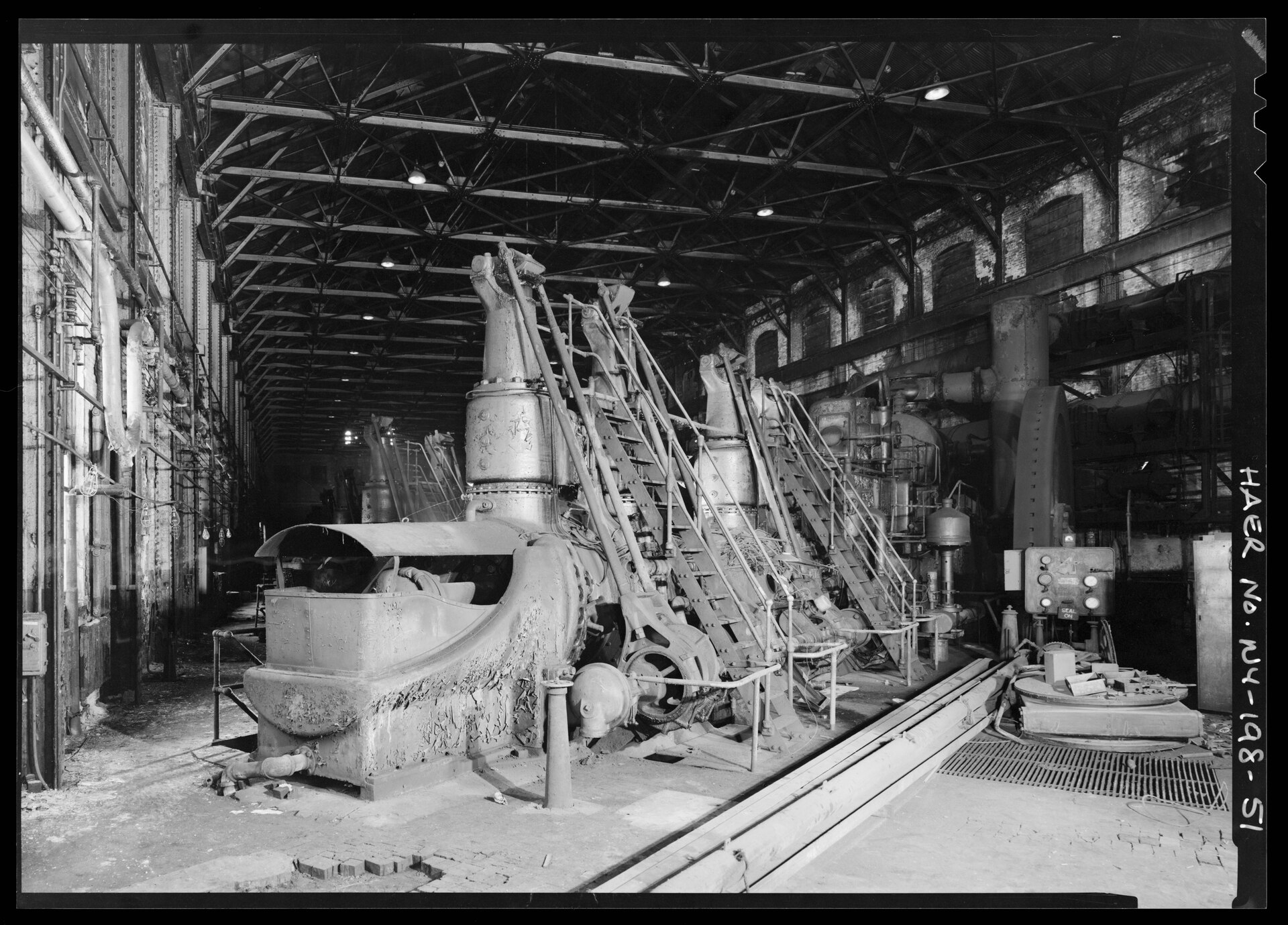
The photographs accompanying this article come from the Historic American Engineering Record. Photographer Jet Lowe documented interiors that reveal something a distant skyline cannot: the space required to move, handle, and process heavy material.
In the featured image, an overhead crane crosses a long industrial hall. In the body photograph, large machines fill a room built around their dimensions. These are historical records, not promises of rooms you can visit today.
The Environmental Protection Agency’s site profile describes an approximately 1,100-acre former steel property and notes that much of its aboveground infrastructure had been removed, with foundations and utilities remaining.
That helps explain why an archive can be a better guide to the past than an expectation of intact ruins. What looks like open land may carry the footprint of a highly specialized workplace.
Cleanup changed what could happen next
Steelmaking left more than buildings. Preparing former industrial land for reuse also requires dealing with contamination, dividing responsibilities, and deciding which uses are suitable.
The New York Department of Environmental Conservation documents cleanup across different portions of the former Bethlehem property. Its account is organized around separate areas and projects, rather than treating the entire shoreline as one finished job.
That is the right way to understand the site. A parcel ready for redevelopment does not prove that every neighboring parcel has the same condition or access rules.
The department also records a public benefit: a nearly mile-long section of the Shoreline Trail opened in October 2018 along the eastern side of the former plant. The trail occupies about 6.7 acres, a small but meaningful portion of a much larger industrial landscape.
New industry on old industrial land
The Erie County Industrial Development Agency describes Renaissance Commerce Park as a roughly 240-acre redevelopment effort on former Bethlehem land.
Its project history includes land acquisition, relocation of rail infrastructure, new manufacturing investment, and continuing expansion. The aim is to make useful industrial land available again, drawing on the area’s transport connections.
This gives the place a different kind of fascination from a frozen ghost town. The story is still moving. Older industrial geography is helping support newer businesses.
Do not confuse the commerce park’s acreage with the full historic steelworks. It is one redevelopment area within a much larger former operation. Keeping those boundaries clear avoids exaggerating either the amount restored or the amount still awaiting change.
Some old structures found another purpose
Lackawanna’s development information describes projects including modern manufacturing and the use of a former blowing engine house for sugar storage.
A structure built for one material can become useful for another. That kind of reuse is less theatrical than an empty furnace, but it keeps industrial history connected with employment and daily work.
Other portions of the old property took a different path. An EPA brownfields account documents the Steel Winds project on a former industrial parcel. Wind energy added another chapter to a shoreline long shaped by large machines.
These changes do not erase the losses associated with shutdown. They show how several futures can occupy the same former works: reused buildings, cleared land, new businesses, cleanup areas, and public space.
Seeing the place responsibly
Use the public Shoreline Trail and other clearly designated public areas. Operating industrial sites and cleanup parcels are not open for casual exploration.
Bring an old photograph or map and compare it with the present landscape from a legal viewpoint. Look for the relationship between the lake, transport routes, and the scale of the property.
The most revealing question is no longer simply, “What was abandoned?” It is, “What became possible after the steelworks changed?”
Frequently asked questions
When did the main steelworks close?
The major steelmaking shutdown occurred in 1983. Different later activities and property uses should be considered separately.
Is this the Bethlehem plant in Pennsylvania?
No. This article covers Lackawanna, New York, near Buffalo, rather than Bethlehem’s Pennsylvania works.
Can visitors enter the old buildings?
Do not assume public interior access. Many structures were removed, and surviving industrial properties have restricted uses.
Is there a public place to walk?
Yes. DEC documents a Shoreline Trail section along the former site’s eastern edge. Follow current route signs and closures.
Image credits
Featured image: Lowe, Jet, Public domain. Body image: Lowe, Jet, Public domain. Images retain their original framing; dates are identified in their captions or the article.