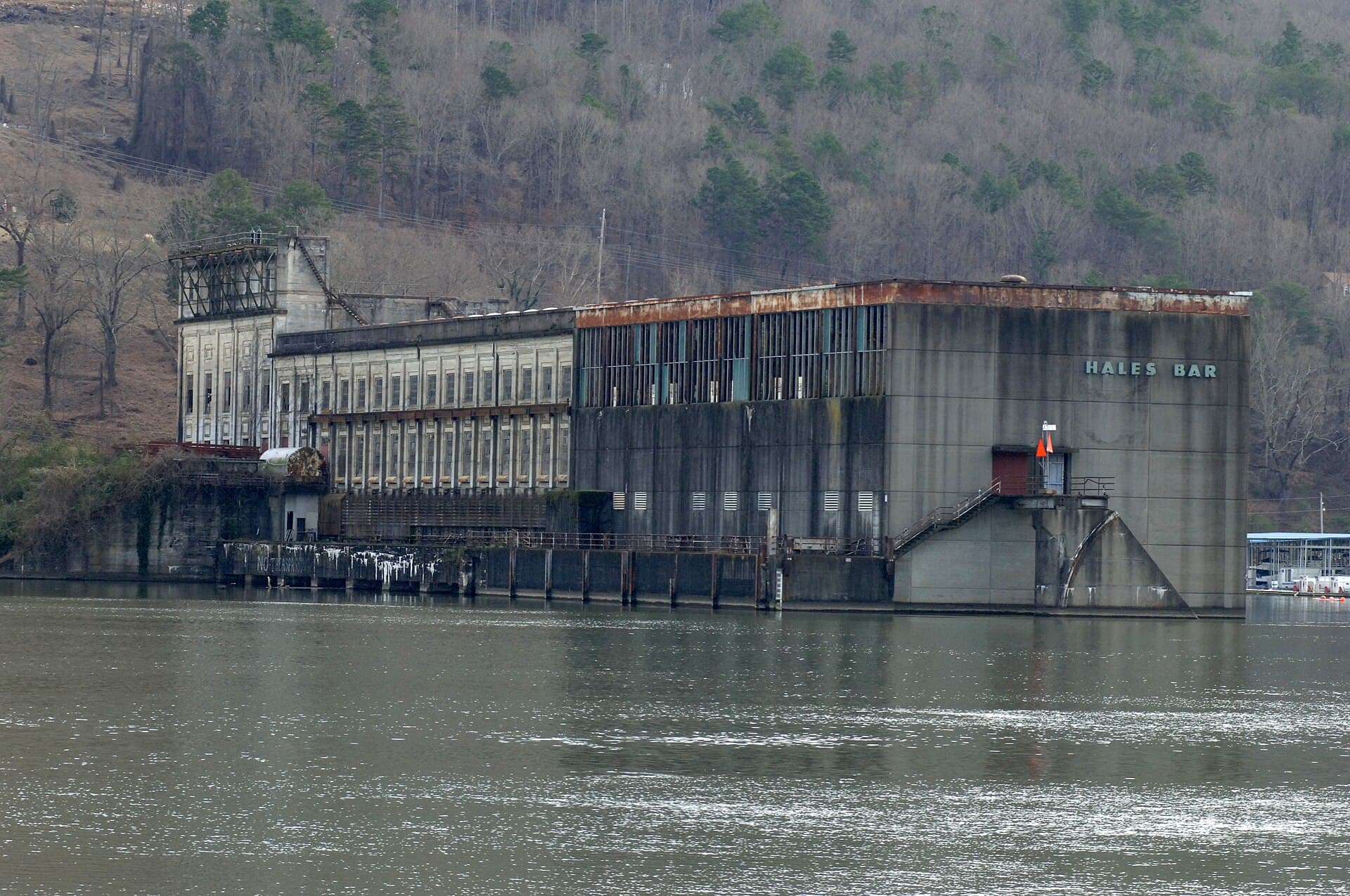
The dam disappeared, but its powerhouse still faces the river.
Hales Bar Dam in Haletown, Tennessee, was an early effort to turn the Tennessee River into reliable power and easier navigation. Persistent foundation leaks helped end that experiment. Nickajack Dam replaced it, while the old powerhouse survived.
Today, the site combines industrial history with a working marina and advertised tours. It is a place to arrange a visit, rather than assume an empty building is open. Its most interesting mystery has a documented answer: why build a huge river project where water kept finding a way underneath?
Why Hales Bar Dam mattered
Construction began in 1905, and the project opened in 1913. The Chattanooga and Tennessee River Power Company built it before the Tennessee Valley Authority existed. Hales Bar became the first multipurpose dam on the Tennessee River’s main channel.
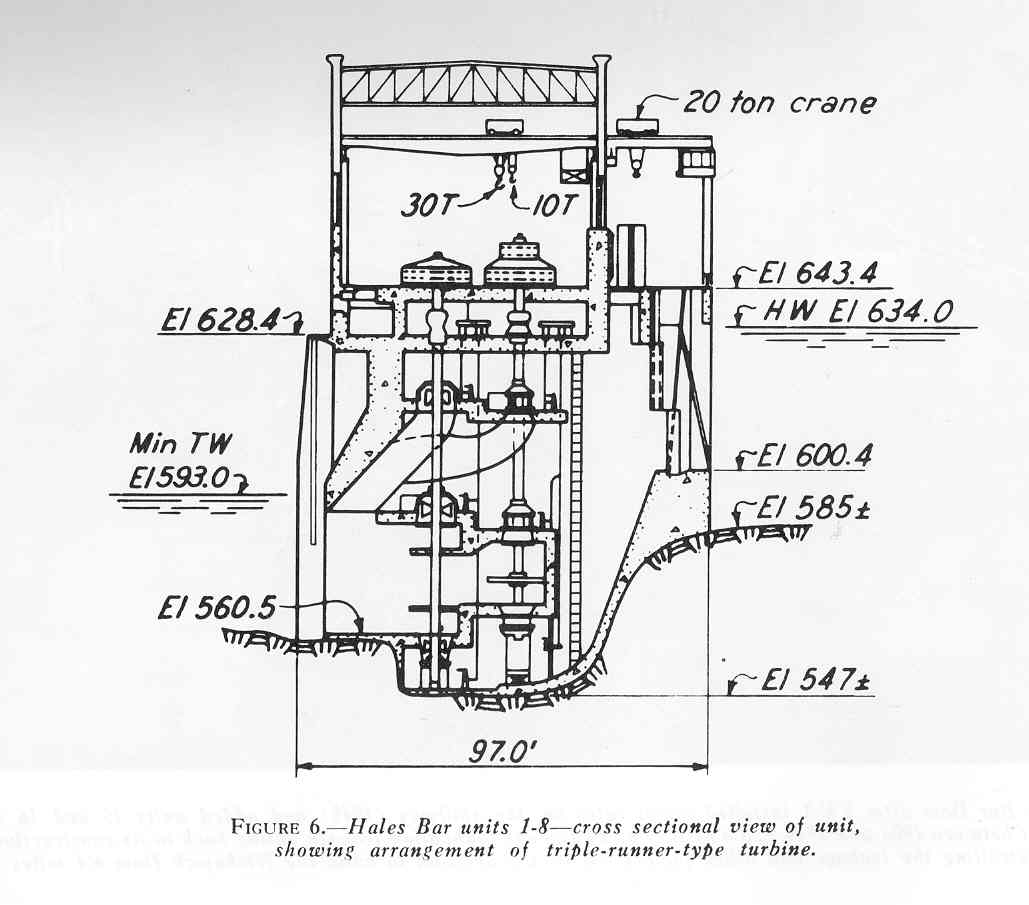
Its trouble lay beneath the concrete. The foundation allowed water to escape, and repairs became a recurring burden. Ownership passed through the Tennessee Electric Power Company before TVA acquired the project in 1939. TVA’s history of Hales Bar describes both the engineering challenge and later efforts to seal the leaks.
That background changes how the surviving building looks. This was a serious attempt to improve a difficult river, not a project that never served a purpose. Its long life included useful work and a problem that never fully went away.
The river was also a workplace
Power generation tells only part of the story. Boats needed to move past the dam, so a navigation lock raised and lowered traffic between different water levels.
In an Army Corps of Engineers oral history, retired operator Earl Keeler recalled working here from 1960 to 1967. He returned in December 2013, when the project reached its centennial year.
The old lock had a 39-foot lift and opened on November 1, 1913. Those details give the ruin a human scale. Someone had to guide vessels through a confined space, manage the machinery, and keep river traffic moving.
A visit is richer when you imagine that routine. The powerhouse was one part of a system that linked workers on shore with crews carrying goods through the valley.
Nickajack took over the job
TVA eventually chose replacement over continued dependence on Hales Bar. Construction of Nickajack began in 1964, and the new dam was completed in 1967, downstream from the older site.
The Nickajack project still combines electricity, navigation, and recreation. Its lock measures 600 feet long and 110 feet wide, enough for nine large barges at a time. TVA lists cargoes ranging from grain and wood chips to petroleum and steel.
This is a useful contrast to the abandoned powerhouse. The old industrial shell does not mean the river stopped working. The work moved to a newer structure.
The reservoir also supports boating and other recreation. What travelers now experience as a waterside getaway sits within a managed landscape built around shipping and electricity. Hales Bar belongs to that larger story of repeated changes to the river.
What a visit can include today
The powerhouse remains beside Hales Bar Marina and Resort. A 2026 Chattanooga tourism guide describes history tours connected with the site’s distillery, including areas inside the old structure.
That guide also mentions stairs, dark spaces, puddles, and a building without normal heating or cooling. These are useful details when deciding whether an interior tour suits your group. Ask the operator about the specific route, accessibility, footwear, and current availability before booking.
Do not read an older tour listing as permission to explore on your own. The marina, accommodations, tour spaces, and closed industrial areas have different uses. Follow the operator’s instructions and stay within the areas included in your visit.
For photographs, the long waterside facade tells much of the story without needing a dramatic interior scene. The featured photograph dates to 2013; it documents an earlier appearance rather than promising identical conditions today.
Where the ghost stories fit
Local tourism also promotes haunted tours at Hales Bar. Those experiences form part of the site’s visitor culture, but paranormal claims should remain clearly separate from established history.
A reported haunting does not explain the dam’s engineering problems. The documented story already contains plenty of tension: ambitious construction, stubborn leaks, generations of workers, and eventual replacement.
Whether you come for a guided history visit or a seasonal ghost event, keep those two kinds of storytelling distinct. Hales Bar is memorable because so much of its purpose can still be understood from what remains.
Frequently asked questions
Is Hales Bar Dam still operating?
No. Nickajack replaced the dam’s role. The surviving powerhouse is a historic structure rather than an operating hydroelectric plant.
Can you go inside the powerhouse?
Advertised guided tours provide a possible legal route. Confirm availability and the permitted areas with the current operator before traveling.
Why was Hales Bar replaced?
Persistent leakage through its foundation made the project difficult to maintain. TVA built Nickajack downstream as its replacement.
Is the powerhouse the same as the dam?
No. The powerhouse housed generating equipment. It survived after the dam itself was removed, which explains the unusual scene beside the river.
Image credits
Featured image: Leon Roberts, Public domain. Body image: Tennessee Valley Authority, Public domain. Images retain their original framing; dates are identified in their captions or the article.

