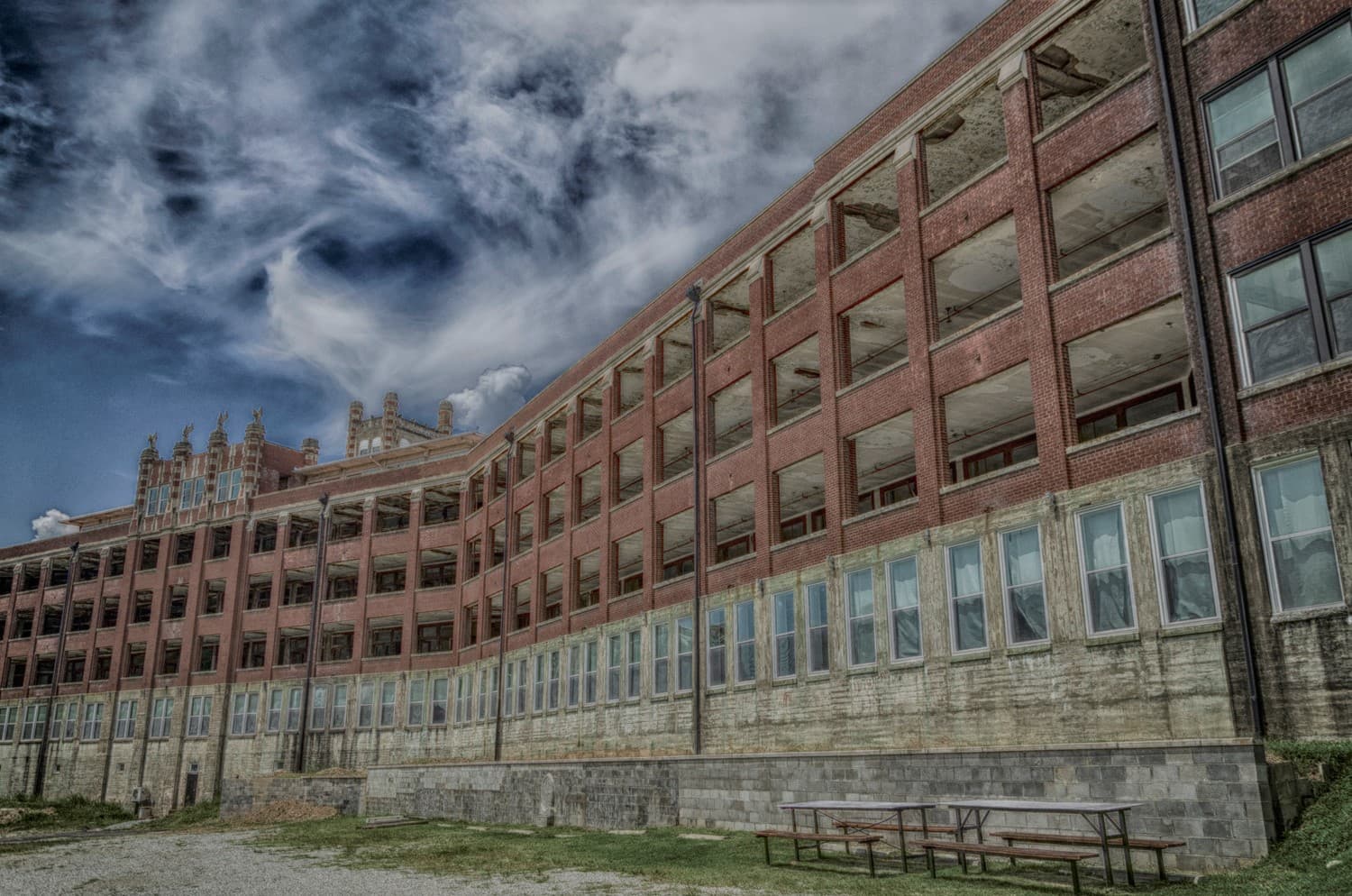
Waverly Hills was built to give patients air and light, long before its corridors became famous for darkness.
Waverly Hills Sanatorium is a former tuberculosis hospital in Louisville, Kentucky. The institution opened in 1910, and its large surviving hospital building opened in 1926. Tuberculosis care ended there in 1961. Today, authorized tours offer access to a historic site often overshadowed by ghost stories.
Its real history follows a disease, a changing approach to treatment and the challenge of preserving an enormous building after its original purpose disappeared.
Why Waverly Hills Sanatorium was built
The operator’s historical account describes a small original hospital with space for roughly forty to fifty patients. Demand soon required a much larger institution.
The five-story replacement opened on October 17, 1926, with capacity for more than four hundred patients. Its scale reflected the seriousness of tuberculosis in the surrounding community.
Before effective antibiotics, sanatorium treatment emphasized rest and a carefully managed environment. Open-air spaces became a defining feature of the architecture.
The building’s long facade still makes that approach visible. Repeated openings and broad terraces suggest a hospital designed around more than ordinary enclosed bedrooms.
These features were intended to help people recover. Knowing that purpose changes the meaning of an empty balcony or a long corridor.
Read the building before the legends
The historic entrance has decorative stonework and a strong central composition. Elsewhere, the repeated bays emphasize the number of people the building was meant to accommodate.
The Waverly Hills Historical Society identifies both the architecture and medical history as reasons for preserving the property. It also emphasizes remembrance of patients and staff.
That is a useful starting point for a visit. Look first at how the building worked: where people lived, how they moved and how the spaces supported treatment.
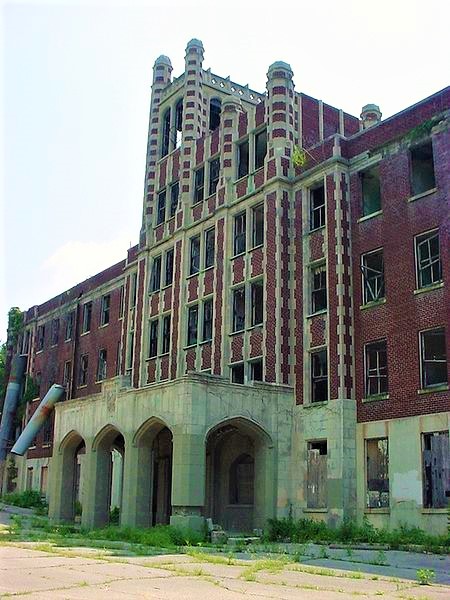
The entrance photograph accompanying this article is a separate archival view. Its date is not established in the source record, so it should not be read as documentation of current access or condition.
The building can feel imposing without any supernatural explanation. Its size, age and connection with illness are enough to make it emotionally powerful.
Why tuberculosis care ended
The hospital’s closure was connected to advances in treatment. As antibiotics changed tuberculosis care, a facility of Waverly’s scale was no longer needed for the same purpose.
The Frazier Kentucky History Museum’s account records the end of the sanatorium in 1961. The building then served as the Woodhaven Geriatric Center, beginning in 1962.
This second use is essential to the chronology. The hospital did not simply shut one day in 1961 and remain empty ever afterward.
The Frazier Museum reports that the state closed the nursing home in 1982 following reports of neglect. Later proposals failed to secure a lasting new use for the entire building.
The sequence matters: tuberculosis hospital, nursing facility, then a prolonged struggle over the future of the property.
What preservation has to solve
A building this large needs sustained maintenance. Roofs, windows, drainage and interior spaces all require attention even when no patients remain.
The historical society’s work places Waverly within a broader preservation problem. Buildings designed for a specialized medical purpose can be difficult to adapt without losing what makes them significant.
Visitor interest can help keep a place visible, but popularity alone does not complete restoration. A tourable historic building may still contain areas that are closed or awaiting work.
That is why a visitor should not equate a ticket with unrestricted access. The route reflects current arrangements, not the full floor plan.
The best tours make those limits part of the interpretation. They explain how a structure survives, as well as what happened inside it.
History and haunting are different kinds of stories
Waverly’s modern identity includes paranormal tours and Halloween entertainment. Those offerings are real businesses and events; their existence does not prove supernatural activity.
Stories about particular rooms, figures or unexplained sounds should be identified as claims. They should not replace documented information about patients or be presented as established medical history.
Avoid repeating enormous death totals without reliable records. A dramatic number can travel widely online while having little evidentiary value.
The actual history is compelling without embellishment. Families faced a frightening illness, staff worked in a demanding setting, and medical progress eventually changed the institution’s purpose.
That is a stronger foundation for understanding the site than treating every person who died there as a character in a horror story.
How to visit legally
The official visitor website advertises daytime historical tours separately from paranormal experiences. Choose the format that matches your interests.
The published regular 2026 tour season ran from March through August. Check current bookings and event listings for later dates or future seasons rather than assuming daily access.
The visitor FAQ explains reservation requirements and practical arrangements. Confirm entrance instructions, photography rules and accessibility before leaving home.
Wear suitable shoes and ask about stairs or walking distances if needed. Stay with the authorized route and follow staff instructions.
Waverly Hills rewards a slower look. Behind the famous silhouette is a place built around the hope that an environment could help people heal.
Frequently asked questions
Was Waverly Hills a psychiatric asylum?
Its original purpose was tuberculosis treatment. It later became a geriatric care facility.
When did the main building open?
The large surviving hospital opened in 1926. The earlier institution began in 1910.
Can you visit without choosing a ghost tour?
The operator advertises daytime historical tours. Confirm availability through its booking system.
Is Waverly Hills a functioning hospital?
No. It is a historic visitor site, with access controlled through authorized tours and events.
Image credits
Featured image: Royasfoto73, CC BY-SA 4.0. Body image: Kris Arnold, Public domain. Images via Wikimedia Commons.

