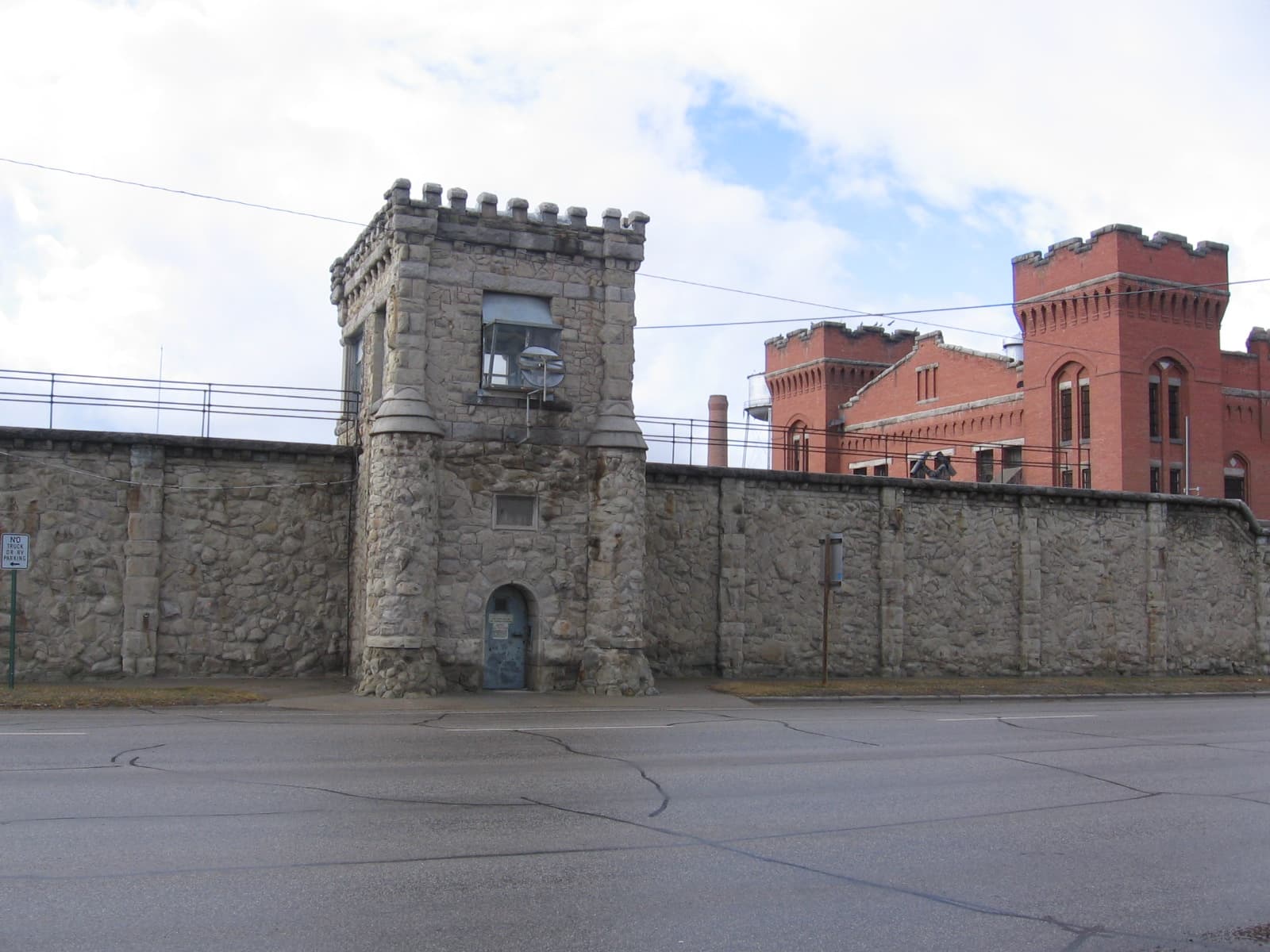
The people confined inside Deer Lodge’s prison helped build the walls that kept them there.
Old Montana State Prison in Deer Lodge began holding prisoners in 1871 and remained in use until 1979. Today, the Old Prison Museum offers authorized access to its historic compound. Visitors can examine cells, exhibits and surviving architecture without treating the site as an unguarded ruin.
The stone towers make a strong first impression. The deeper story lies in the labor, rules and lives that gave those walls their meaning.
A prison older than the state
Montana was still a territory when the prison received its first inmate on July 2, 1871. The museum’s historical account places that moment at the beginning of more than a century of incarceration on the site.
Montana became a state in 1889, but the prison continued serving the same basic public function. Its institutional history crossed the boundary between territorial and state government.
That long life helps explain why the compound contains buildings from different periods. The site grew and changed rather than emerging fully formed in one construction campaign.
An old prison can look like a single fortress from the street. Inside, the arrangement of yards, cells and supporting buildings reveals a more complicated working place.
The labor in the walls
Incarcerated people built substantial portions of the compound. The museum describes inmates making bricks, quarrying stone, cutting timber and producing materials for construction.
This detail changes the way a visitor might look at masonry. A wall was both a security barrier and the product of the labor of people held behind it.
The National Register documentation traces the prison’s development and the influence of warden Frank Conley.
His era left a strong physical mark on the site. Yet architecture cannot be separated from the conditions under which it was created.
A useful question during a visit is not only “How old is this building?” but also “Who built it, and what choices did they have?”
That question brings the scale of the compound back to individual people.
Life followed rules, records and routines
The museum preserves evidence of daily prison life, including photographs, logs, restraints and objects made by prisoners.
Such material can reveal a world organized around permission. Movement, work and personal appearance could all be controlled.
A cell offers one kind of evidence: restricted space and a barrier between the occupant and the corridor. A written rule offers another: how authorities expected that space to be used.
Read both together. Physical surroundings alone cannot explain every aspect of confinement, and a formal rule does not necessarily describe how it was enforced.
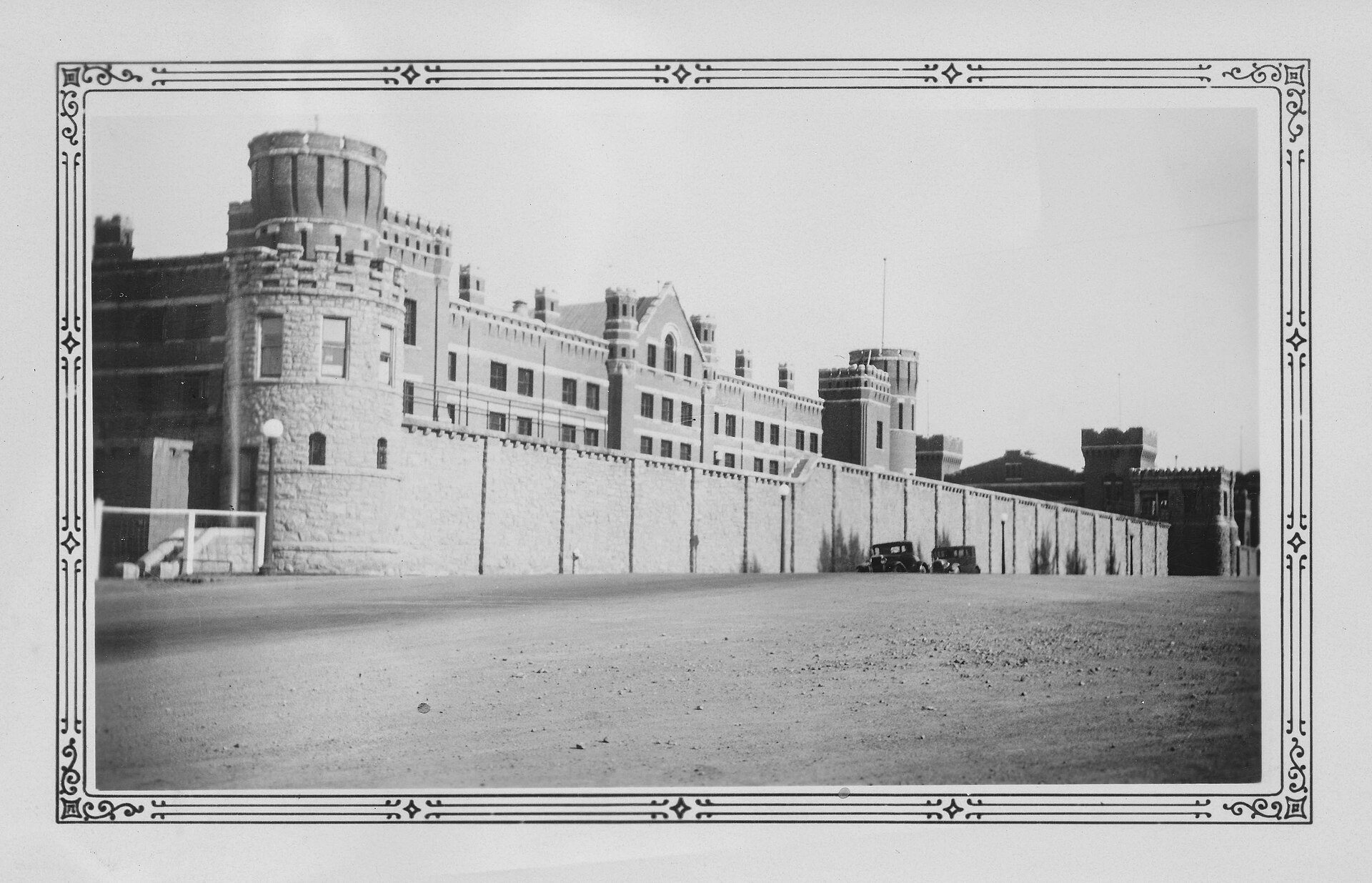
The historical photograph in this article shows an earlier arrangement of the prison buildings. Its original date is not established in the source caption; the modern scan should not be mistaken for a recent view.
Comparing it with the surviving compound makes the losses and additions easier to recognize.
The crisis of 1959
The prison’s history included severe overcrowding, inadequate funding and outdated facilities. The museum foundation’s overview connects these problems with the violent riot of April 1959.
Deputy Warden Ted Rothe was killed, and staff and inmates were held hostage. The event brought national attention to conditions inside the prison.
The American Archive of Public Broadcasting’s account preserves a later public-radio treatment of the riot and its wider significance.
It is a major part of the site’s story, but it should not overwhelm the decades around it. Most institutional life consisted of routine, restriction and work rather than a single dramatic confrontation.
The riot is best understood as an event within a troubled system, not simply an exciting episode to reenact.
Why the old prison closed
By the 1970s, Montana was developing a replacement prison outside the old downtown compound. The final prisoners moved in 1979, according to Visit Montana.
The transfer ended the site’s use for incarceration. It did not end the state’s prison system.
That distinction matters for visitors searching directions. The historic museum and the operating Montana State Prison are different destinations.
The old compound’s survival gave Deer Lodge a chance to preserve a difficult part of its history. A building designed to limit movement became a place where visitors could move through and ask questions.
Visiting the Old Prison Museum
The museum’s visitor page provides current hours, admission information and seasonal arrangements. Check it before traveling, especially outside the main tourist season.
The museum complex includes other collections, including the Montana Auto Museum. Allow time according to your interests rather than treating the prison as a quick roadside photograph.
Follow the marked route and staff directions. Historic stairs, cell areas and uneven surfaces may affect access, so ask about mobility needs ahead of time.
The operator also offers separate evening and paranormal events. Those are different experiences from a daytime historical visit.
Ghost stories should remain identified as claims. The documented history of imprisonment, labor and reform already gives the setting considerable weight.
Leaving the compound means stepping back into an ordinary town street. That short distance between confinement and everyday life may be the visit’s most memorable contrast.
Frequently asked questions
When did Old Montana State Prison operate?
The Deer Lodge compound held prisoners from 1871 until 1979.
Can you visit legally?
Yes. The historic compound operates as the Old Prison Museum, with admission and visitor rules.
Is it the same as the current Montana State Prison?
No. The operating prison is a separate facility. Use the museum’s directions for a historic visit.
Did inmates build the prison?
Yes. Incarcerated people performed substantial construction work and produced materials used in the compound.
Image credits
Featured image: Tanankyo, Public domain. Body image: simpleinsomnia, CC BY 2.0. Images via Wikimedia Commons.

