For years, an empty amusement park stood as one of Hurricane Katrina’s most visible unfinished stories.
Six Flags New Orleans opened as Jazzland in 2000 and never reopened after Hurricane Katrina in 2005. Demolition began in 2024 as the former park moved toward redevelopment. Its famous abandoned rides should now be understood through dated photographs, not as an intact attraction visitors can explore.
The site’s future is associated with Bayou Phoenix, but proposed facilities and completed public attractions are different things. That distinction is essential when reading the latest plans.
Jazzland’s Louisiana beginning
Jazzland opened in New Orleans East in 2000. Its identity drew on Louisiana’s culture rather than presenting a park that could have stood anywhere.
A contemporary Travel Weekly preview described themed areas, music facilities, shops and group-event spaces. The ambition extended beyond roller coasters.
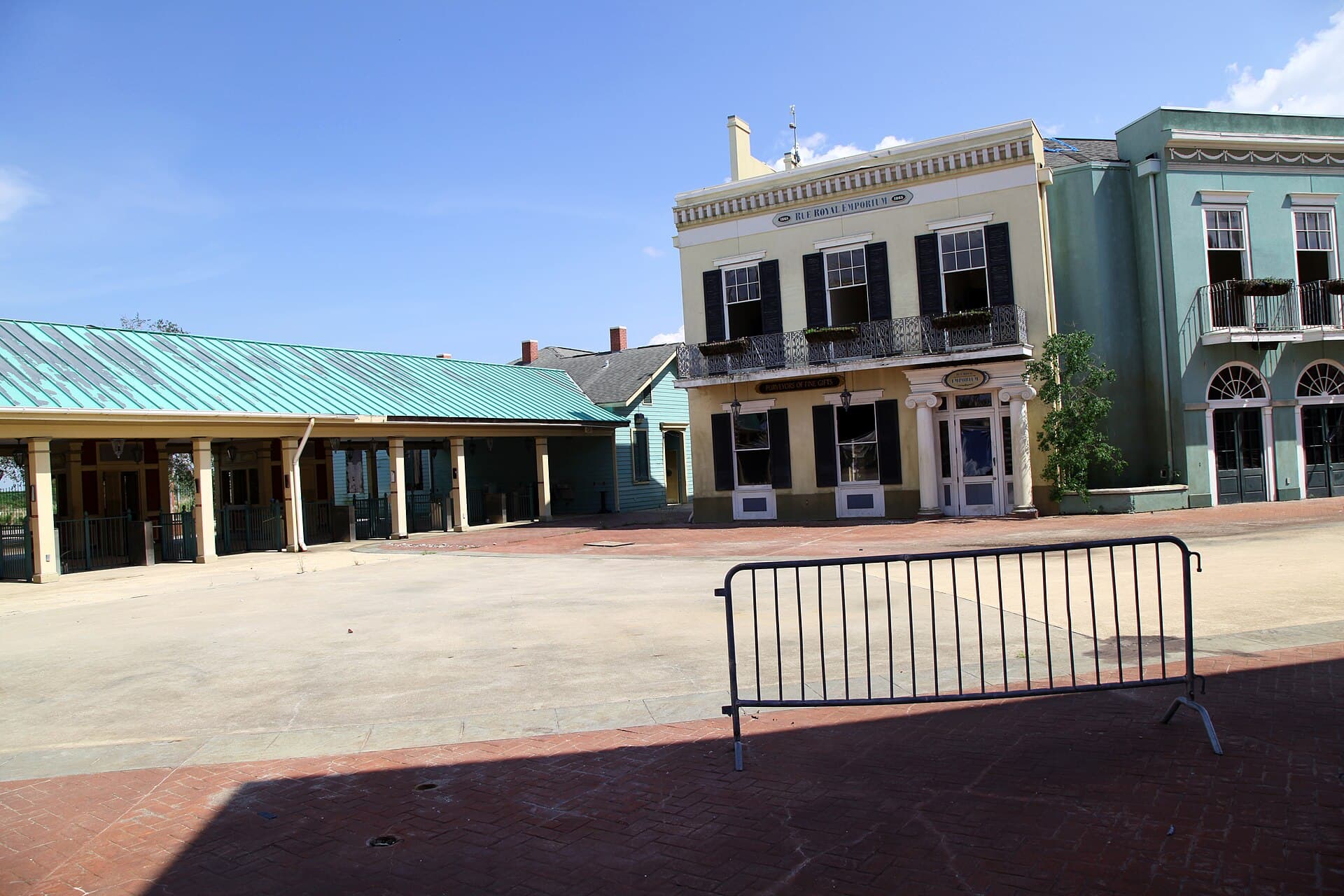
The entrance area’s buildings recalled a familiar New Orleans streetscape. That choice gave visitors a recognizable setting before they reached the larger rides.
The city’s official site history records the project’s early financial difficulties and the later arrival of Six Flags.
The company took over after Jazzland’s bankruptcy. The park reopened under the Six Flags name in 2003, with new investment and attractions.
A second beginning cut short
A 2003 WAFB report described the new Batman coaster and the investment accompanying the relaunch.
At that moment, the park represented a fresh attempt to make a major entertainment destination work in eastern New Orleans. Families were arriving for operating rides, not a future landmark of abandonment.
That short timeline makes the later photographs especially striking. The place was still relatively young when disaster changed its future.
It had not slowly aged out of relevance over generations. Its working life ended after only a few seasons, leaving a large amount of recognizable infrastructure behind.
What Hurricane Katrina did
The park closed ahead of Hurricane Katrina in August 2005. Flooding caused severe damage, and Six Flags never resumed operations there.
The city’s historical account describes standing floodwater and the difficulties that followed. Recovery involved more than cleaning visible mud from pathways.
An amusement park depends on electrical systems, mechanical equipment, buildings and inspected rides operating together. Damage across that system can make reopening far more complex than a photograph suggests.
This was also part of a much larger catastrophe. The park’s abandoned appearance should not overshadow the losses suffered by New Orleans residents and communities.
Its importance came partly from what it represented: another promised return to normal life that did not happen.
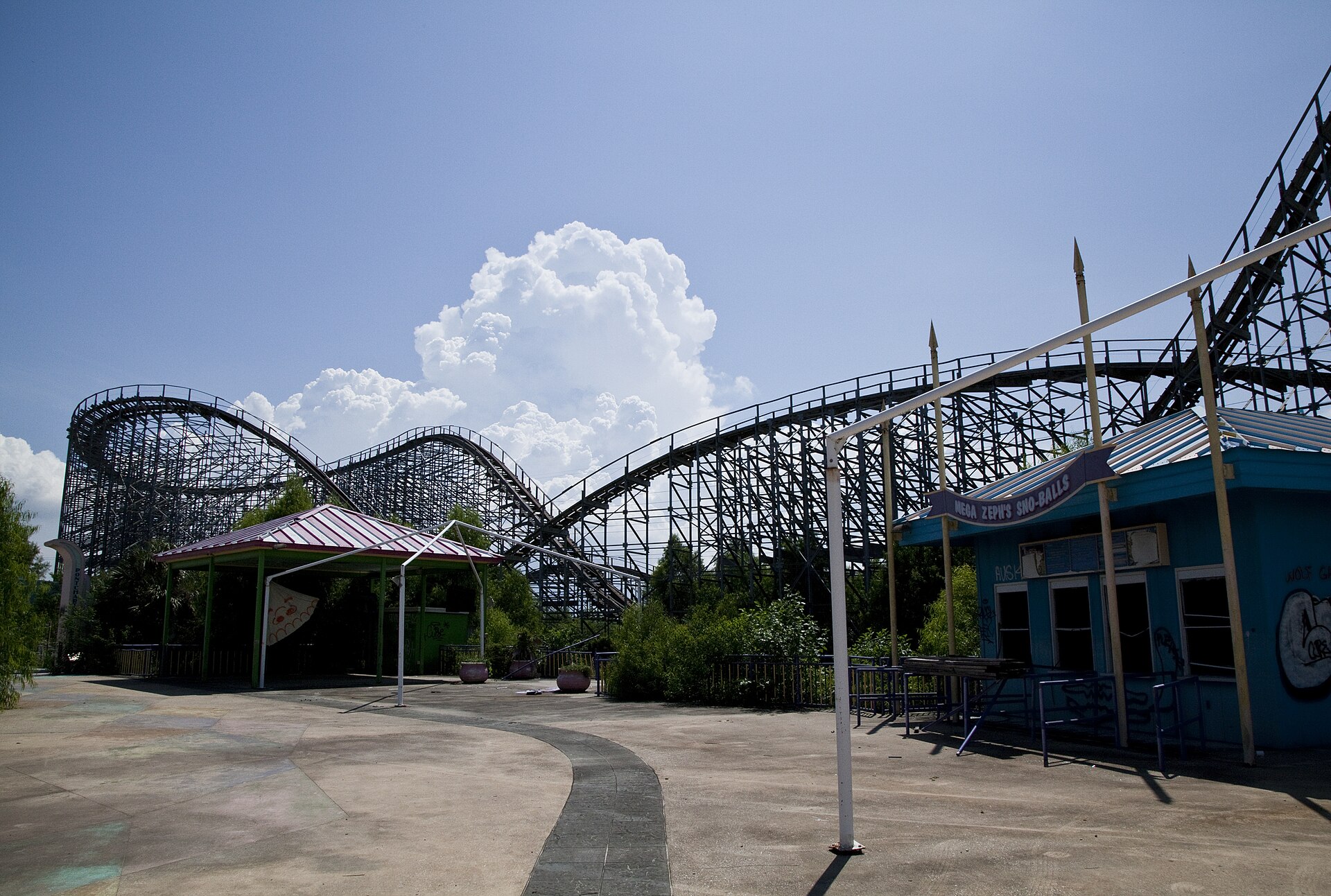
The roller-coaster photograph dates from 2011, before the recent demolition program. It records a past stage of the site’s condition.
Why the empty park became so memorable
Amusement parks are designed around movement, sound and crowds. When those disappear, even familiar objects can look unsettling.
A queue without riders and a ticket window without staff reverse the purpose of the place. The contrast is immediately understandable, even to someone who never visited Jazzland.
The featured photograph shows the entrance area in 2011. Its colorful facades still suggest an invitation, while the empty space tells a different story.
These images became part of the park’s afterlife. They preserve details that redevelopment may remove, but they also need careful captions.
An old picture cannot establish what remains standing today. Nor does a photographer’s past access establish permission for another person to enter.
Demolition and the Bayou Phoenix plan
The New Orleans Redevelopment Authority documented complications during demolition, including a dispute over scrap materials and contractor arrangements.
That record shows why announced completion dates should not be treated as accomplished facts. Large redevelopment projects can change direction or encounter delays.
Bayou Phoenix’s project website presents a vision involving recreation, entertainment and other commercial uses. Its 2026 materials describe planned partners and facilities.
A 2026 update carried by NORA identified a proposed studio operation as an intended early tenant.
These are development milestones and expectations, not evidence that a replacement theme park is open. The old Six Flags operation has not returned.
What the plans mean for visitors
Do not plan a walk through the abandoned park. It is a controlled redevelopment site, and demolition has changed the landscape shown in older videos.
The city’s FAQ explains that special access requests go through the responsible public authority. Casual curiosity does not substitute for authorization.
If your interest is the history, use archival photographs, contemporary opening reports and official redevelopment updates. Together they provide a clearer timeline than a collection of undated exploration posts.
For any future attraction, wait for an operator’s confirmed opening and visitor information before making travel plans around it.
The most useful question has changed. Instead of asking which rides are still rusting behind the fence, it is now worth asking what the land can contribute to the surrounding community.
Jazzland’s history began with that promise. Whatever comes next will be judged by whether it delivers.
Frequently asked questions
Is Six Flags New Orleans open?
No. It never reopened after Hurricane Katrina in 2005.
Was it originally called Jazzland?
Yes. Jazzland opened in 2000, before the Six Flags takeover and 2003 relaunch.
Are all the abandoned rides still there?
Do not rely on older photographs. A demolition program began in 2024 and has substantially changed the site.
Is Bayou Phoenix a reopened Six Flags park?
No. It is a separate redevelopment project. Proposed facilities should not be confused with operating attractions.
Image credits
Featured image: gonzo_vision, CC BY-SA 2.0. Body image: gonzo_vision, CC BY-SA 2.0. Images via Wikimedia Commons.

