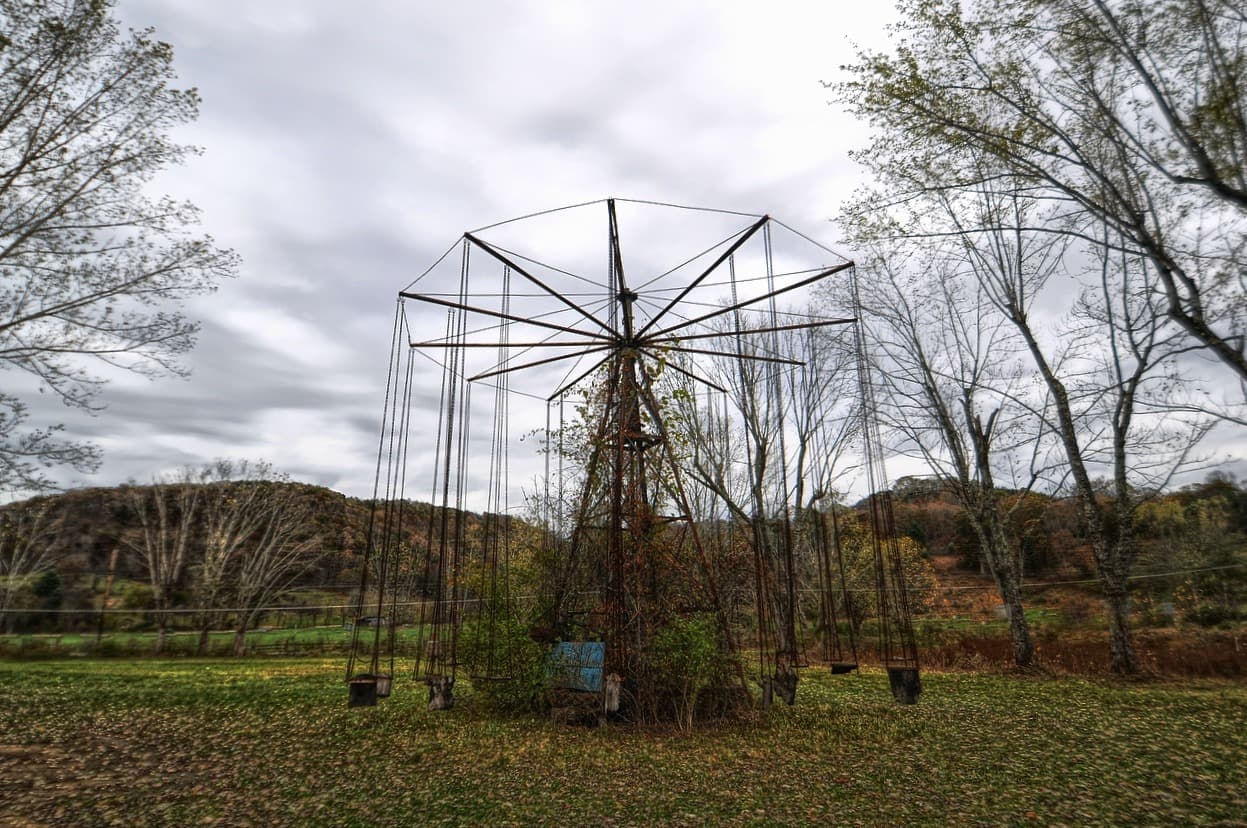
A silent Ferris wheel can make a forgotten summer feel unexpectedly close.
Lake Shawnee Amusement Park in Mercer County, West Virginia, began welcoming visitors in 1926. Its original amusement-park era ended in the 1960s, followed by a brief later revival. Today, the privately managed property offers history and photography visits by appointment, along with separate paranormal experiences.
The abandoned rides are the familiar image. The fuller story connects recreation, local families, older histories of the land and the way legends grow around places that stop being used.
A place for families to spend a day
Conley T. Snidow developed the amusement park beside Lake Shawnee. The operator’s history describes a destination that drew coal miners and their families from the surrounding area.
That social role is easy to overlook. Before the rides became symbols of decay, they were part of ordinary leisure: a break from work, a gathering place and a reason to spend time outside.
A WOAY television account dates the opening to 1926 and describes roughly four decades of operation.
The park belonged to a smaller, local kind of amusement landscape. Its appeal did not require a giant resort or a nationally recognized brand.
Thinking of the site that way makes its surviving machinery more poignant. An old seat was once simply a seat someone hoped would be available next.
Why the closure story needs care
Lake Shawnee’s ending is often reduced to a single frightening explanation. The available accounts are more complicated.
Tourism histories commonly place the first closure in 1966. A research account drawing on contemporary newspaper reports records a July 1967 health-department order stopping recreational activities until regulations were met.
Those dates should not be forced into a neat story without acknowledging the difference. The safest broad description is that the original park ceased operating in the 1960s.
The property later saw a short revival in the 1980s. That also complicates claims that it remained completely untouched after its first closure.
Accidents and deaths appear in accounts of the park, but repeating dramatic details requires stronger evidence than a frequently shared ghost story. A documented safety or health issue is not evidence of a curse.
What the surviving rides communicate
The Ferris wheel and swings are among Lake Shawnee’s most recognizable remains. Their shapes still explain what they were designed to do.
The loss of movement changes the effect. Chains hang without riders, and the structure of a wheel becomes more visible when its seats are still.
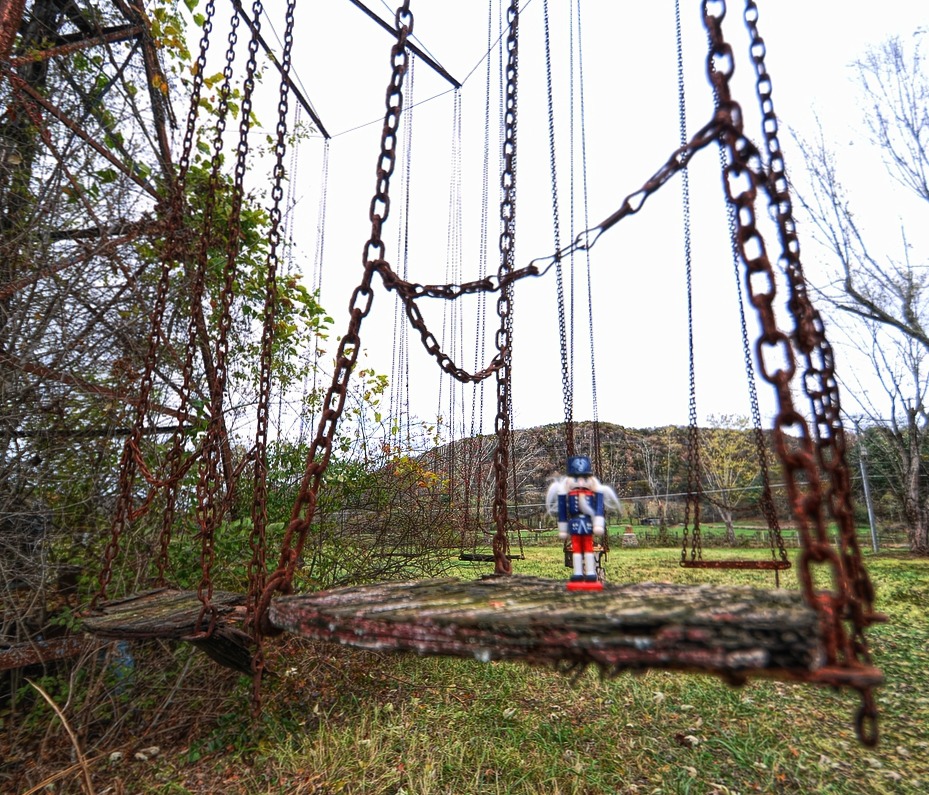
The supporting photograph shows an old swing seat in 2013. It records the ride as a surviving object, not as equipment available for use.
Do not climb, sit on or try to move the abandoned rides unless the operator specifically permits an activity. Age and appearance are not reliable measures of structural safety.
For photography, the details can be as revealing as the whole scene. Weathered paint, repeated metalwork and the relationship between rides and water tell a story without adding invented events.
The land’s history reaches further back
The amusement park occupied land with a much older human history. The operator discusses archaeological discoveries and earlier Indigenous occupation, as well as the Clay family’s eighteenth-century history.
These subjects deserve separate attention from the park’s haunted reputation. Burial places and archaeological evidence are not proof of supernatural activity.
The Clio history entry provides references for further reading, including archaeological literature. Such sources are more useful for understanding the land than treating every old burial as part of a horror plot.
A responsible account should also avoid assigning all people who lived here across centuries to one modern tribal identity without evidence.
The place can hold several histories at once. They do not have to be compressed into a single legend to be meaningful.
History tours and paranormal experiences
The official website distinguishes daytime photo-and-history tours from overnight experiences. It states that all visits are by appointment.
That makes Lake Shawnee different from an unmanaged site someone discovers beside a public road. There is a person to contact and an authorized way to arrange access.
The property also hosts seasonal entertainment. Confirm which experience you are booking, because a daytime history visit and a Halloween event serve different purposes.
Paranormal reports should be understood as claims made by visitors or operators. They may be part of the site’s modern cultural story, but they are not verified explanations for its past.
You can be curious about those stories while keeping a clear line between testimony, folklore and established events.
Planning a thoughtful visit
Use the official booking information for the property at 470 Matoaka Road in Rock, near Princeton. Do not confuse it with Lake Shawnee recreation areas in other states.
The visitor FAQ says the experience is largely outdoors and involves walking. Dress for weather and ask about terrain or accommodations before booking.
Photography is encouraged during authorized visits. Follow the guide’s instructions about where to stand and what may be touched.
Treat burial areas with particular care. Leave objects and ground surfaces undisturbed, and avoid using memorial places as theatrical props.
Lake Shawnee is memorable because familiar pleasures have become still. Its history becomes richer when the people who came for those pleasures remain visible behind the rust.
Frequently asked questions
Are the rides operating?
No. The surviving amusement rides are historic remains, not functioning attractions.
Can you visit without an appointment?
The operator says all visits require an appointment. Arrange access directly.
When did the park first open?
It opened in 1926 under Conley T. Snidow.
Are the haunting stories proven?
No. Paranormal reports and folklore should be distinguished from documented history and archaeology.
Image credits
Featured image: Forsaken Fotos, CC BY 2.0. Body image: Forsaken Fotos, CC BY 2.0. Images via Wikimedia Commons.

