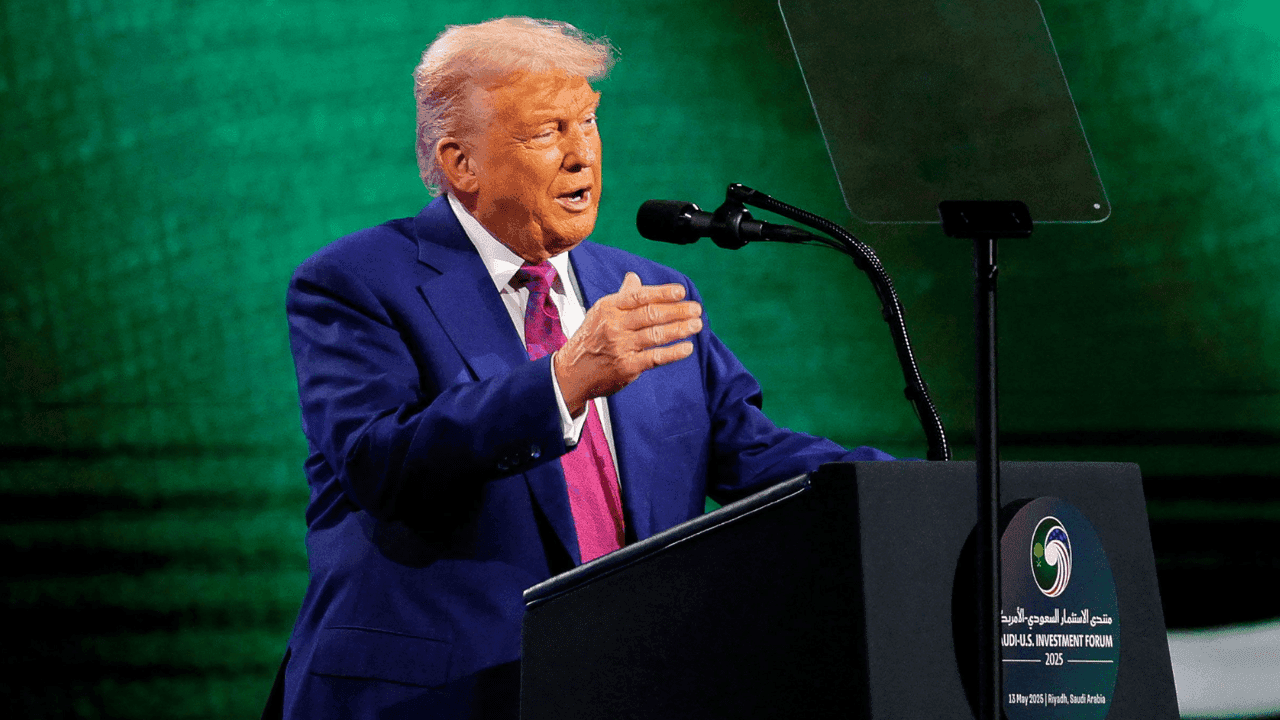
In a surprising move that could reshape Middle Eastern geopolitics, President Donald Trump has declared the cessation of American-imposed sanctions on war torn Syria. Speaking at the Saudi-U.S. Investment Forum held at the King Abdulaziz International Conference Center in Riyadh, Trump offered Syria a chance at reclaiming its former greatness by removing economic barriers to its development.
Trump’s announcement is part of a broader strategy to strengthen ties with key regional players such as Saudi Arabia. During his speech, he highlighted the potential for Syria to follow in Saudi Arabia’s footsteps toward economic prosperity, aligning with visions of business growth and technological advancement. His remarks were received with enthusiasm by Mohammed bin Salman, the Crown Prince of Saudi Arabia, who appeared visibly gratified by the acknowledgment.
The move to lift sanctions comes amidst changes in Syrian leadership following the overthrow of Bashar al Assad. The U.S. administration will reportedly seek to normalize relations with Syria’s new government and pave the way for international collaboration and reconstruction efforts.
Economic implications of this decision are vast, especially considering the potential influx of investment that could follow a normalized international stance towards Syria. Trump’s initiatives seemingly favor strategic economic partnerships over previous diplomatic tensions. This shift in policy marks a stark contrast to the approach taken by former President Joe Biden, whose administration had stringent views on Saudi Arabia following the murder of journalist Jamal Khashoggi.
Furthermore, Trump engaged in dialogue with several high-profile business leaders, including Elon Musk and other prominent executives from companies like Palantir, Uber, Google, and Amazon, emphasizing the opportunities for technological innovation in the region. Discussions at the forum culminated in a groundbreaking $600 billion investment agreement signed between the U.S. and Saudi leaders.
Critics of Trump’s policy change warn that lifting sanctions might alleviate pressure on Syria but must be accompanied by significant political reforms within the country. However, supporters argue that this strategic realignment could foster an environment conducive to reducing regional tensions and promoting economic development.
Whether this diplomatic maneuver will yield the envisioned outcomes remains to be seen. Yet, the impact of Trump’s declaration ripples across the international stage, reshaping the narrative around Middle Eastern geopolitics for years to come and raising questions about the future role of the United States in fostering peace and stability in the region.