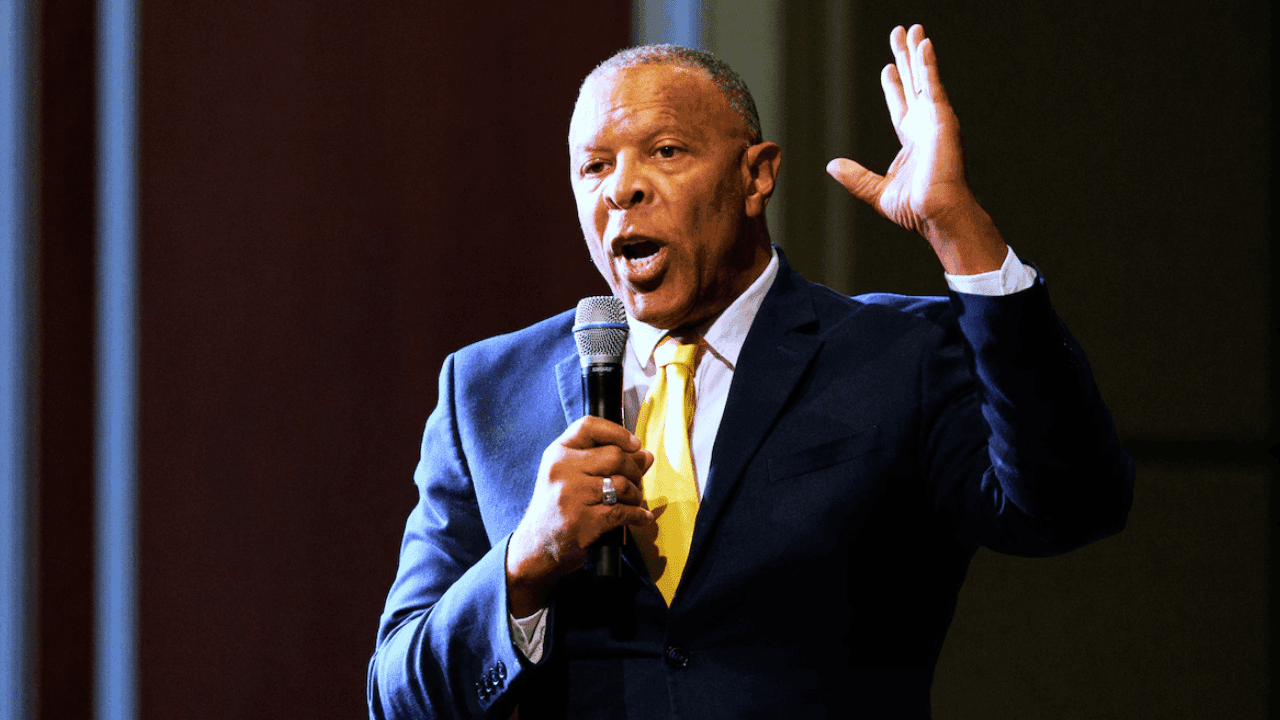
In a historic election that has captured national attention, John Ewing Jr. has been elected as Omaha’s first Black mayor, pulling off a significant upset against three-term incumbent Mayor Jean Stothert. Ewing’s victory marks a pivotal moment in Omaha’s political landscape and represents a broader shift in Nebraska politics. This election was not just a local affair; it was a high-stakes contest influenced by national sentiments, particularly the impact of aligning with unpopular political figures like President Donald Trump.
Ewing, a long-standing public servant with roles such as the Douglas County Treasurer and former Omaha deputy police chief, ran a campaign that resonated deeply with the diverse and evolving demographics of Omaha. His election signifies a shift towards inclusive representation, where voters are increasingly motivated by shared community values over partisan loyalties.
This election was closely watched as Omaha is a critical ‘blue dot’ in an otherwise conservative state. The city’s political dynamics have often mirrored national trends, making this victory particularly significant. Democrats aimed to associate Stothert with Trump’s policies, which proved advantageous amid growing economic uncertainties and a nationwide pushback against such political affiliations. Ewing capitalized on this by focusing his campaign on local issues that matter to Omaha residents, such as economic development, public safety, and urban revitalization.
The election results also served as a litmus test for the Republican hold in urban areas of the Midwest, historically not only dominated by conservative governance but also seen as indicators for future national campaigns. Ewing’s win points to a broader acceptance of Democratic ideologies, especially in urban areas that are diversifying in both culture and political priorities.
Despite Stothert’s long-standing influence and historical achievements as Omaha’s first female mayor, her association with Trump’s policies proved to be a liability in this election. The shift reflects growing discontent with the current Republican strategies, particularly among younger and more diverse voter groups who are demanding change in governance approaches.
Ewing’s campaign drew significant support from these demographics, emphasizing a message of unity and progress. “This victory is for every resident of Omaha who wishes for a city that works for all, not just some, ” Ewing declared in an emotionally charged acceptance speech. His triumph underscores the power of grassroots movements and the increasing impact of community-led political change.
Looking ahead, Ewing’s administration is expected to focus on fulfilling campaign promises centered around better infrastructure, accessible housing, and strengthening public services. His leadership could pave the way for further Democratic gains in Nebraska, setting the stage for upcoming elections and potentially reshaping the political map in historically Republican territories.
This victory not only brings hope to progressive movements within Nebraska but also serves as an inspiration to Democratic strategists nationwide, highlighting the potential to harness local sentiments to overcome entrenched political landscapes. For Omaha, this represents a new chapter where diversity and a focus on shared community values will lead the way.