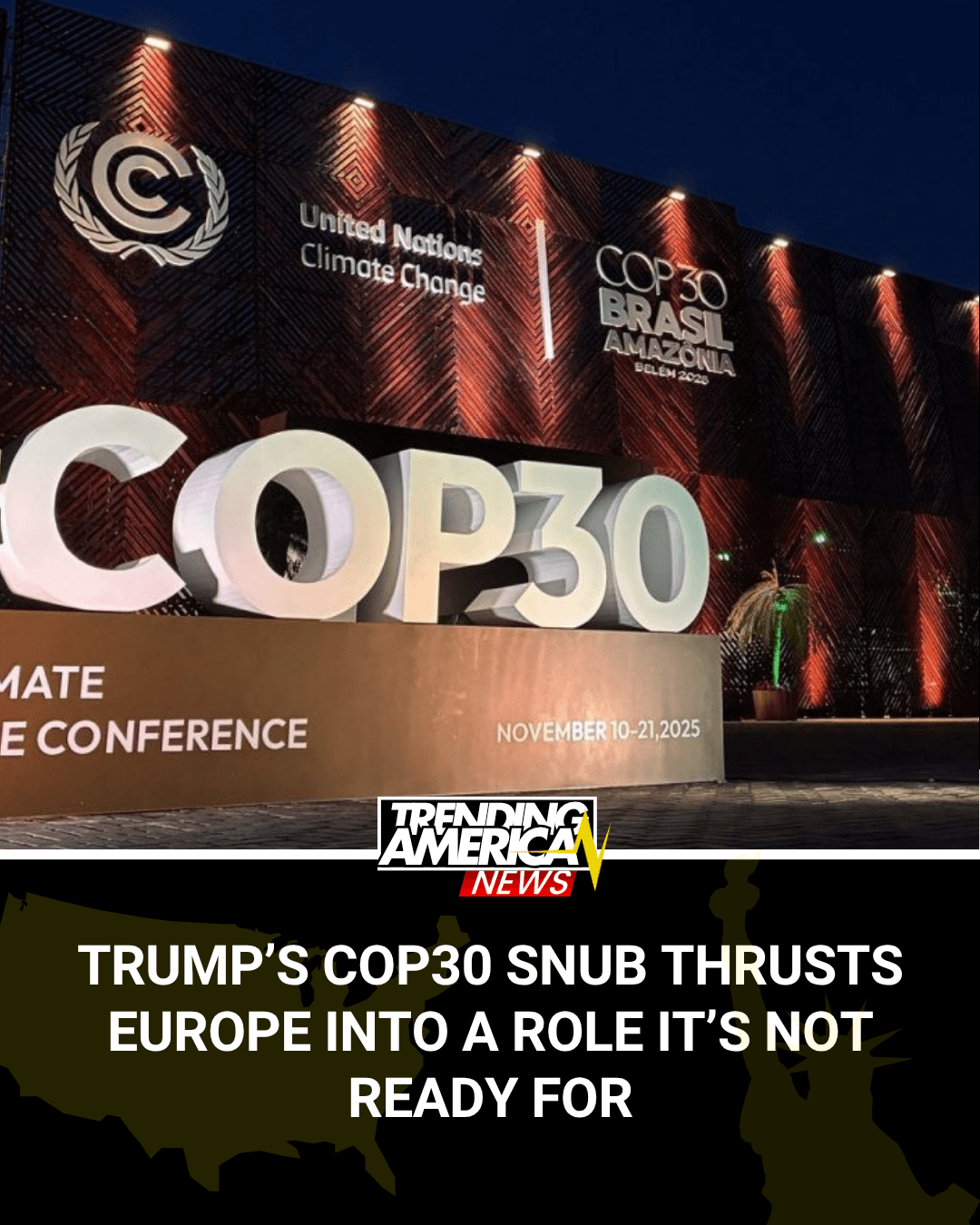
When Donald Trump decided to skip the COP30 climate summit, it left a conspicuous gap in international diplomacy. Traditionally a US stronghold, the European Union was left unexpectedly thrust into the leadership void. But is Europe prepared?
Taking place in Belém, Brazil, the summit has the EU grappling with the absence of America’s diplomatic shield. “Being the bad cop isn’t a role that comes naturally to the EU,” noted a senior EU negotiator. Domestic squabbles and weakened green policies further complicate their new leadership role.
Tensions rise as major polluters like China announce less aggressive targets for 2035, a stark contrast to the EU’s ambitious climate goals. The EU criticized China’s target reductions, leading to accusations of hypocrisy, heightening diplomatic rifts.
Europe’s internal challenges, driven by political changes and tactical negotiations, expose its vulnerabilities. Without the US to assist, the EU faces intensified pressures on trade and emissions issues—a delicate dance of diplomacy without its usual partner.
Trump’s absence has done more than raise eyebrows; it has shifted global dynamics, placing the EU in an unanticipated spotlight. As the summit unfolds, the question remains—can Europe truly lead the global charge against climate change without the American powerhouse in tow?