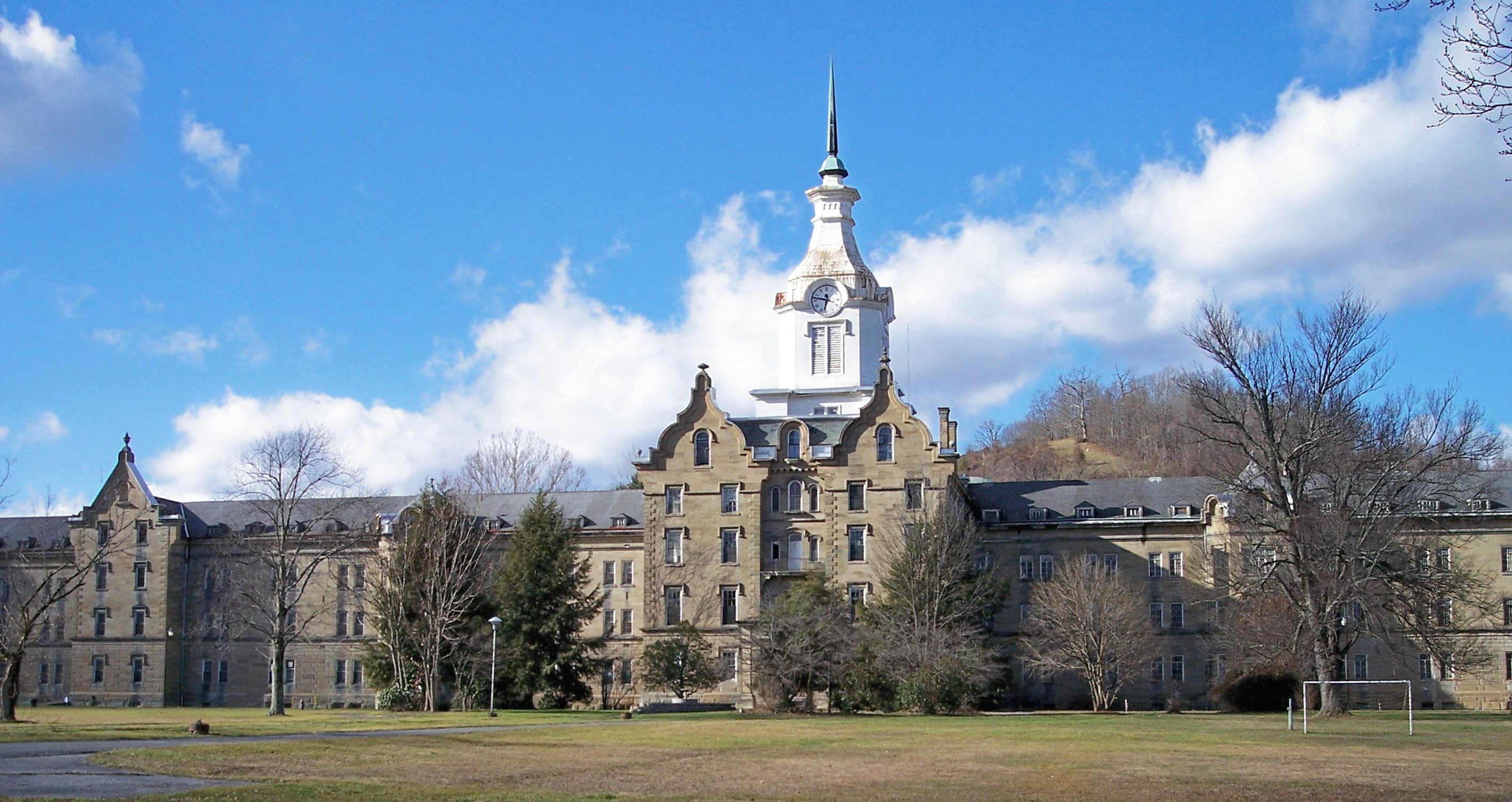
The stone wings were built to offer hope. Their history reveals how hard that promise was to keep.
The Trans-Allegheny Lunatic Asylum in Weston, West Virginia, is a former psychiatric hospital that treated patients from 1864 to 1994. Today, the privately owned National Historic Landmark offers organized history tours and separate paranormal experiences. Its historic name remains the attraction’s name, although that language is no longer appropriate for describing people with mental illness.
The building is striking, but the most important story belongs to those who lived and worked inside it. Understanding their world makes a visit more meaningful than simply walking through empty rooms.
A hospital that crossed a state line without moving
Construction began in 1858, when Weston was still part of Virginia. The Civil War interrupted the project, and West Virginia became a state before the first patients arrived. The West Virginia Encyclopedia records the first admissions on October 22, 1864.
That timing gives the place an unusual connection to national history. A project authorized by one state became a major public institution in another. Its unfinished walls witnessed a change in government as well as a war.
Architect Richard S. Andrews designed the immense main building. Construction continued after the hospital opened, so the opening date and completion date describe different stages of its life.
The institution later became known as Weston State Hospital. That name is useful when searching archives, old photographs and family records.
Why the wings stretch so far
The site’s historical account explains that the design followed the Kirkbride Plan. Long, staggered wings were intended to bring natural light and fresh air into patient rooms.
The idea was ambitious: surroundings could support recovery. Open space, light and an ordered routine were meant to provide something better than confinement in a jail or poorhouse.
Look at the repeated windows and the relationship between the central section and the wings. These were working parts of a treatment philosophy, not merely decorative choices.
Yet attractive architecture could not guarantee good care. The operator says the hospital was designed for roughly 250 patients but held more than 2,400 by the 1950s. That scale of overcrowding undermined the space and attention the original plan required.
It is a powerful detail to carry through a tour. A large building can still be painfully short of room.
A community behind the walls
Weston was more than a collection of wards. The encyclopedia describes a hospital farm, dairy, waterworks and cemetery. Together, they formed the infrastructure of a large institution with daily needs stretching far beyond medical treatment.
Food had to be produced, water supplied, buildings heated and clothing washed. Nurses, maintenance workers, administrators and other employees kept that system running.
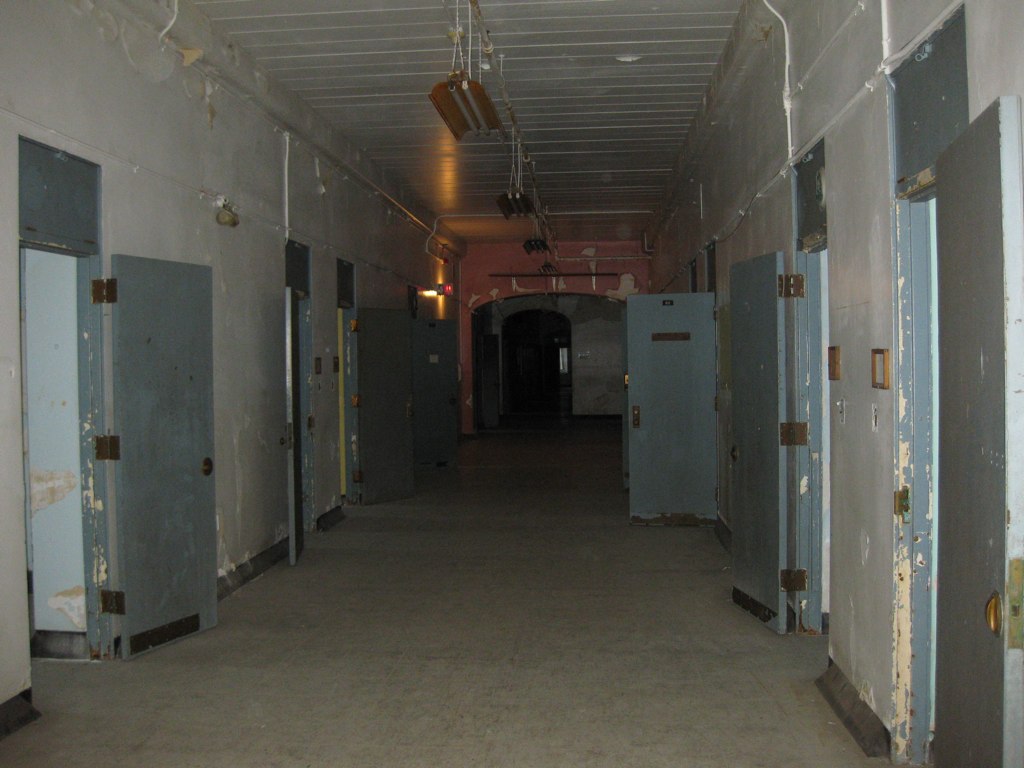
Thinking about those ordinary tasks changes the view of a corridor. It becomes a place where people moved between work, meals, treatment and rest, rather than an empty stage for frightening stories.
The historical record also includes harmful treatment. The encyclopedia documents lobotomies carried out during the West Virginia Lobotomy Project in the early 1950s. These facts deserve clear explanation without turning individual patients into curiosities.
Why Weston State Hospital closed
The hospital closed in May 1994, and the newer William R. Sharpe Jr. Hospital replaced it in Weston. This was a transfer of psychiatric services, not the disappearance of the need for care.
The old complex then faced the question shared by many enormous institutions: what could sustain buildings designed for a purpose they no longer served?
Its current role as a visitor attraction keeps people coming through the doors. It also creates a responsibility to explain the history accurately. A visitor should be able to distinguish a documented event from a guide’s anecdote or a paranormal claim.
The official website markets both historic and ghost-focused visits. The existence of the latter is evidence of a tourism offering, not scientific evidence of haunting.
How to visit for the history
Choose a heritage and history tour if your main interests are architecture, hospital life and changing treatment practices. The operator specifically says its historic tours do not include paranormal information.
For 2026, the published historic-tour season runs from March 28 through November 8. Check the current calendar before traveling, especially around the end of that season. Different tour types cover different areas and require different amounts of time.
Wear comfortable shoes and dress for the weather. The operator warns that interior temperatures can be hot in summer and cold in winter. Ask ahead about stairs, accessible routes and any limits affecting your group.
Visit through the official arrangements. A ticket for one experience does not provide unrestricted access to the property.
The strongest impression may be the simplest: all those windows once belonged to occupied rooms. Remembering that gives the stone building its human scale again.
Frequently asked questions
Is the Trans-Allegheny Lunatic Asylum still a hospital?
No. Hospital operations ended in 1994. The historic complex now operates as a privately owned visitor attraction.
Can you visit without taking a ghost tour?
Yes. The operator offers separate historic tours focused on the site’s history, architecture and treatment practices.
Where is the asylum?
It is in Weston, West Virginia. Use the attraction’s official location and visitor information when planning your route.
Are the ghost stories proven?
No verified historical record establishes paranormal activity. Treat supernatural accounts as claims or folklore, separate from documented hospital history.
Image credits
Featured: Tim Kiser (w:User:Malepheasant), CC BY-SA 2.5. Body: Richie Diesterheft from Chicago, IL, USA, CC BY 2.0.

