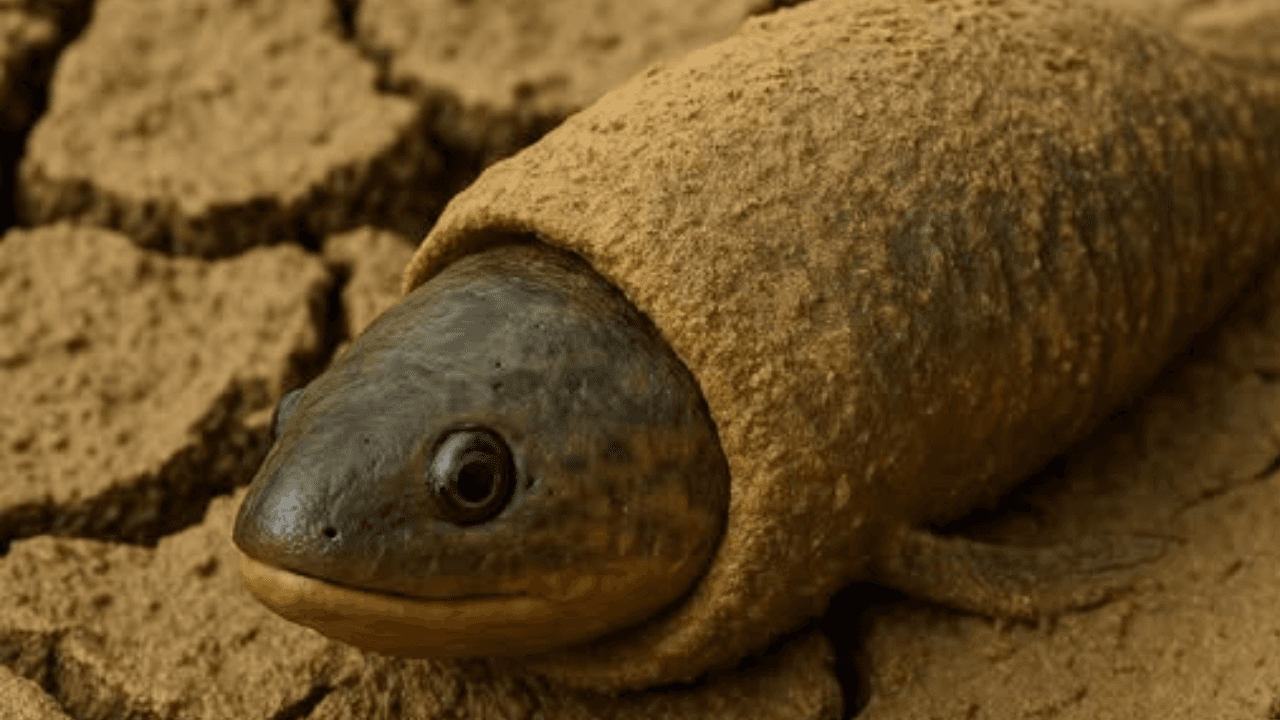
In the heart of West Africa, where rivers can vanish under the searing sun, an extraordinary survivor thrives: the West African lungfish. This remarkable creature, known to locals as the ‘mudfish,’ has a survival strategy that defies logic. During long dry seasons, it buries itself deep in the mud, crafting a protective mucus cocoon. Inside this self-made sanctuary, it slows its metabolism, entering a state of dormancy known as aestivation.
While other fish would perish without water, the West African lungfish remains alive and well in its hardened cocoon, sometimes for up to three and a half years. Imagine that! As the waters recede, the lungfish uses its two lungs to breathe air, allowing it to survive in an environment where most other animals would be doomed. With a unique blend of resilience and adaptability, it has captured the attention of scientists and nature lovers alike.
‘The lungfish can drastically reduce its metabolic rate, entering a state of suspended animation,’ says marine biologist Dr. Kofi Asante. This state is akin to hibernation but occurs during the blistering heat of summer. By encasing itself in mud, it minimizes water loss, almost like a natural refrigerator.
But here’s the twist: while in this mire, the lungfish not only survives; it thrives on its own resources. It digests tissues in its own tail, providing crucial nutrients to sustain it. This self-cannibalism is an astonishing adaptation to a harsh fate. The very muddy prison that conceals it also nourishes it, showcasing nature’s remarkable ingenuity.
As the rains begin to fall and the rivers swell, the lungfish awakens from its slumber. Emerging from the depths of its cocoon, it resumes its life in the water—eager to feast after years of starvation. The sheer resilience of this fish tells us a fascinating story of survival in extreme conditions.
Beyond its extraordinary biology, the lungfish symbolizes hope and tenacity. As ecosystems face the pressures of climate change, this little-known creature demonstrates what’s possible when life hinges on adaptation. It challenges our understanding of survival and highlights the deep connections that exist between organisms and their environments.
What can we learn from the lungfish about enduring hardship? As humans, we are often faced with challenges that may feel insurmountable, yet this fish teaches us that adaptation is key. It’s a reminder that sometimes, the greatest strength lies in the ability to endure—biding our time until the tide turns.
The story of the West African lungfish resonates deeply as we ponder the balance of life in our ever-changing world. If a fish can survive years in suffocating mud, what obstacles could we conquer in our lives?
Disclosure: We may earn a commission when you make a purchase through the ads.