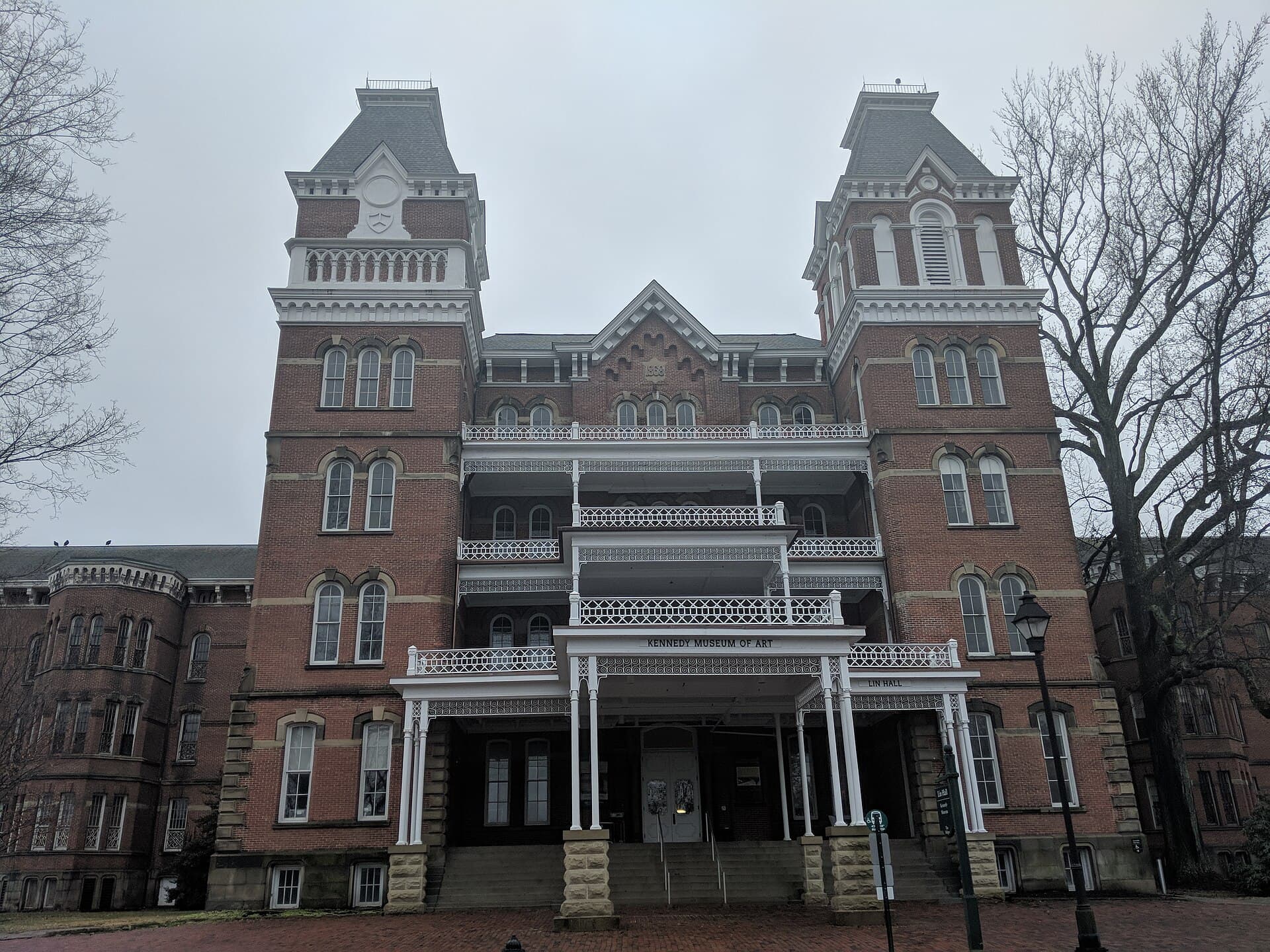
Above Athens, old hospital wings now share the hillside with art, research and walking trails.
The Ridges is the former Athens psychiatric hospital campus in Athens, Ohio. The hospital opened in 1874 and its last patients left in 1993. Today, Ohio University uses many of the buildings, while other areas are part of an ongoing preservation and redevelopment effort.
It is a place where an abandoned-asylum label can be especially misleading. The past is present in the architecture, but the campus also has an active daily life.
A hospital on the hill
The university’s historical overview describes the institution’s beginnings in the nineteenth-century movement to provide more humane surroundings for people with mental illness.
Its main building followed the Kirkbride Plan. Rather than one undivided block, the design used a central section and wings arranged to provide light, air and access to outdoor space.
The asylum opened in 1874. Its hillside setting separated it from the center of Athens while placing it within the town’s wider landscape.
That location still shapes the experience of the site. Brick buildings, lawns and wooded slopes create a different atmosphere from the streets across the Hocking River.
The design embodied a belief that place could help people recover. Its later history shows how treatment ideals changed, and how the demands placed on large institutions could outgrow their original plans.
More than a single building
The Ohio University Libraries research guide describes a self-sustaining institution with a farm and dairy. It also records the many names used during the hospital’s life.
Athens State Hospital, Athens Mental Health Center and Athens Lunatic Asylum can refer to different periods of the same institution. Recognizing those names is essential when looking through old records.
The grounds were part of the working hospital. Food production, outdoor activity and maintenance connected the larger landscape with life inside the wards.
Treatments also changed over time. The library guide identifies physical work, group therapy, hydrotherapy, electroshock treatment and lobotomy among the approaches used during the institution’s history.
These should not be presented as one fixed treatment system that remained unchanged for more than a century. Nor does a list of procedures tell us how every individual patient experienced the hospital.
What happened when patients left?
As the hospital population declined, care moved toward a newer facility. The final patients transferred to nearby Appalachian Behavioral Health Care in 1993.
Ohio University’s account of the campus’s new era explains that full ownership brought both opportunity and substantial maintenance responsibilities.
The central administration building became Lin Hall. Within the university’s first years of full ownership, its first floor was adapted as the Kennedy Museum of Art.
That change is striking: rooms once associated with hospital administration became a setting for public engagement with art. Other buildings found uses in teaching, research and university operations.
Reuse did not happen everywhere at the same pace. The Ridges is best understood building by building, rather than as a campus that was either entirely saved or entirely abandoned.
What is at The Ridges today?
The university’s current campus page lists the Kennedy Museum of Art, Ohio Museum Complex, an observatory, a child development center and academic spaces among the site’s uses.
It also describes a strategy for unused buildings and land, guided by the Ridges New Community Authority. Plans for future development should be read as plans, not as a list of finished attractions.
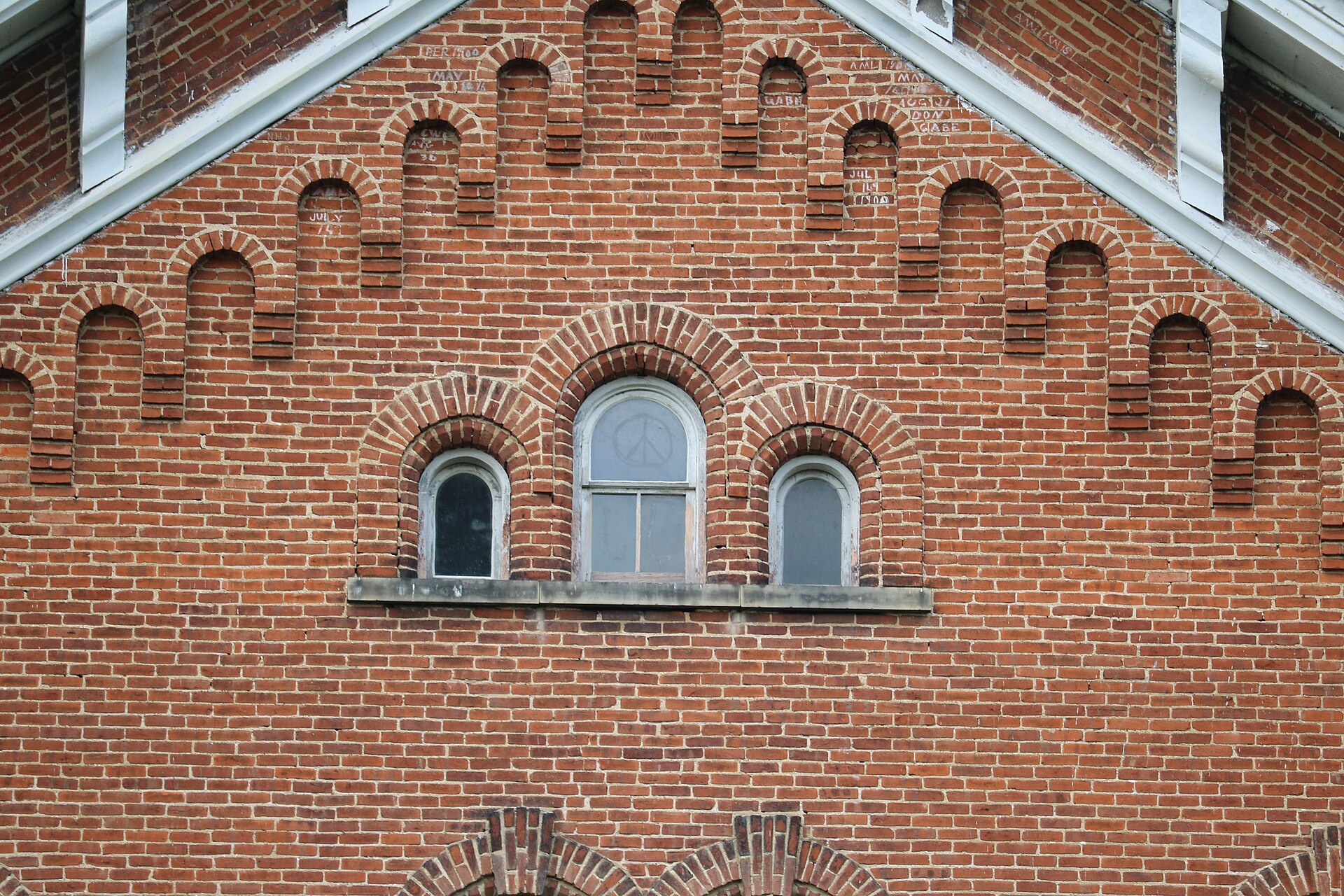
Visitors can see the surviving brickwork and rooflines without assuming that everything behind them remains as it was during the hospital years.
The smaller details are worth attention too: arched windows, patterned masonry and the relationship between separate buildings reveal a campus assembled over time.
Visiting without chasing a ghost story
Begin with the Kennedy Museum of Art and the university’s visitor information. Museum hours, exhibitions and holiday closures can change, so check before setting out.
The university also identifies walking tours, trails, self-guided experiences and public telescope nights as ways to engage with The Ridges. Each has its own arrangements. An open trail does not make a nearby building open to visitors.
A good visit can combine architecture with a public cultural activity. Look at the main building from outside, visit an exhibition when available, then use an authorized walking route to understand the surrounding landscape.
The Ridges has a strong presence in local ghost lore. Such stories should be identified as folklore, not substituted for patient histories or presented as proof of supernatural events.
If you encounter cemeteries or memorial spaces, approach them as places of remembrance. The people connected with the institution were members of families and communities, not characters created for a scary story.
A place still learning what comes next
The Ridges invites a different kind of curiosity from a sealed ruin. Its strongest questions concern continuity: which spaces can keep serving people, and how can the past remain visible as their uses change?
The university’s work has already given many buildings another chapter. The unfinished parts show that preservation is an ongoing responsibility rather than a single ribbon-cutting.
Frequently asked questions
Is The Ridges abandoned?
No. Many buildings are used by Ohio University, although some portions remain unused or await redevelopment.
When did the Athens asylum close?
The last patients left the historic campus in 1993 for a newer treatment facility.
Can visitors enter the buildings?
Public access is limited to designated venues and authorized activities. Check museum and tour information rather than assuming every building is accessible.
Why does the hospital have so many names?
Its name changed repeatedly as its organization and terminology changed. The university library guide identifies those names for historical research.
Image credits
Featured: Asoep44, CC BY-SA 4.0. Body: Dan Keck from Ohio, CC0.

