At Central State, rows of small markers can tell a more powerful story than the largest building.
Central State Hospital in Milledgeville, Georgia, began admitting patients in 1842 and grew into a vast state institution. Much of its historic campus has been vacated, but hospital services continue in a smaller part of the property. Visitors may use permitted public areas of the grounds; entering vacant buildings is prohibited.
This is a landscape of several histories at once: treatment, institutional expansion, segregation, decline, remembrance and continuing care. Understanding that mixture is the key to a responsible visit.
How a hospital became a world of its own
The Milledgeville visitor bureau traces the hospital’s origins to 1842. Over time, its buildings and land expanded far beyond the scale of an ordinary medical facility.
The institution passed through several names before becoming Central State Hospital. Those changes are reflected in the Georgia Archives’ collection of annual reports.
A campus of this size also depended on ordinary work. Food, laundry, transport and maintenance had to support a large population. The hospital was embedded in Milledgeville’s economy as well as its physical landscape.
Reading the architecture
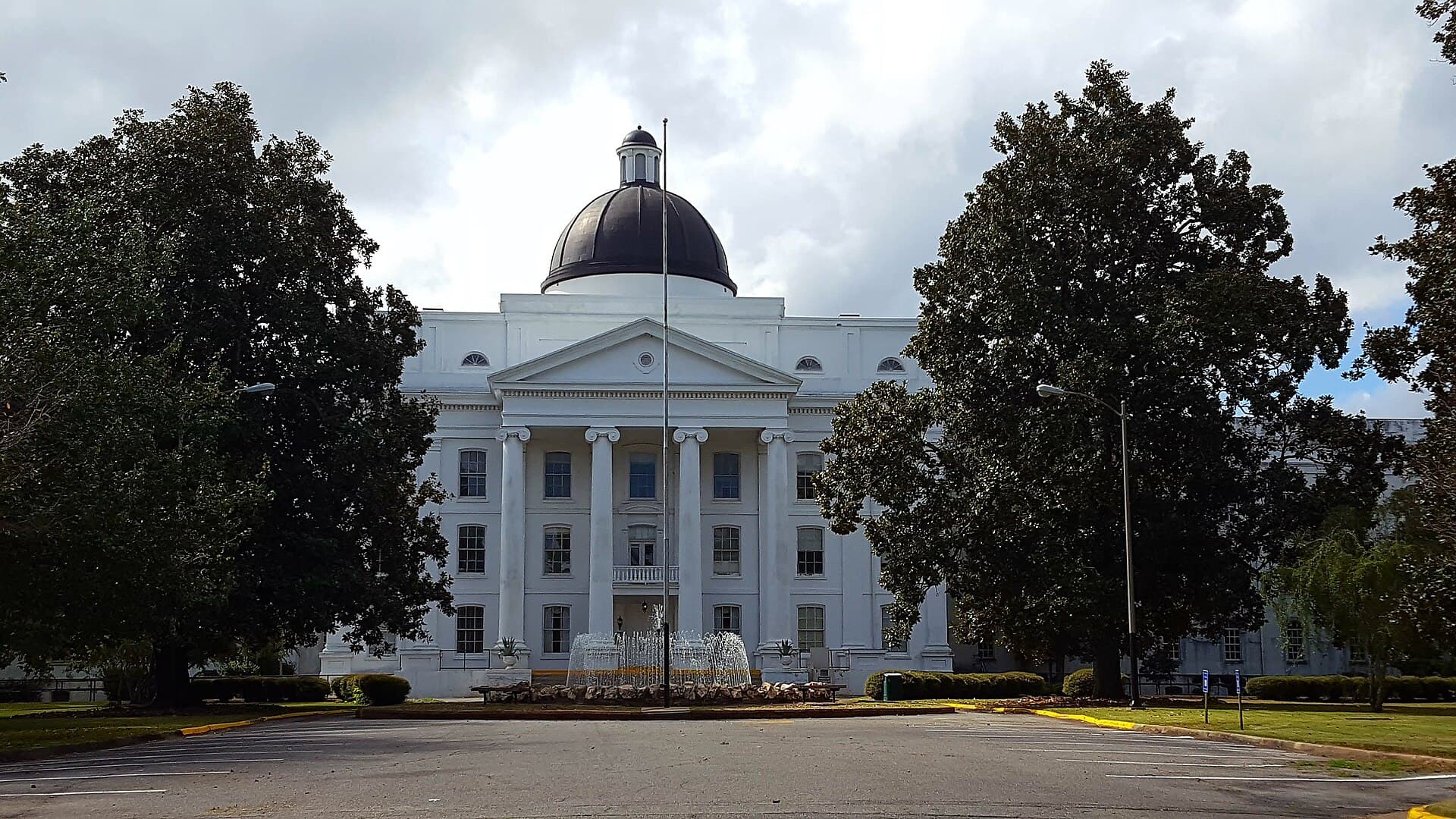
The historic central building’s columns and dome give it the appearance of an important public monument. The photograph accompanying this article records that exterior in 2018.
The scale communicates authority. Repeated windows hint at the number of rooms behind the facade, while open space separates the building from the road.
Yet architecture alone cannot tell us whether patients received good care, how much freedom they had or how their lives changed. Those questions require records and personal accounts.
The contrast is part of what makes the site memorable. A building can express confidence in a public mission while the institution inside it struggles with overcrowding, inadequate resources or changing expectations.
It is worth resisting the urge to describe every empty room as a mystery. Often, the harder and more revealing questions are practical ones: who worked here, who paid for care and who had the power to make decisions?
The cemeteries change the visit
The hospital cemeteries bring the focus back to individuals. Their preservation is an important part of Central State’s history, not a footnote to a tour of large buildings.
A restoration account preserved by the Digital Library of Georgia describes the discovery that many grave markers had been removed to make grounds maintenance easier.
The Georgia Mental Health Consumer Network explains that the Georgia Consumer Council adopted the cemetery memorial project in 1997. Its aims included remembrance, public understanding and reducing stigma.
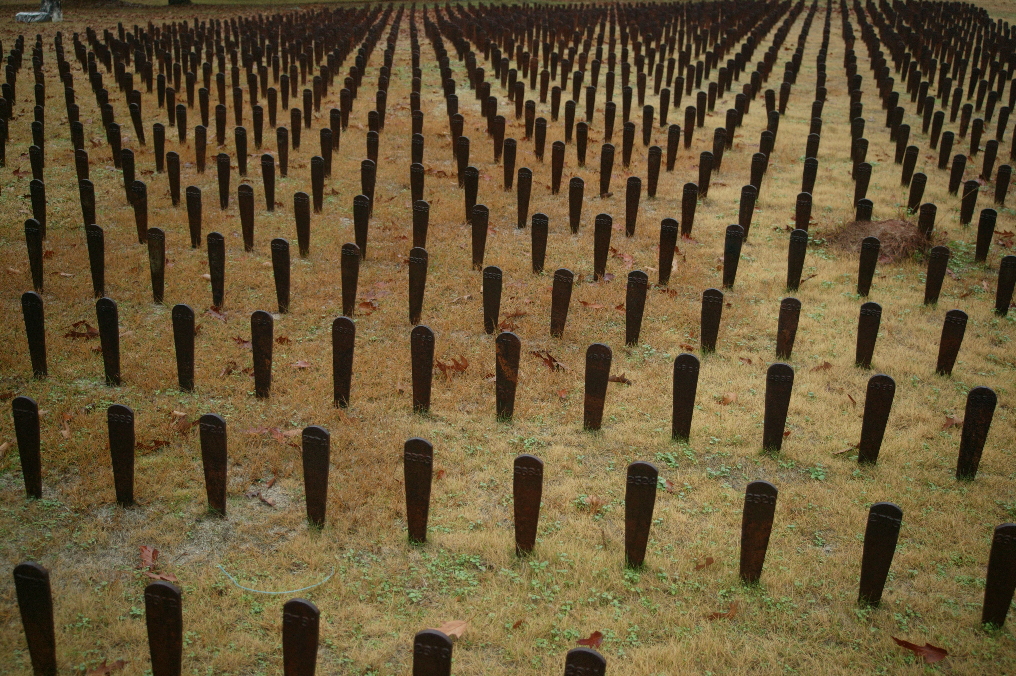
The rows of markers shown in the supporting photograph form a memorial representation. They should not be read as a precise map of the original burial locations.
That difference matters. The memorial asks visitors to recognize people who had become anonymous in the landscape, while restoration work tries to recover a more accurate record of their presence.
Remembering segregation as well as neglect
The local visitor bureau’s account of the African-American cemetery identifies it as a burial ground specifically laid out for Black patients.
That history adds another layer to the campus. Institutional life was shaped not only by illness and disability, but also by racial segregation.
A respectful visit should make room for those differences rather than treating every patient’s experience as identical. The cemeteries are places to consider whose names were preserved, whose were lost and whose stories remain difficult to recover.
Photograph markers with care. Leave everything where it is, avoid walking over graves and remember that a historic cemetery can still hold deep meaning for living relatives.
What is operating now?
Georgia’s current hospital listing identifies Central State Hospital at the Payton B. Cook Building, a forensic facility on Vinson Highway.
That active listing is why describing the entire campus as abandoned would be inaccurate. Vacant historic buildings and ongoing treatment exist within the broader story of the same institution.
Visitors should respect patient privacy and keep clear of clinical and restricted areas. The presence of an interesting old building does not make every road, doorway or parking space part of a tourist site.
How to visit the grounds
The state’s visitor FAQ says guests may drive through or walk the open campus. It also states clearly that access to vacated buildings is prohibited and that the hospital itself does not offer scheduled or appointment tours.
The visitor bureau separately advertises guided trolley experiences through the grounds. These are different from tours operated by the hospital. Check the tourism office’s current calendar and meeting arrangements if you want interpretation along the way.
Plan for an exterior visit. Bring water, choose suitable shoes and follow signs and barriers. Do not expect access to wards simply because another visitor’s old photograph shows an interior.
Central State rewards a slower approach. The most lasting image may be a modest marker, reminding you that the immense institution was made up of individual lives.
Frequently asked questions
Is Central State Hospital completely abandoned?
No. Many historic buildings are vacant, but state hospital services continue in a smaller part of the property.
Can visitors enter the empty buildings?
No. Georgia’s visitor FAQ explicitly prohibits access to vacated buildings.
Does the hospital run public tours?
The hospital says it does not. The local visitor bureau separately advertises guided trolley visits through the grounds.
Are the memorial markers all in their original positions?
No. The displayed memorial arrangement should not be treated as a precise map of original graves. Cemetery restoration and remembrance are central to its purpose.
Image credits
Featured: Upstateherd, CC BY-SA 4.0. Body: John Kloepper, aka Shelka04 at en.wikipedia, CC BY 3.0.

