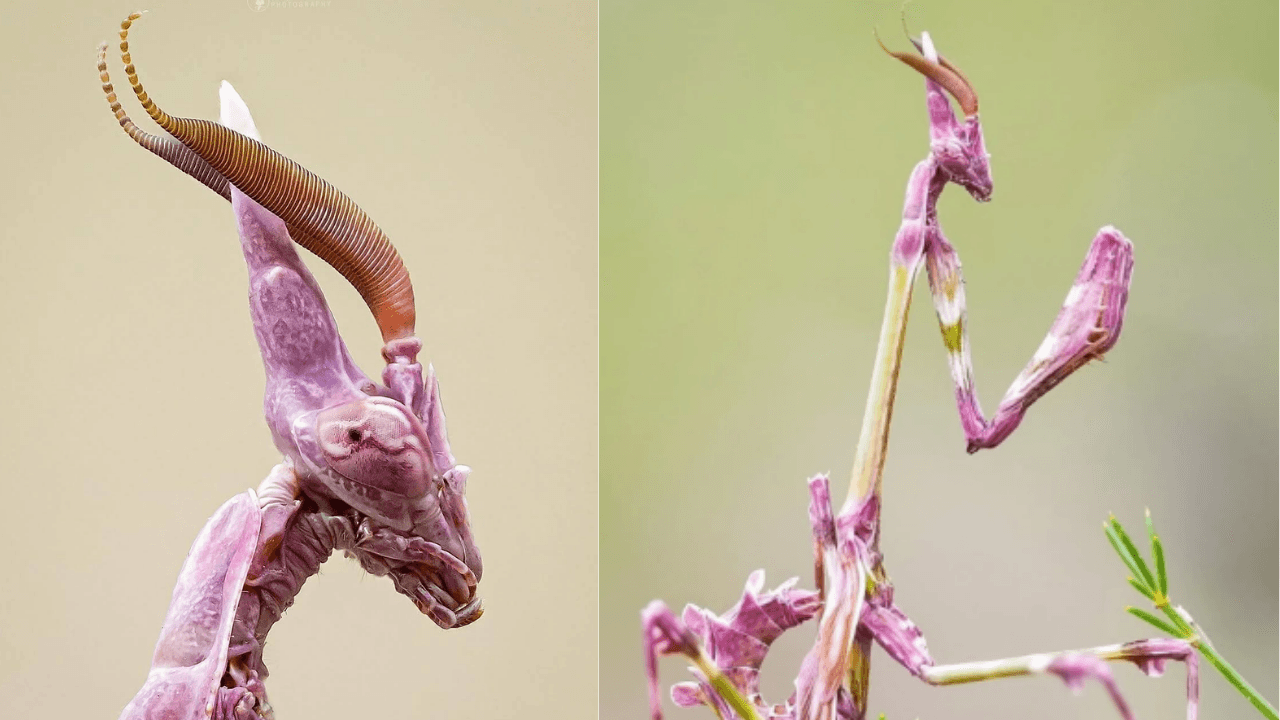
Imagine wandering through a Mediterranean landscape, where the golden sun kisses vibrant blooms. There, amidst the foliage, you may stumble upon the mesmerizing pink empusa mantis. This delicate insect, draped in soft pastel hues, reveals the surreal elegance of nature. It honestly looks like it slipped from a surreal dream, with horn-like crests that seem more extraterrestrial than earthly.
This mantis isn’t just a pretty face; it’s a brilliant ambush predator. Native to the dry, warm environments of southern Europe and North Africa, the pink empusa mantis perfected a haunting camouflage that allows it to blend seamlessly with flowers and dry vegetation. The soft pinks and greens of its body provide protection against both predators and curious prey. With its feathery antennae and elongated limbs, it resembles twigs and petals, ensuring that one wrong move by a bug could lead to its doom.
The mantis may appear fragile, but it’s far from defenseless. Patience is its greatest asset. It waits motionless amid flowers for an unsuspecting insect to venture too close. Once the opportunity arises, it strikes with lightning-fast precision, snatching flies, bees, and even small grasshoppers. This remarkable predatory skill showcases its dual nature: ethereal beauty and lethal effectiveness.
Such adaptations have come about through millions of years of evolution. Its horn-like projections and elongated limbs are not mere decorations; they are critical for survival. Each feature is a masterpiece of adaptation, fine-tuned to enhance this insect’s stealth and hunting prowess.
People might wonder, how can something so enchanting be so deadly? The pink empusa mantis serves as a profound reminder that the world’s smallest creatures often possess the most complex stories. Each little moment spent frozen among the flowers, waiting for a meal, underscores a life driven by instinct and survival.
Despite its stunning appearance, the road ahead for this mantis isn’t just about beauty. Habitat loss and climate change threaten the delicate ecosystems it depends on. As the world warms and natural spaces alter, the pink empusa mantis faces an uncertain future.
What happens next in the life of this striking insect? Will it continue to thrive, masked in its alien beauty, or will the changes in its environment become its worst enemy? As our world evolves, so too must we consider the life cycles of even the most extraordinary insects. The pink empusa mantis reminds us that beauty is often layered and complex, encouraging us to look deeper into the wonders of nature and reconsider the delicate balance of our ecosystems.
So the next time you behold a mantis, think of the cosmic beauty it holds within. Amidst its delicate wings and sharp instincts lies a story begging to be told — a story as old as time yet as fresh as the blossoms it calls home.
Disclosure: We may earn a commission when you make a purchase through the ads.