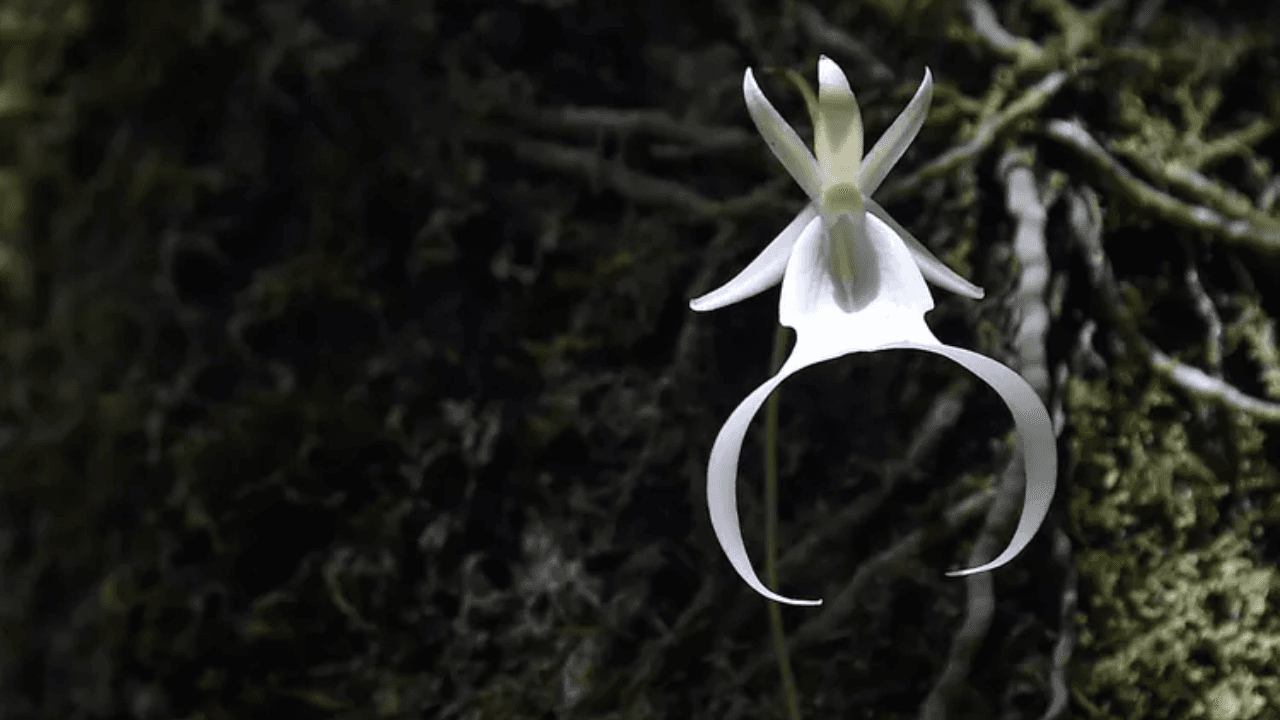
In the depths of Florida’s swamps, an ethereal beauty whispers secrets of nature’s magic — the ghost orchid. Found only in the remote wetlands of Florida and Cuba, this striking flower enchants all who seek it. With its white blooms that seem to float in midair, it’s a botanical marvel that’s both haunting and beautiful.

The ghost orchid, known scientifically as Dendrophylax lindenii, prefers to thrive in the moisture-laden air, attaching itself to tree trunks without any soil. This leafless wonder relies entirely on its long, chlorophyll-rich roots for sustenance. Discovered in Cuba in the 1840s, it wasn’t until the late 1800s that this elusive flower was found in Florida’s swamps. Yet, the ghost orchid remains one of nature’s best-kept secrets.
Blooming unpredictably for only a few weeks each year, this rare flower often hides from eager onlookers. Timing is everything; these orchids can skip blooming altogether in some years. Those who do manage to witness the ghost orchid during its brief appearance feel like they’ve stumbled upon a long-forgotten treasure. For orchid lovers and nature enthusiasts alike, spotting one is a slice of magic itself.
Its blooms are nothing short of spectacular, appearing white and delicate, often evoking a sense of wonder. As darkness falls, the ghost orchid’s flowers seem to glow with an otherworldly light, cementing its name. The sight of these mysterious blooms against the backdrop of dense swamp foliage creates an almost dreamlike experience.
This remarkable plant is more than just a pretty face; it symbolizes resilience and the delicate balance of the ecosystem. Ghost orchids thrive in challenging environments, and their survival story mirrors the resilience of nature itself. Yet, the ghost orchid faces threats that challenge its existence — habitat destruction, climate change, and illegal poaching have drastically reduced its population.
As of recent years, fewer than 1,000 ghost orchids remain in the United States, and only about half are capable of reproducing. Conservation efforts are underway to protect these fragile beauties, but without sufficient action, their fate hangs in the balance. Groups advocate for stricter protections, raising awareness about their plight and the importance of biodiversity.
The ghost orchid remains a poignant reminder that nature’s beauty is intertwined with vulnerability. As they cling to trees in the damp, shady undergrowth of Florida and Cuba, these plants challenge us to reflect on our role in preserving the delicate web of life they represent. Each ghost orchid has its story, reminding us of the mysteries that lie hidden in the natural world.
So the next time you hear about the ghost orchid, remember: it’s not just a flower; it’s a beacon of resilience, a testament to nature’s ability to endure amid chaos. What does the ghost orchid’s struggle to survive teach us about our responsibility toward nature?
Disclosure: We may earn a commission when you make a purchase through the ads.