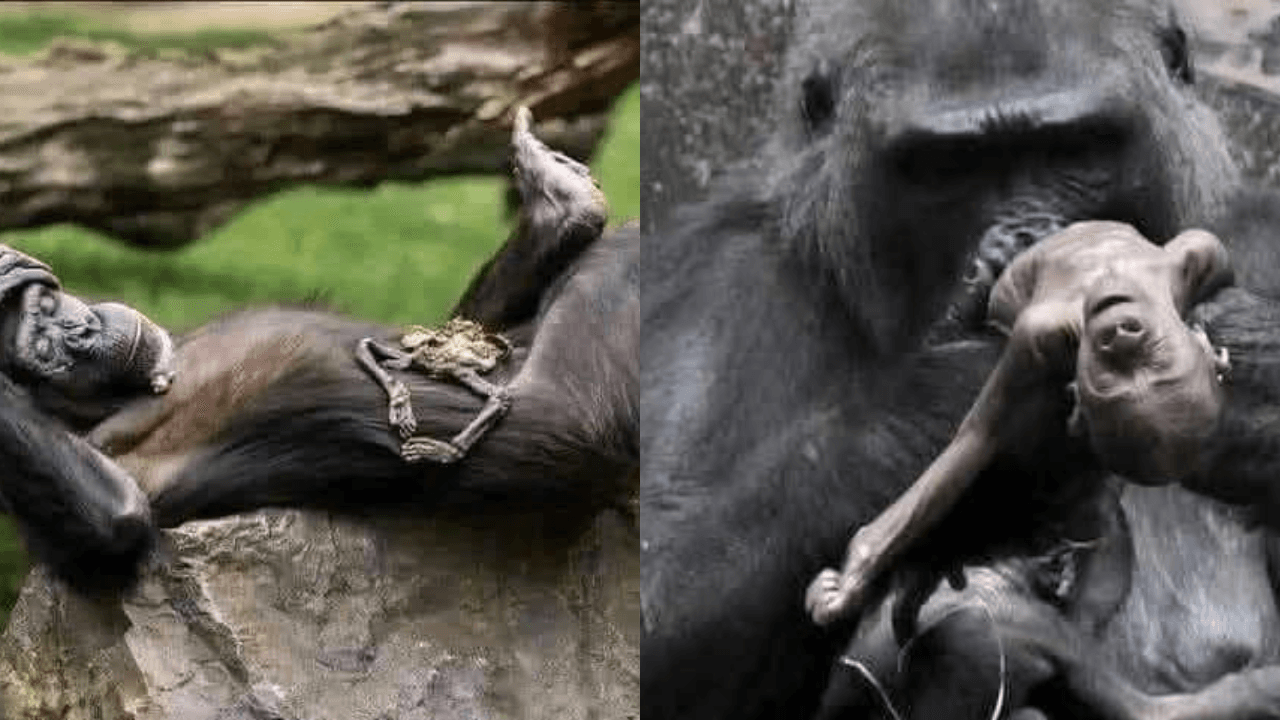
In the heart of Bioparc Valencia, a story of love and loss unfolded that touched everyone who witnessed it. For seven months, a 21-year-old chimpanzee named Natalia carried her lifeless baby in her arms — as if her love alone could bring him back to life.
Her journey began in February 2024, when she gave birth to a baby who tragically died just two weeks later. What followed became one of the most emotional stories ever seen at the park.
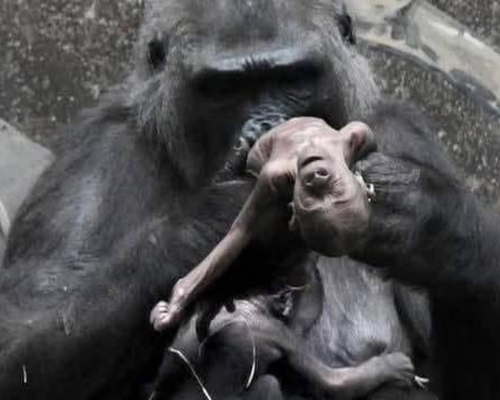
Caretakers and visitors watched in heartbreak as Natalia continued to cradle and groom the tiny body every single day. She carried him wherever she went, treating him just as if he were still alive.
“It was heart-wrenching to watch,” said one caretaker. “She refused to let go, as though her love might somehow breathe life back into him.”
Her actions left both staff and onlookers in tears. The zoo, understanding the deep emotional nature of her behavior, chose not to intervene. They allowed Natalia the time and space she needed to process her grief — recognizing that loss is not a human experience alone.

While Natalia’s devotion captured the world’s attention, scientists say her reaction isn’t unique. Research has shown that chimpanzees exhibit mourning behaviors similar to humans.
Studies published in Scientific Reports and other journals describe chimpanzee mothers who continue to carry, clean, and protect their dead infants for days, weeks, or even months. Such behavior suggests a deep emotional understanding — one that mirrors human grief and attachment.
Natalia’s case stood out not only for its length but for its intensity. At the three-month mark, Reuters and People Magazine reported her ongoing vigil, noting how the zoo had decided to “respect her process.” By October 2024, local Spanish outlet Cadena SER confirmed that Natalia finally released her baby’s remains after seven months of mourning.
By the time she laid her baby down, what remained was little more than a fragile form — but to Natalia, it was still her child. The moment she finally let go brought tears to the eyes of everyone present.
Zoo staff gently recovered the remains and noted the end of a long and painful mourning period. For them, it was a bittersweet moment — the close of a story that had revealed how powerful a mother’s love can be, even in the animal kingdom.
Natalia’s behavior challenges the idea that emotion belongs only to humans. Her steadfast love reminds us that other species feel, mourn, and remember too.
In her quiet way, Natalia showed the world that love transcends species. Her grief became a mirror for our own — a reflection of the bonds that connect all living beings.
Disclosure: We may earn a commission when you make a purchase through the ads.