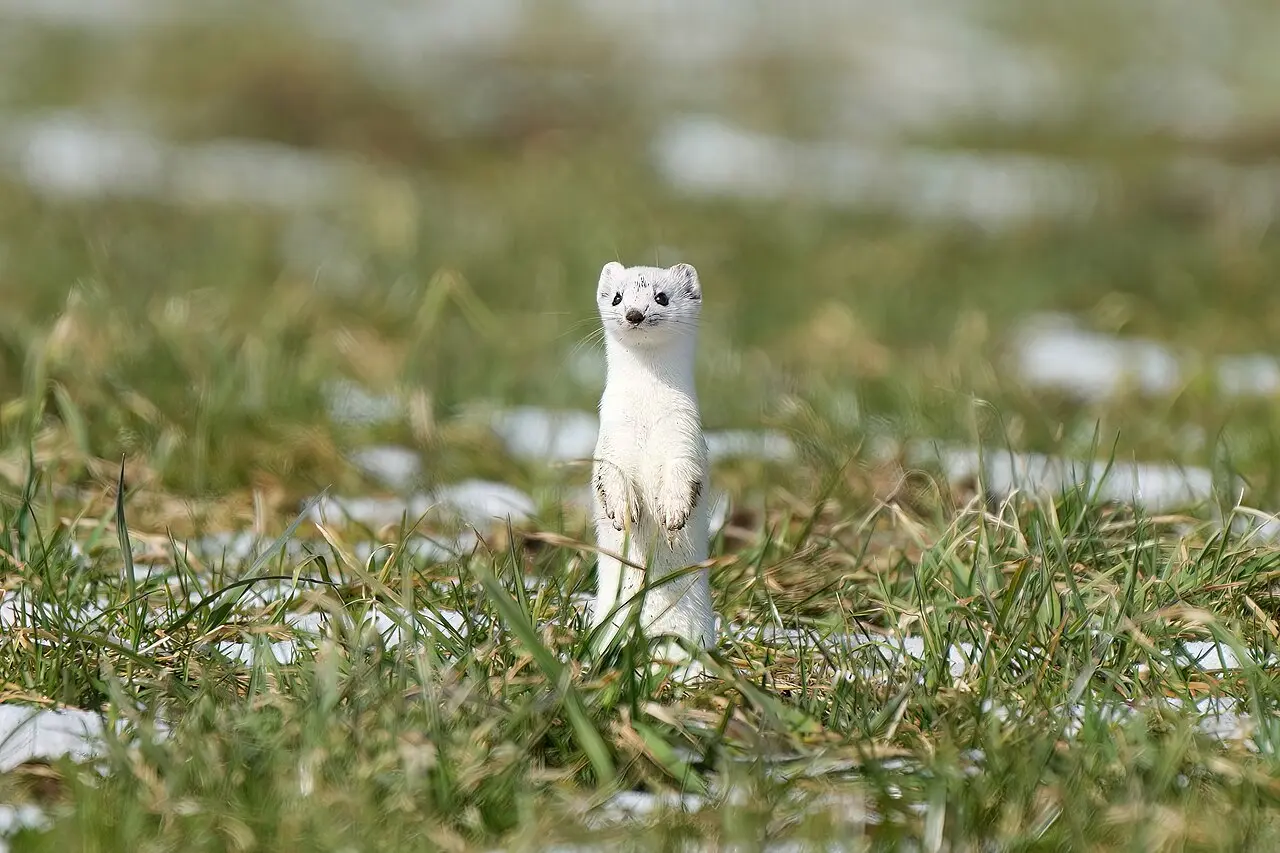
A stoat can become almost invisible against snow, yet one detail stays dark: the black tip of its tail. Even in its white winter coat, that small mark remains.
The stoat, Mustela erminea, is a slender member of the weasel family. Its long body and short legs help it move through places a larger hunter cannot easily enter.
White is a seasonal option
The Woodland Trust explains that some stoats turn partly or almost entirely white in winter, particularly in snowier northern areas.
This pale coat is called ermine. Not every stoat develops it, so a winter animal may remain brown. The change is a wonderful example of why location matters when interpreting wildlife photographs.
Follow the tail
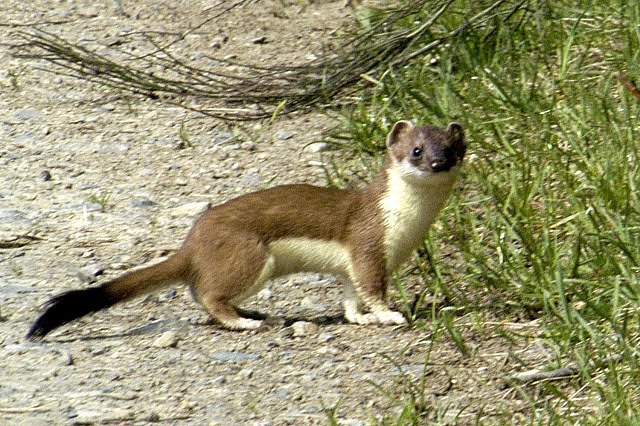
In Britain, stoats and least weasels can be confused at a glance. The stoat’s longer, black-tipped tail offers a useful clue.
Stoats hunt rodents, birds, and rabbits. They search through undergrowth, climb, and enter underground spaces. A quick movement beside a hedge may be the only glimpse a watcher gets.
A small predator in a busy landscape
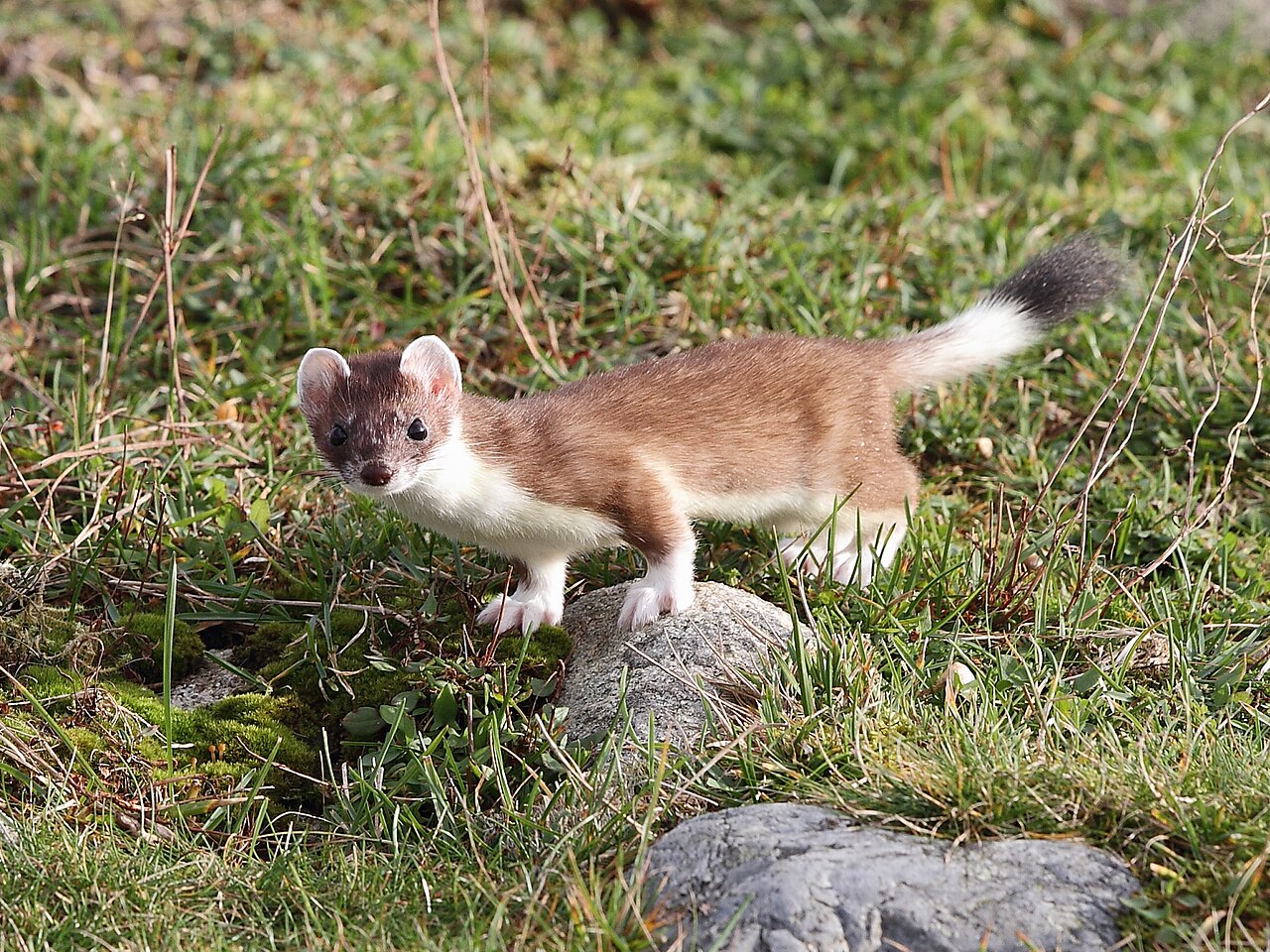
Woodland, farmland, grassland, and upland areas can all provide habitat. Cover matters in a world where stoats also face predators such as foxes and birds of prey.
Watching from a distance lets the animal keep moving on its own terms. A white coat and a black tail tip tell a short but remarkable story about life through the seasons.
Photo credits
Featured image: 035 Stoat in winter coat in Parc naturel régional Jura vaudois Photo by Giles Laurent.jpg — Giles Laurent; CC BY-SA 4.0.

Body photograph: Mustela.erminea.jpg — James Lindsey; CC BY-SA 3.0.

Body photograph: Røyskatt (Mustela erminea erminea), Lista, Norway.jpg — Marton Berntsen, crop by User:MPF; CC BY-SA 4.0.

Photographs resized for web display where available. Existing crops are identified in their source filenames.