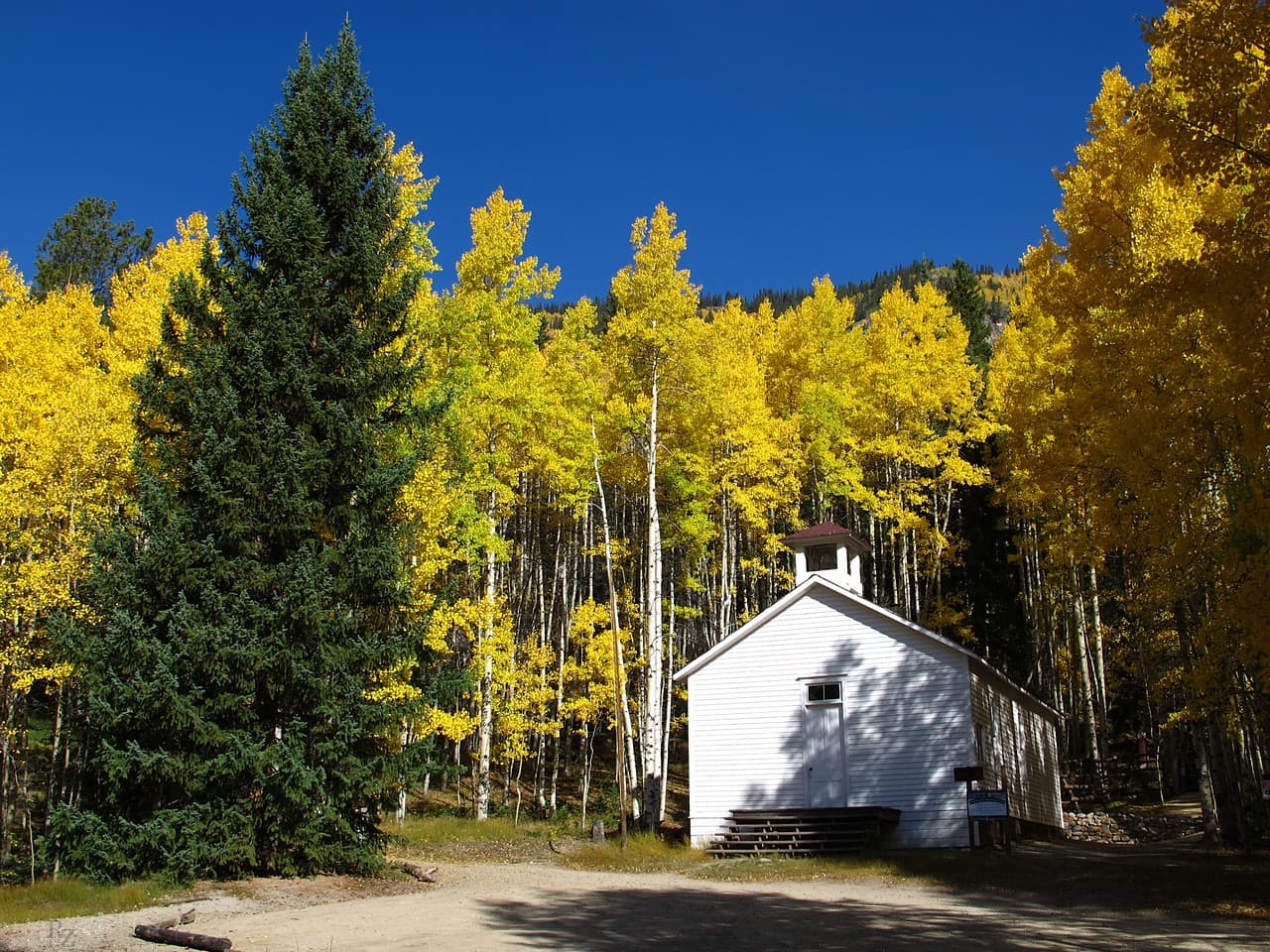
St. Elmo’s wooden storefronts survived the mining rush, the departing trains, and decades of mountain weather.
St. Elmo ghost town is a historic mining settlement in Colorado’s Chalk Creek Canyon, southwest of Buena Vista. It grew around nearby mines and a railroad connection, then declined as those economic supports disappeared.
Many buildings remain, but the town is not ownerless. Private property, continuing care, and organized preservation are central to understanding what visitors see today.
Why St. Elmo grew in Chalk Creek Canyon
The town’s historical overview traces the settlement to mining activity in the canyon during the nineteenth century. It incorporated as St. Elmo in 1880.
Gold and silver prospects drew people into the area. Mines needed workers and supplies, and workers needed places to buy food, sleep, and conduct everyday business.
The Mary Murphy Mine became especially important. Its name appears repeatedly in the district’s history because it supported more than a hole in the mountainside. It helped sustain a network of transport and services.
A street of surviving shops can make that network seem compact. In reality, the town’s livelihood extended into the surrounding terrain.
The buildings are best understood as the visible center of a much wider working landscape.
The railroad made the canyon less remote
The Denver, South Park and Pacific Railroad connected St. Elmo with a larger transport system. That link helped move both people and the products of mining.
Rail service changed what a mountain town could support. Heavy equipment, commercial supplies, and passengers no longer depended entirely on the same difficult road journey.
The Library of Congress historic district documentation records the town’s development and built environment. It gives the streets a firmer historical context than a simple collection of picturesque facades.
A railroad can make a place seem secure because it represents a major investment. Yet tracks alone cannot guarantee a town’s future when the industry they serve is weakening.
That tension runs through St. Elmo’s story: the infrastructure that enabled growth also tied the settlement to changes beyond the canyon.
A town with more than miners
At its height, St. Elmo supported hotels, stores, a school, and other services. These were signs of a community trying to function beyond the immediate demands of extracting ore.
The Society of Architectural Historians’ account places the town within a forested mountain valley and emphasizes its surviving mining-era buildings.
Look at the relationship between the storefronts and surrounding mountains. The setting explains both the town’s attraction today and the difficulty of keeping it supplied in the past.
For a visitor, the buildings can appear almost theatrical. Their meaning is more ordinary and more interesting: they held businesses, meals, conversations, and rooms where people expected to return after work.
That human scale is what makes St. Elmo memorable. Its history is visible at the size of a doorway rather than only in production figures.
Why did St. Elmo decline?
As mining activity weakened, jobs and customers disappeared. The town’s history records the abandonment of the railroad in 1922 and the end of postal service in 1952.
Those widely separated dates help correct the image of a settlement emptied overnight. Decline happened in stages.
Some people stayed after the main economic boom ended. The Stark family, associated with the store and Home Comfort Hotel, became particularly important to the town’s later history.
A surviving building may therefore represent several periods at once: the original mining economy, the years of reduced activity, and the later effort to preserve it.
The phrase “ghost town” is useful shorthand, but it should not erase the people who continued caring for the place.
Keeping old wooden buildings standing
Historic St. Elmo and Chalk Creek Canyon describes preservation and stabilization as the core of its work. The organization formed in 2010 to support the long-term protection of the district.
Its project records show what preservation means in practice: damaged foundations, failing roofs, snow-related deterioration, and specialist repair.
Work on the Home Comfort Hotel and Stark Brothers Store addressed rotting foundation timbers and roofing problems. Other projects have stabilized buildings at risk of collapse.
These details change the way a visitor sees an old wall. Weathered does not mean untouched, and still standing does not mean secure.
The nearby Mary Murphy tram building also illustrates the district’s industrial systems. It served a cable tram that carried ore down toward rail transport. Preserving that structure helps explain the connection between mine, mountain, and town.
Visiting St. Elmo with care
The town’s visitor website describes St. Elmo as privately owned but open to visitors. Public welcome should not be confused with permission to enter every structure.
Respect fences, signs, closed doors, and residents’ space. Keep to permitted areas and leave loose objects where they lie.
Plan around mountain weather and road conditions. A summer photograph does not describe a winter journey, and seasonal businesses may not be operating when you arrive.
Allow time to read interpretation and notice the small details. A slow visit reveals more than a quick photograph of the main street.
St. Elmo’s survival is a shared achievement between historic materials and modern care. Its most valuable story is not that time stopped here, but that people have worked to keep parts of the past within reach.
Frequently asked questions
Is St. Elmo completely abandoned?
No. It includes private property and continuing care. Visitors should respect owners and follow access signs.
Why did St. Elmo become a ghost town?
Declining mining activity and the loss of rail service undermined the economy, leading to a long population decline.
Can you enter the old buildings?
Only where access is clearly permitted. A historic appearance does not make a building publicly accessible.
What is being preserved today?
Local preservation work includes commercial buildings and mining infrastructure, with attention to roofs, foundations, and structural stability.
Featured photograph: Ronzeidler. Original image and details. CC BY-SA 3.0. Photograph predates this article; it is not a real-time view.
