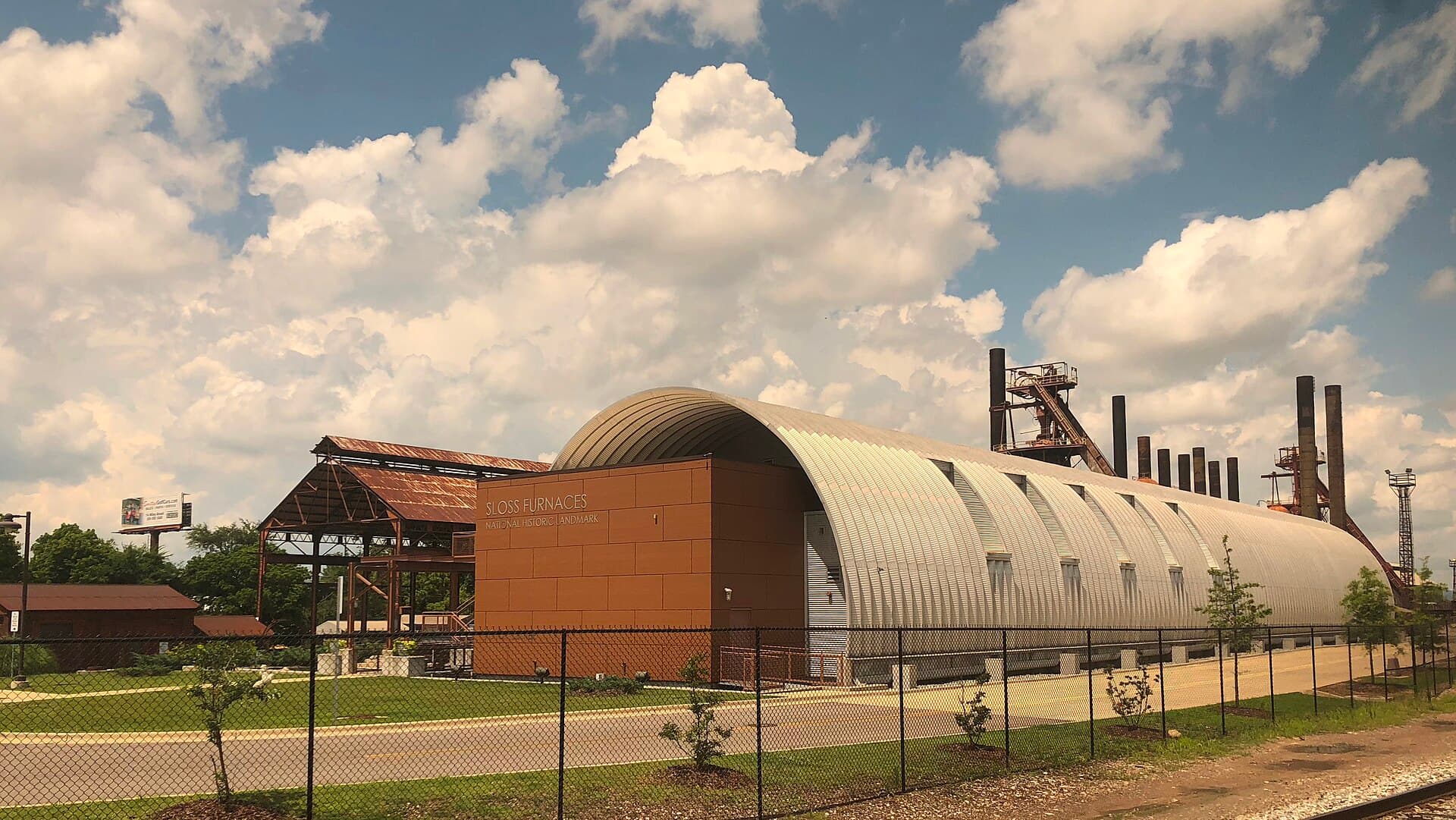
At Sloss Furnaces, Birmingham’s industrial past rises above a place still full of public life.
Sloss Furnaces in Birmingham, Alabama, produced iron from 1882 until 1971. The preserved site became a National Historic Landmark in 1981 and now welcomes visitors for history, arts and events. Its weathered towers are remnants of industry, but the place itself is not abandoned.
The most rewarding visit connects the striking machinery with the people and resources that made Birmingham an industrial city.
Why Sloss Furnaces belonged in Birmingham
Birmingham’s growth depended on the nearby presence of iron ore, coal and limestone. Those materials formed the basis of its iron industry.
James Withers Sloss established his furnace company during the city’s early development. Construction began in 1881, and iron production started in April 1882. The official history places the enterprise within the wider expansion of railroads, mining and manufacturing. Sloss Furnaces history
Yet the resulting landscape became one of Birmingham’s defining sights. Tall stacks, stoves and furnace structures made the process visible from a distance, turning production into part of the city’s everyday skyline.
Iron, not a steel mill
Sloss made pig iron, the basic metal produced by smelting iron ore. Despite the later company name Sloss-Sheffield Steel and Iron, its official history notes that it did not make steel.
That small distinction helps visitors understand what they are seeing. The furnaces belonged to one stage of a much larger manufacturing economy.
The site’s tour map explains the movement of ore, limestone and coke into the furnace. Other equipment supplied air, handled materials and supported the operation. Sloss visitor map
The people behind the furnace walls
The work was demanding and dangerous. The official history also acknowledges a workforce divided by race for many years.
A Birmingham Historical Society account uses maps and local records to show the relationship between the furnaces and nearby workers’ housing. The company’s small houses stood close to an operation that ran around the clock. Birmingham Historical Society
That proximity makes the industrial story a neighborhood story. Work affected where families lived and the sounds and rhythms surrounding them.
The surviving equipment is easier to photograph than those daily lives. Interpretation matters because it brings the workers back into a view otherwise dominated by machinery.
A thoughtful visit leaves room for both achievement and hardship. The skill required to make iron does not erase unequal conditions or the risks people faced.
Why the furnaces stopped
Sloss ceased iron production in 1971. The closing ended a long industrial chapter, but it did not automatically secure the site’s future.
A contemporary historical essay published by Facing South describes the transfer of the property after closure and the effort to make it an industrial history museum. It also explains how researchers relied on oral histories, artifacts and local records to recover workers’ experiences. Facing South’s historical account
Preservation required more than deciding the structures looked impressive. The site needed a purpose, support and a way to explain its significance.
The eventual public landmark kept an industrial landscape available for study at a time when many comparable places were disappearing.
Keeping old metal standing
Preserving a furnace complex presents unusual problems. Large outdoor structures face weather, corrosion and the gradual loss of material.
A project account from coatings manufacturer Tnemec describes work to address corrosion while respecting the site’s historic appearance. The aim was protection compatible with the landmark, rather than simply making old equipment look new. Preservation project account
That balance is part of what visitors see. A historic industrial site can retain its age and texture while receiving deliberate care.
A new kind of activity
Sloss now combines historical interpretation with cultural events and creative programs. Its official site lists self-guided visits, guided tours and special experiences.
The landmark’s current public identity includes gatherings that bring people together beneath the old structures. Sloss Furnaces visitor information
This is a different use of the same powerful setting. An event audience does not recreate an ironworks shift, but public activity gives the preserved site an ongoing role in the city.
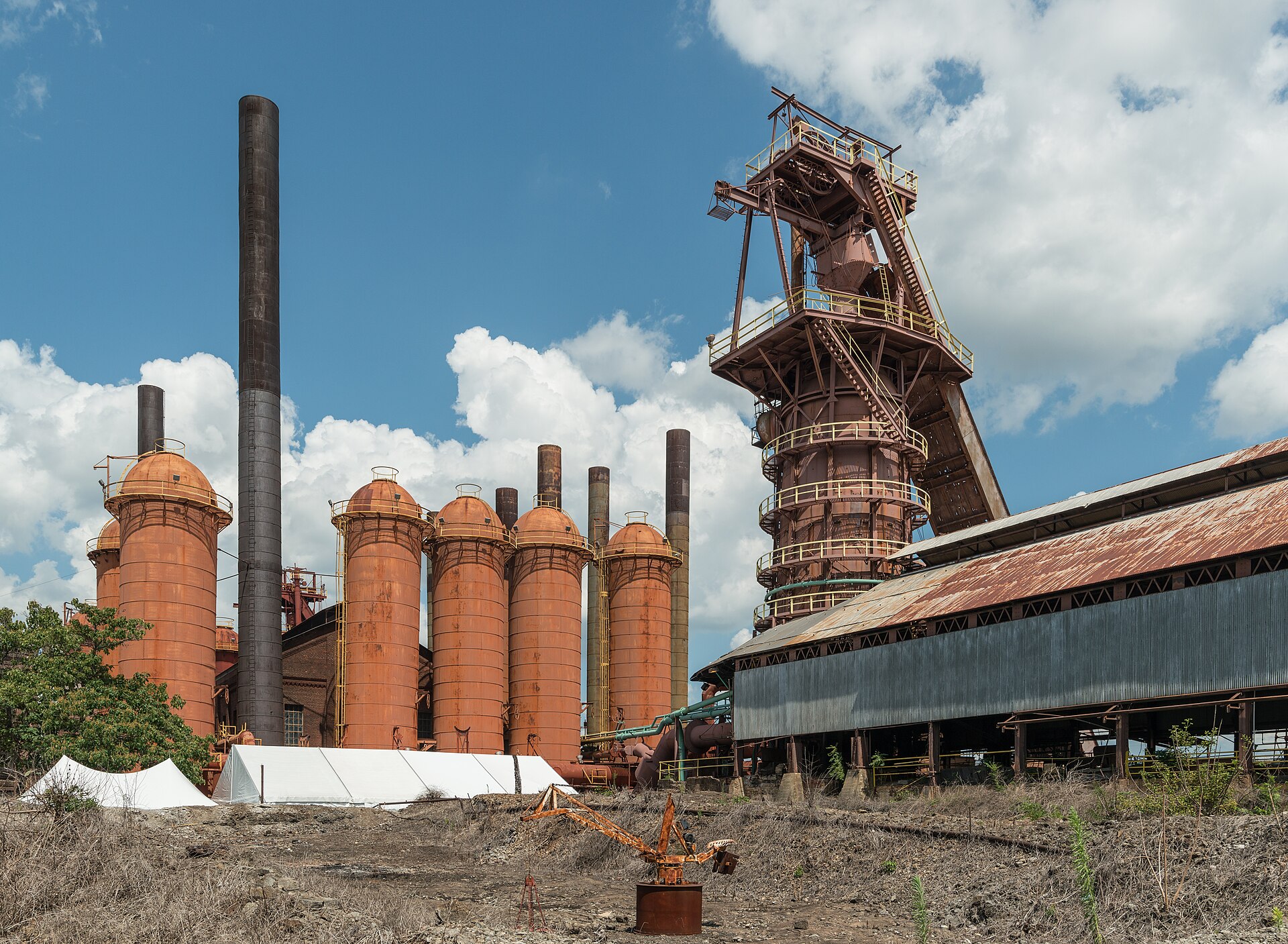
The photographs here date from 2016 and 2018. One records the furnace and stove structures; the other shows the visitor-center era of the property.
Planning a visit
Check the official calendar before traveling. General admission is currently advertised as free, while guided experiences or special events may have separate arrangements.
Use designated visitor routes and ask about accessibility if uneven ground or industrial stairs could affect your plans.
If you encounter ghost stories associated with Sloss, treat them as folklore unless supported by historical evidence. The documented story of labor, engineering and preservation is substantial enough without invented accidents or supernatural claims.
The lasting surprise is how much a quiet furnace can explain. Once its purpose becomes clear, the skyline starts to look like a record of human work.
Frequently asked questions
Is Sloss Furnaces abandoned?
No. It is an active historic landmark and cultural destination.
When did it operate?
Iron production began in 1882 and ended in 1971.
Did Sloss make steel?
No. The furnaces produced pig iron, despite “Steel and Iron” appearing in the company’s later name.
Can you visit for free?
The official site currently advertises free general admission. Check schedules and separate charges for tours or events.
Image credits
Featured image: Bjoertvedt / Wikimedia Commons, CC BY-SA 4.0. The Sloss Furnaces visitor center and industrial skyline in July 2018.

Body image: DXR / Wikimedia Commons, CC BY-SA 4.0.
