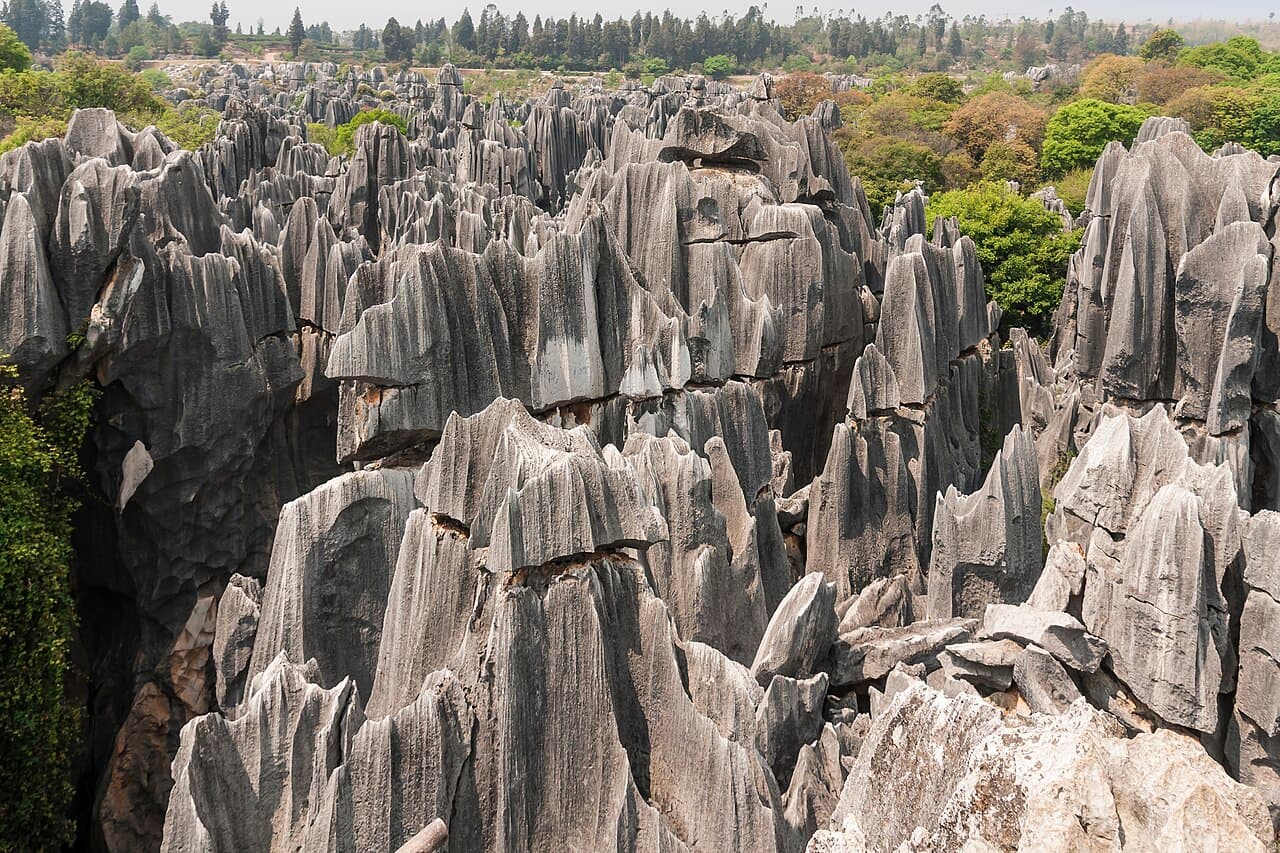
At Shilin, narrow gray pinnacles rise where you might expect tree trunks. Paths thread between them, creating the impression of walking through a forest made of stone.
The resemblance is wonderful, but these pillars are not petrified trees. They are limestone shaped by water.
A forest without wooden trunks
Shilin lies in Yunnan, China. Its stone forest is an example of pinnacle karst, a landscape that develops as water dissolves soluble rock.
Rainwater picks up carbon dioxide and becomes mildly acidic. Over long periods, water can widen cracks and remove limestone, leaving more resistant sections standing.
UNESCO's Shilin Global Geopark profile describes the region's distinctive stone landscapes.
The gaps matter as much as the pillars
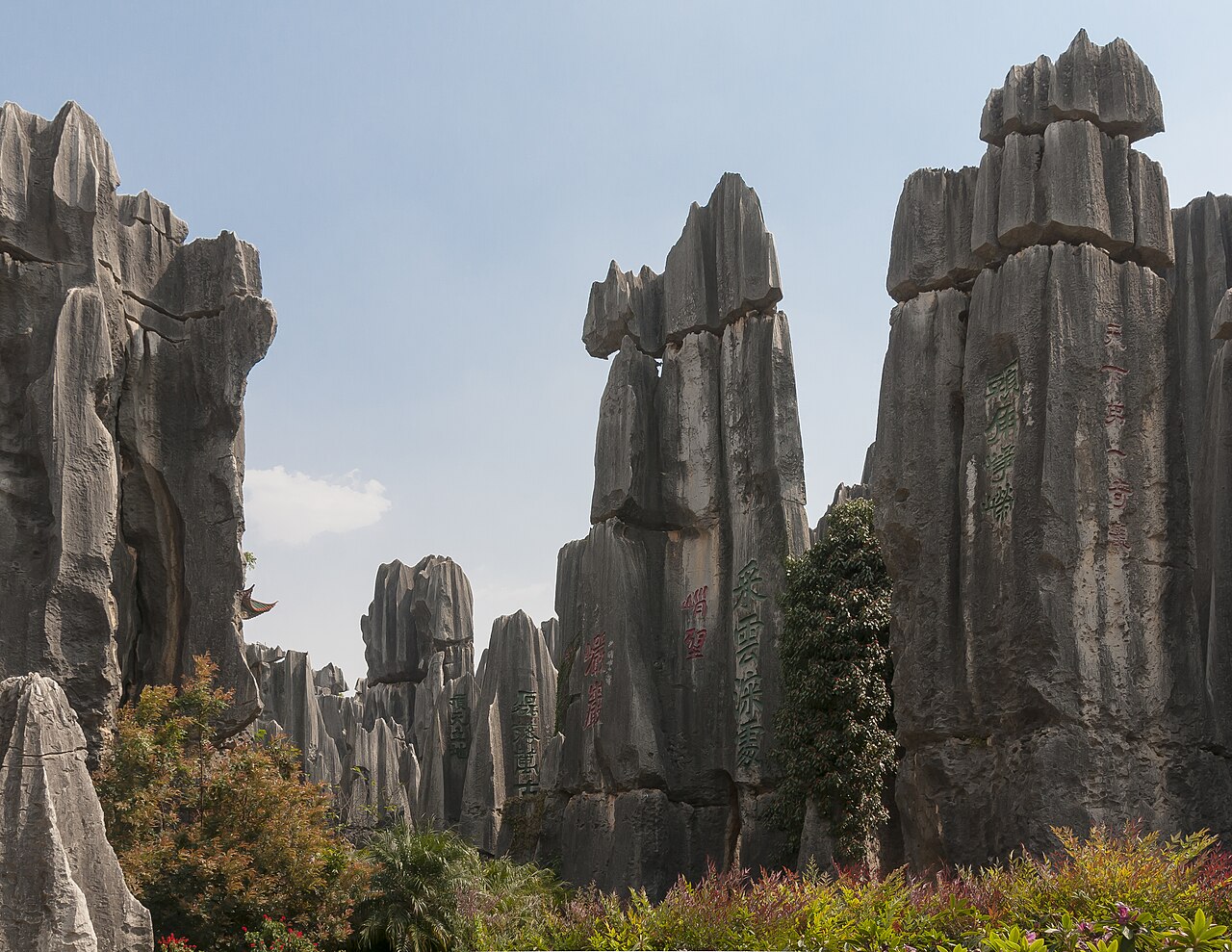
It is easy to focus on the rock that remains. Yet the spaces between the pinnacles are equally important to the story.
Dissolution and erosion removed material along routes through the rock. The resulting network produces ridges, slots, and passages rather than a uniform field of identical towers.
Some parts of the geopark also contain darker dolomitic limestone and other contrasting scenery.
Part of a bigger karst world
Shilin is a component of the South China Karst World Heritage property. Other parts of that property display different karst forms, including towers and cones.
The shared process is interaction between water and rock. Local conditions and geological history determine the final shapes.
A landscape with people in it
The Indigenous Sani people of the Yi ethnic group have long connections to this area. UNESCO highlights cultural traditions alongside the geological setting.
Respecting the Stone Forest includes respecting that living heritage, as well as staying on designated routes through the formations.
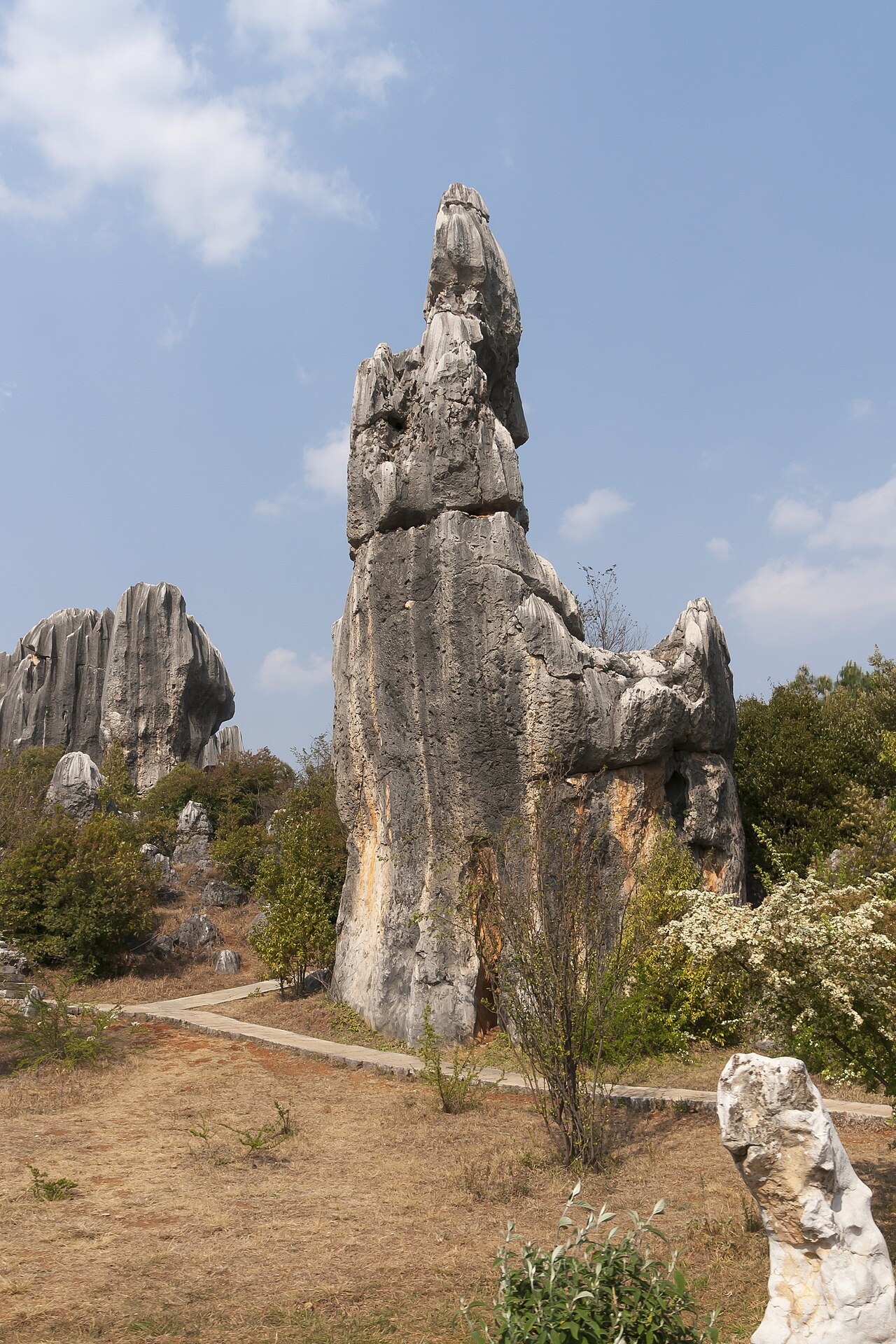
Shilin makes slow change easy to imagine. Water did not plant these stone trees; it revealed them by taking parts of an ancient rock mass away.
Photo credits
Featured image: CEphoto, Uwe Aranas; Wikimedia Commons source; CC BY-SA 3.0. Resized for web display.

Body image 1: CEphoto, Uwe Aranas; Wikimedia Commons source; CC BY-SA 3.0. Resized for web display.

Body image 2: CEphoto, Uwe Aranas; Wikimedia Commons source; CC BY-SA 3.0. Resized for web display.
