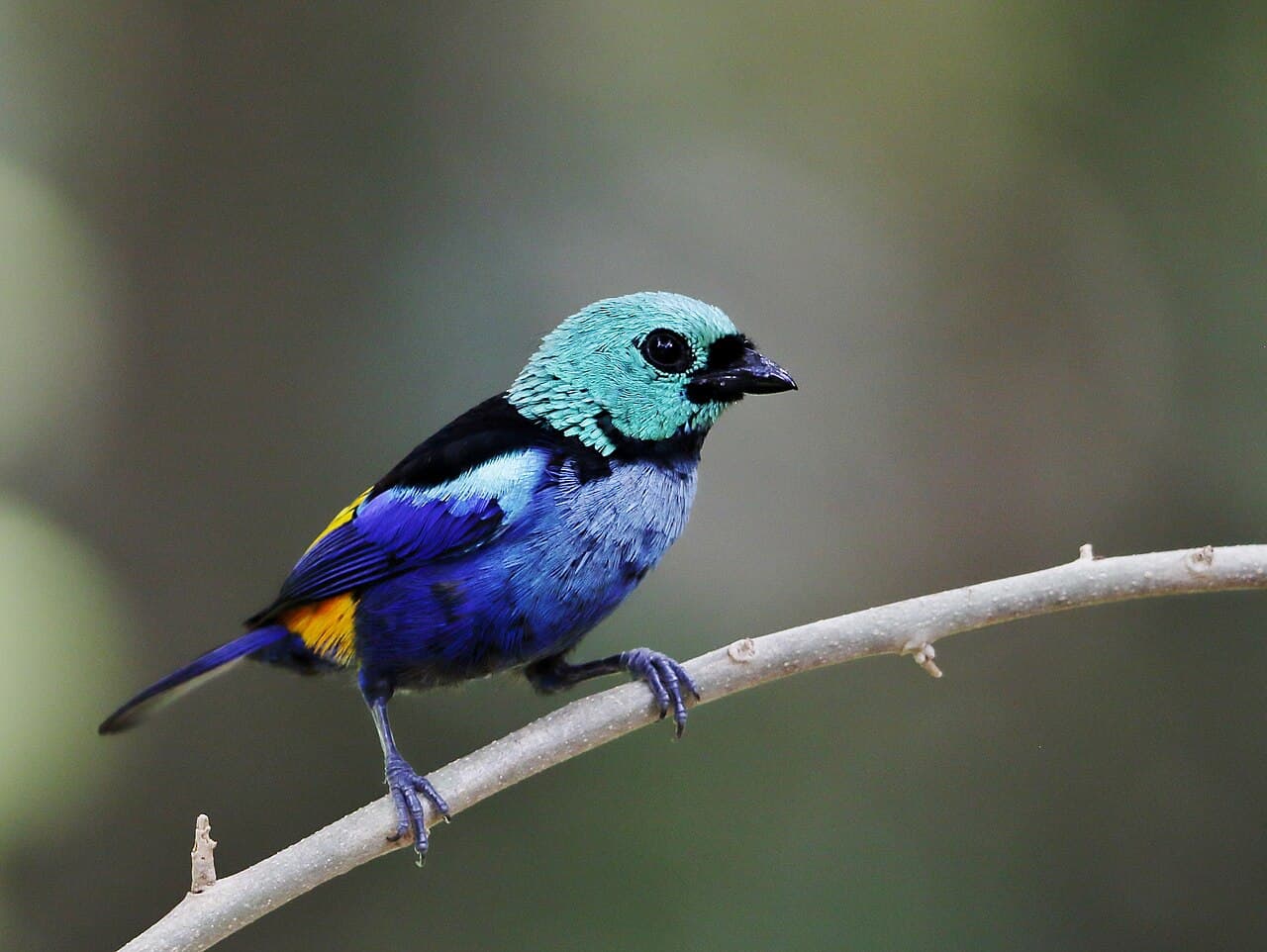
Turquoise, green, blue, and warm golden-orange shades meet on one small bird. The seven-colored tanager looks almost too bright for a shaded forest, yet that forest is the place it needs most.
This is Tangara fastuosa, a Brazilian bird with a restricted northeastern range. Its story brings dazzling plumage and serious conservation concerns together.
Make sure the name matches the bird
Color-based names can be confusing. Several tropical tanagers are called “seven colors” in different languages or local traditions.
The scientific name matters here: Tangara fastuosa identifies the seven-colored tanager in this article. It is a different species from the paradise tanager, Tangara chilensis, and the green-headed tanager, Tangara seledon.
That small check helps keep photographs, maps, and conservation information attached to the right animal.
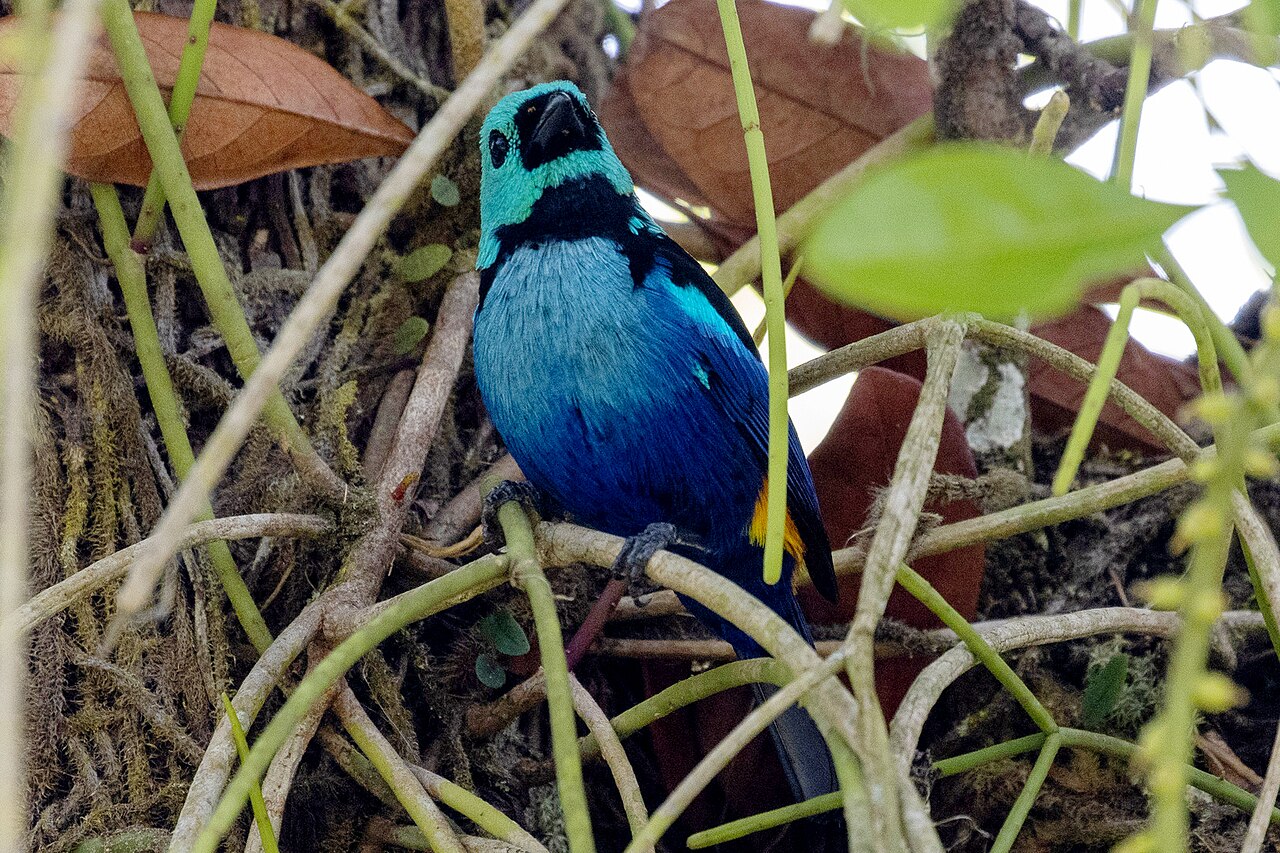
Searching the canopy
Cornell's eBird identification account describes this bird in humid forest, at forest borders, and in older regrowth. It usually searches the canopy in pairs and can join mixed-species flocks.
A surviving patch of forest may therefore hold much more activity than first meets the eye. Fruiting branches, dense cover, and the movements of other birds all form part of the scene.
Look beyond the brightest patch of color. Following the bird's movements tells you which parts of the forest it is actually using.
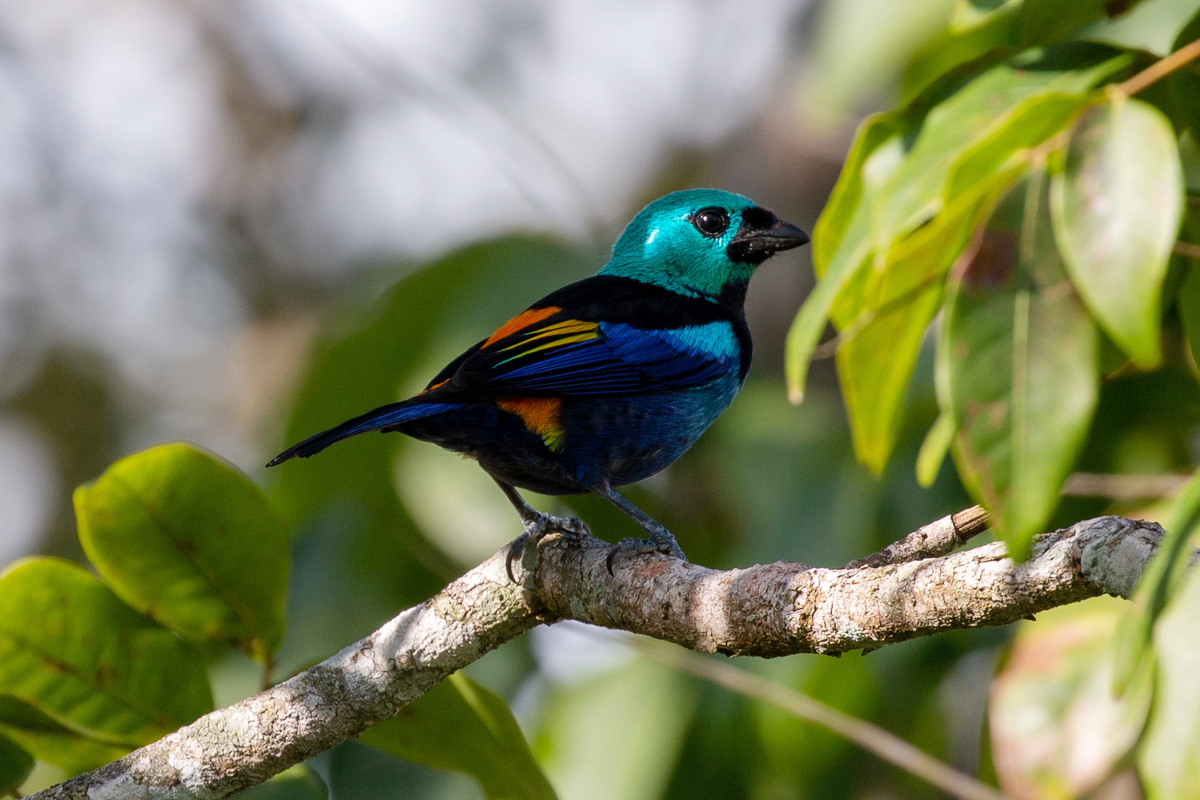
A small range under pressure
BirdLife International's 2024 assessment lists the species as Vulnerable, with a decreasing population. Forest loss and trapping are key threats.
Its remaining range is centered on the Pernambuco region of endemism in northeastern Brazil, including Alagoas, Pernambuco, and Paraíba. When a species occupies a limited area, damage there cannot simply be balanced by healthy forest far away.
BirdLife recommends protecting more habitat, restoring forest, and strengthening efforts against illegal capture. These actions address both the bird's home and the pressure on the birds themselves.
Let the colors stay in the canopy
A living tanager belongs in a living landscape. The best future for this little jewel is one where its colors can still flash between the branches, with enough forest left around them.
Photo credits
Featured image: Tangara fastuosa - Seven colored Tanager; Maceió, Alagoas, Brazil.jpg — Hector Bottai, CC BY-SA 4.0.

Body image 1: Seven-coloured Tanager, Areia, Paraíba, Brazil 1.jpg — thomazcallado, CC BY 4.0.

Body image 2: Seven-coloured Tanager, Areia, Paraíba, Brazil 2.jpg — thomazcallado, CC BY 4.0.

Photographs resized to up to 1,280 pixels wide for web display.