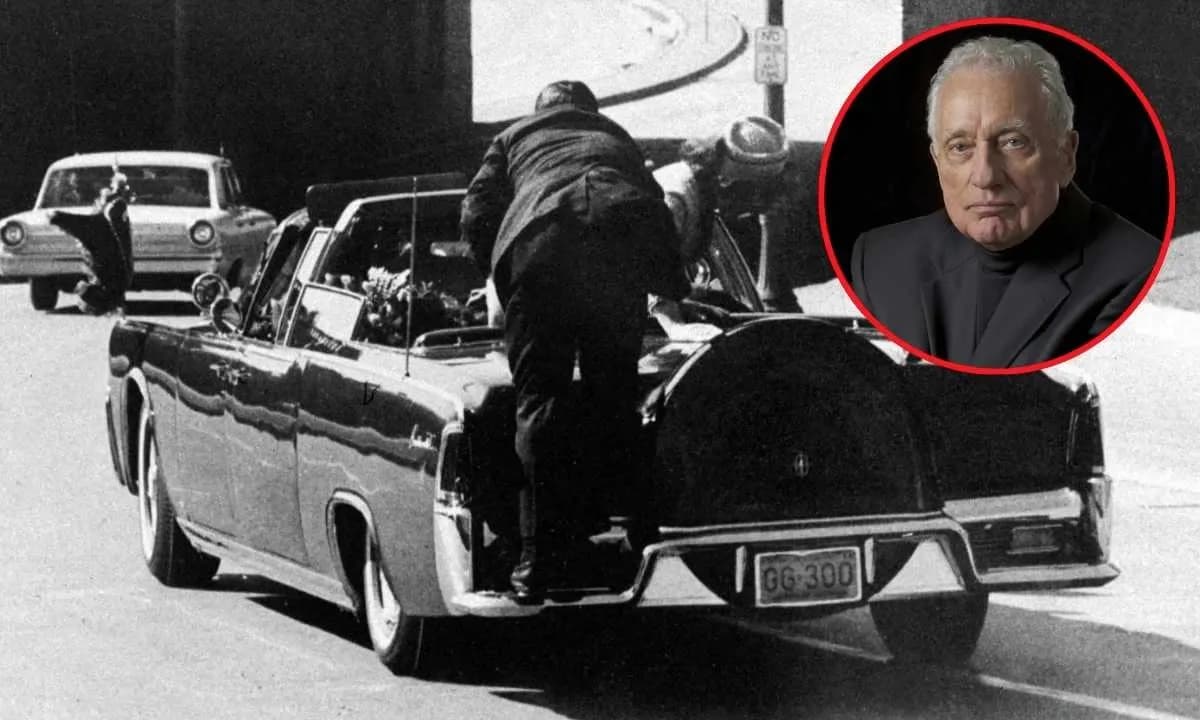
Clint Hill, the Secret Service agent who jumped onto President John F. Kennedy’s limousine in a desperate attempt to save his life, has died at 93. For decades, his name remained in the shadows of history. But the footage of his heroic actions on November 22, 1963, became one of the most haunting images of JFK’s assassination.
Hill spent years struggling with the weight of that moment, believing he could have done more. His death marks the passing of a man who carried the burden of a nation’s tragedy.
Hill died at his home in Belvedere, California, as confirmed by Gallery Books, his publisher. No cause of death was provided. His story is one of duty, trauma, and a lifelong attempt to reconcile with a single moment that changed history.
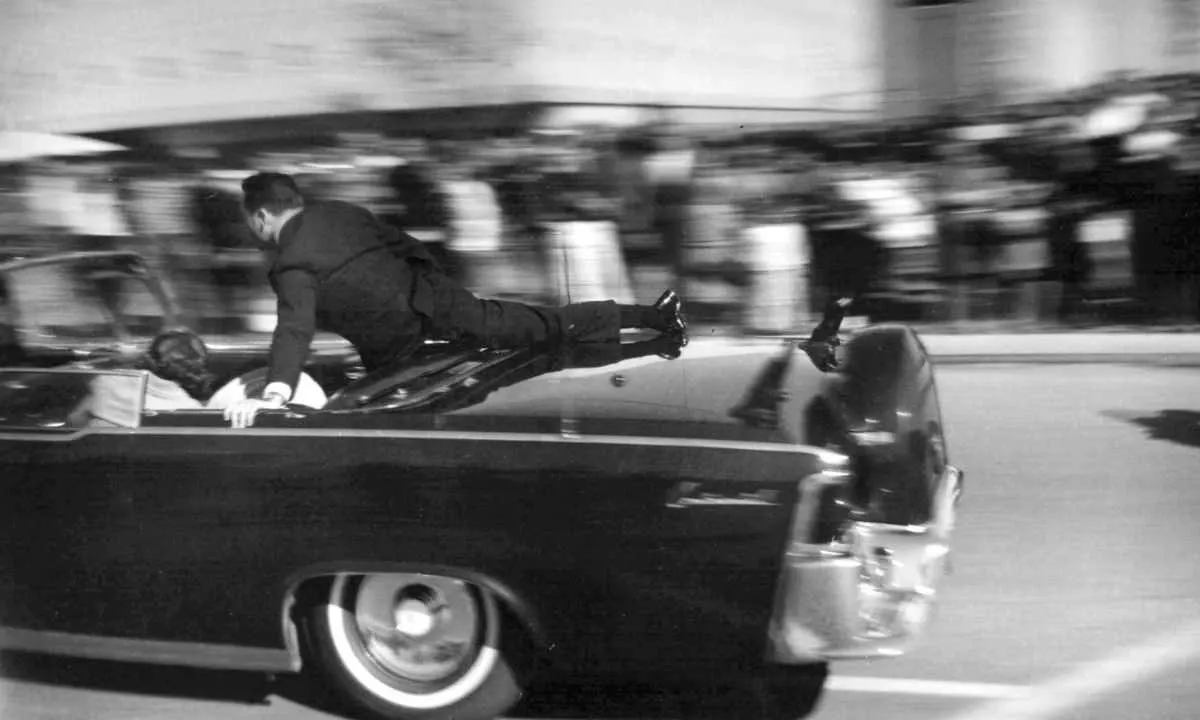
He was assigned to Jacqueline Kennedy’s security detail that day, positioned on the left running board of the follow-up car. When shots rang out in Dealey Plaza, he reacted instantly, racing toward the president’s vehicle. But before he could reach him, the fatal shot struck.
The emotional and historical impact of that day followed Hill for the rest of his life. The Secret Service recognized his efforts, promoting him and awarding him commendations, but he never forgave himself.
In a tearful 1975 interview with CBS’s 60 Minutes, he admitted, “If I had reacted just a little bit quicker. And I could have, I guess. And I’ll live with that to my grave.”
That interview marked a turning point for Hill, forcing him to confront his emotions publicly for the first time. Decades later, he acknowledged that it helped him begin the healing process.
Hill’s actions on that day were immortalized in the infamous Zapruder film. During the assassination, he leaped onto the back of the limousine, pushing Jacqueline Kennedy back into her seat as the vehicle accelerated toward Parkland Hospital. Years later, he reflected on that moment.
He told CNN’s Jake Tapper, “I was the only one who had a chance to do anything… And I couldn’t get there fast enough.” The weight of that realization led to severe post-traumatic stress disorder, forcing him into early retirement at the age of 43.
Born in Larimore, North Dakota, in 1932, Hill’s path to the Secret Service was unexpected. He attended Concordia College in Minnesota, served in the U.S. Army, and briefly worked for a railroad before joining the agency in 1958.
His career took him from the Denver field office to the White House. He protected President Dwight Eisenhower before guarding the Kennedy family. He continued serving under Lyndon Johnson, Richard Nixon, and Gerald Ford, experiencing firsthand some of the most pivotal moments in American history, from the Cuban Missile Crisis to the Civil Rights Movement and Watergate.
For years, Hill remained largely silent about his trauma, avoiding public discussions about JFK’s assassination. But his 60 Minutes interview changed that, opening the door for more conversations.
In 2006, he reunited with Mike Wallace on Larry King Live, where he credited that first interview with helping him begin to heal. “It was because of his questions and the things he asked that I started to recover,” Hill said.
In his later years, Hill co-authored several books, including Mrs. Kennedy and Me and Five Presidents, offering a rare insider perspective on his years in the Secret Service.
He married his co-author, Lisa McCubbin Hill, in 2021, calling their relationship “a once-in-a-lifetime love.” In 2018, his home state of North Dakota honored him with the Theodore Roosevelt Rough Rider Award, recognizing his service to the nation.
Hill’s life is widely remembered by a single moment. However, it did not define him entirely. His dedication, sacrifice, and struggle to come to terms with history made him a living testament to the weight of duty.
His passing closes a chapter on one of the most painful days in American history. A private funeral service will take place in Washington, D.C., at a later date.
Also read,