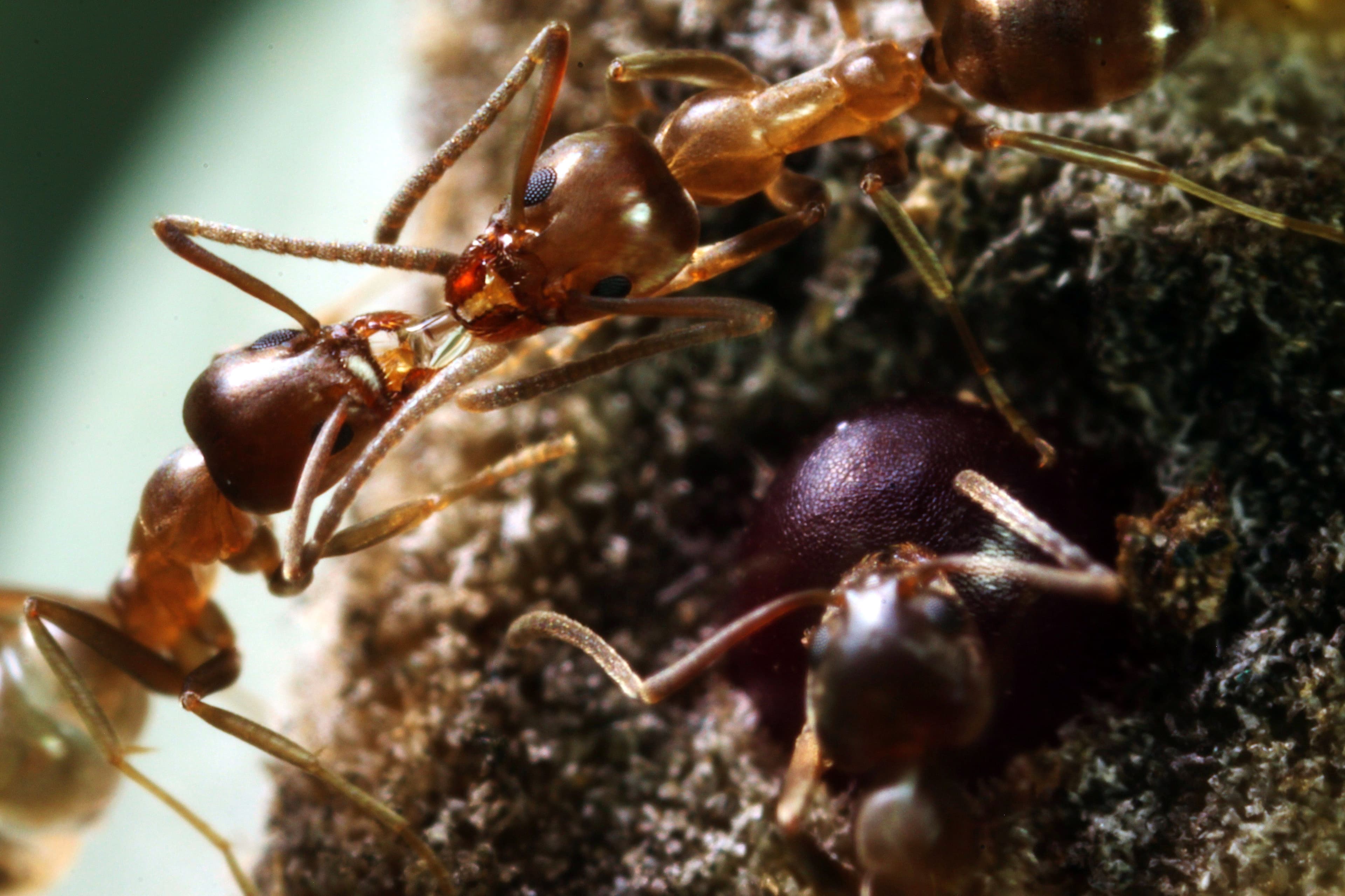
North of San Diego, a war has been going on for decades. It runs for miles, it has killed millions, and scientists have compared it to the trench warfare of World War I. Most people who live nearby have never noticed it, because every soldier is about 2–3 millimetres long.
The fighters are Argentine ants, and the story behind the viral posts about them is real. One part of it is newer than most of those posts admit: the smaller army appears to be winning.
An empire built by accident
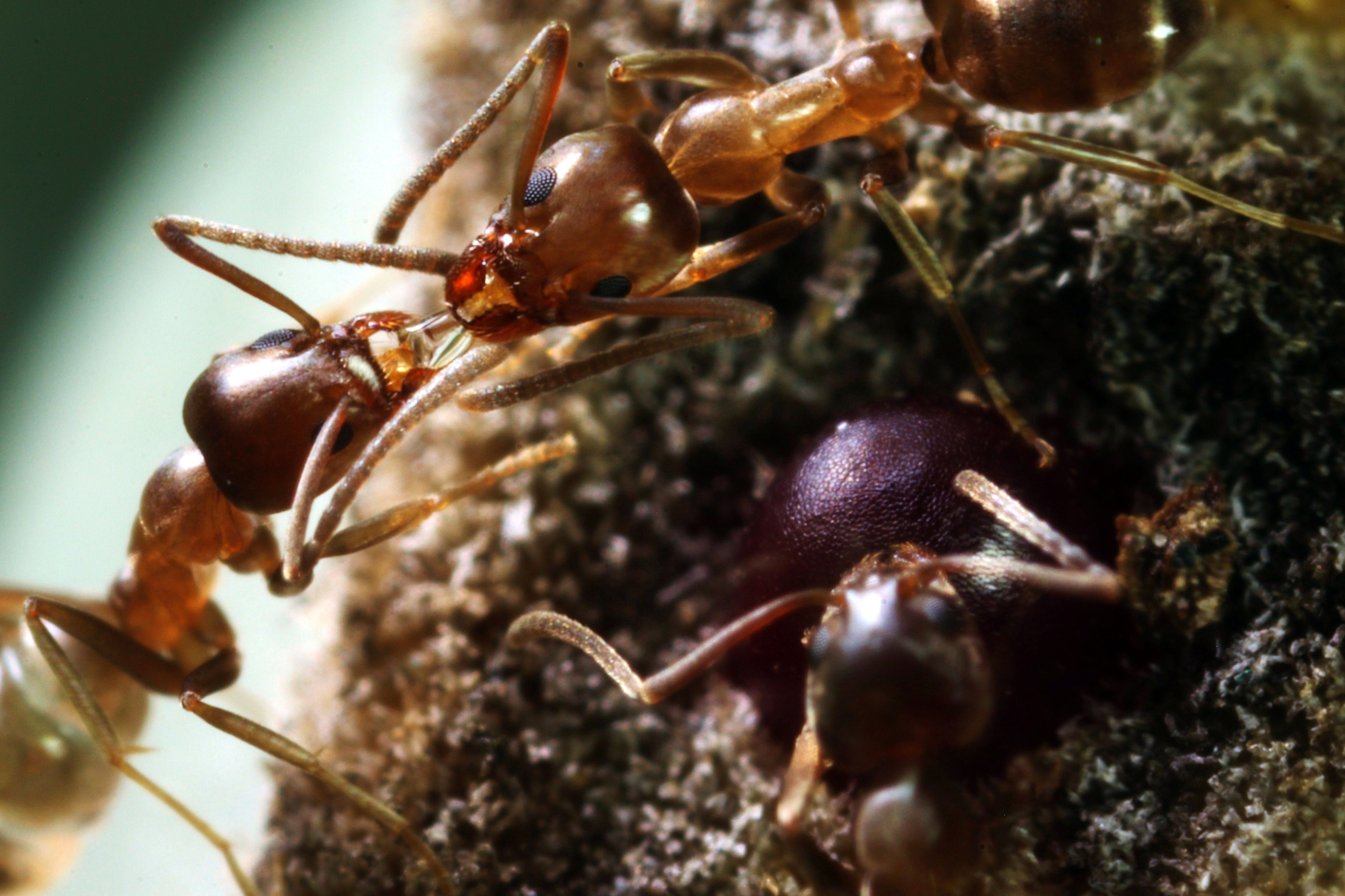
Argentine ants (Linepithema humile) are native to South America. They reached the United States in the 19th century, carried in by trade, and spread up and down coastal California.
In their new home they do something unusual. Most ant colonies stay separate and defend their ground against their neighbours. Introduced Argentine ants instead join into supercolonies: huge networks of linked nests whose workers treat each other as family, even nests miles apart.
The biggest of these, often called the Very Large Colony or Large Supercolony, stretches about 600 miles along the California coast, according to UC San Diego. Some estimates put its population near a trillion ants.
It is not alone. UC San Diego researchers counted five supercolonies in southern California, and the giant one borders three of the four smaller ones. Where they meet, the peace stops.
Friend or foe, by smell and genes
In a study published in Molecular Ecology in December 2006, a team led by UC San Diego biologist David Holway, with Melissa Thomas, Christine Payne-Makris, Andrew Suarez and Neil Tsutsui, set out to explain why.
They found that ants from the same supercolony did not fight, however far apart their nests were. Ants from different supercolonies commonly clashed at the borders. Distance and environment did not explain who attacked whom. Genetics did: genetically similar ants were peaceful, and genetically different ones attacked each other. In practice, the ants tell friend from foe by the chemical signature on each other's bodies.
Counting the dead
Thomas collected dead workers every week along stretches of the border around the Lake Hodges supercolony, a much smaller rival near Escondido. From those counts, the team estimated that at least 15 million workers died there in six months in 2004.
- 15M+Workers killed in six monthsLake Hodges border, 2004
- ~30MImplied deaths per yearIf that pace held all year
- 5Supercolonies in southern California
- ~600 miLength of the largest supercolony
Source: UC San Diego; Thomas et al., Molecular Ecology (2006)
The widely shared figure of 30 million deaths a year comes from doubling that six-month estimate. It is a reasonable extrapolation, not a separate count.
Thomas explained why the fighting matters to the ants: "Territory defense is expensive both in time and workers," she said in UC San Diego's 2006 release. Every worker lost at the border is one that isn't gathering food or raising young.
Why it looks like World War I
The comparison to the Western Front comes from what researchers saw on the ground. The borders were sharp, often just a few metres wide, and the line moved back and forth without either side breaking through. Heavy losses, little ground gained, and no end in sight.
Biologists have suggested one reason it never settles. Many animals calm down once they get used to a neighbour, but Argentine ants don't seem to. So the fighting never wears itself out.
There is no general giving orders, either. Each ant reacts to the chemistry of the ant in front of it, and millions of those small reactions add up to a front line.
Plot twist: the small army is advancing
For years, the story ended there: a stalemate. Newer research suggests the front has not been as frozen as it looked.
In a 2026 PhD dissertation at UC Berkeley, Rachel Beth Weinberg, advised by Neil Tsutsui (one of the 2006 study's authors), analysed Argentine ants sampled across California from 1964 to 2024. According to the abstract, every case where the Large Supercolony had been replaced at a site came from the spread of one genetically diverse supercolony first identified near Lake Hodges. That turnover happened over roughly the last 25 years.
The abstract mentions mutations in genes linked to pesticide resistance and exploratory behaviour as possible reasons for the spread. It does not say they are confirmed causes, and the full dissertation is not public until August 2027.
- 1891Argentine ants first recorded in the USIn New Orleans, after arriving through trade.
- 1997UC San Diego sees rival ants fight in the lab
- 2004Six months of fieldwork on the borderAt least 15 million workers estimated dead near Lake Hodges.
- Dec 2006Study published in Molecular EcologyGenetic differences explain which colonies fight.
- 2026UC Berkeley dissertationThe Lake Hodges supercolony appears to be expanding into Large Supercolony ground.
What we still don't know
The death counts are about 20 years old, and nobody has published a new count of casualties since. We don't know how many ants die at the border today, or where exactly the lines now run. The genetic data suggests the smaller colony has been gaining, but the full findings are still under embargo.
What is clear is that a war bigger than most human ones has been going on under suburban San Diego's driveways and gardens for decades, and it isn't over.
Sources: UC San Diego Biological Sciences, "Invasive Ants Territorial When Neighbors Are Not Kin" (2006); Thomas et al., Molecular Ecology (2006); Weinberg, "Evolution of Invasive Ant Supercolonies Across a Dynamic Social Landscape," UC Berkeley (2026); IFLScience.