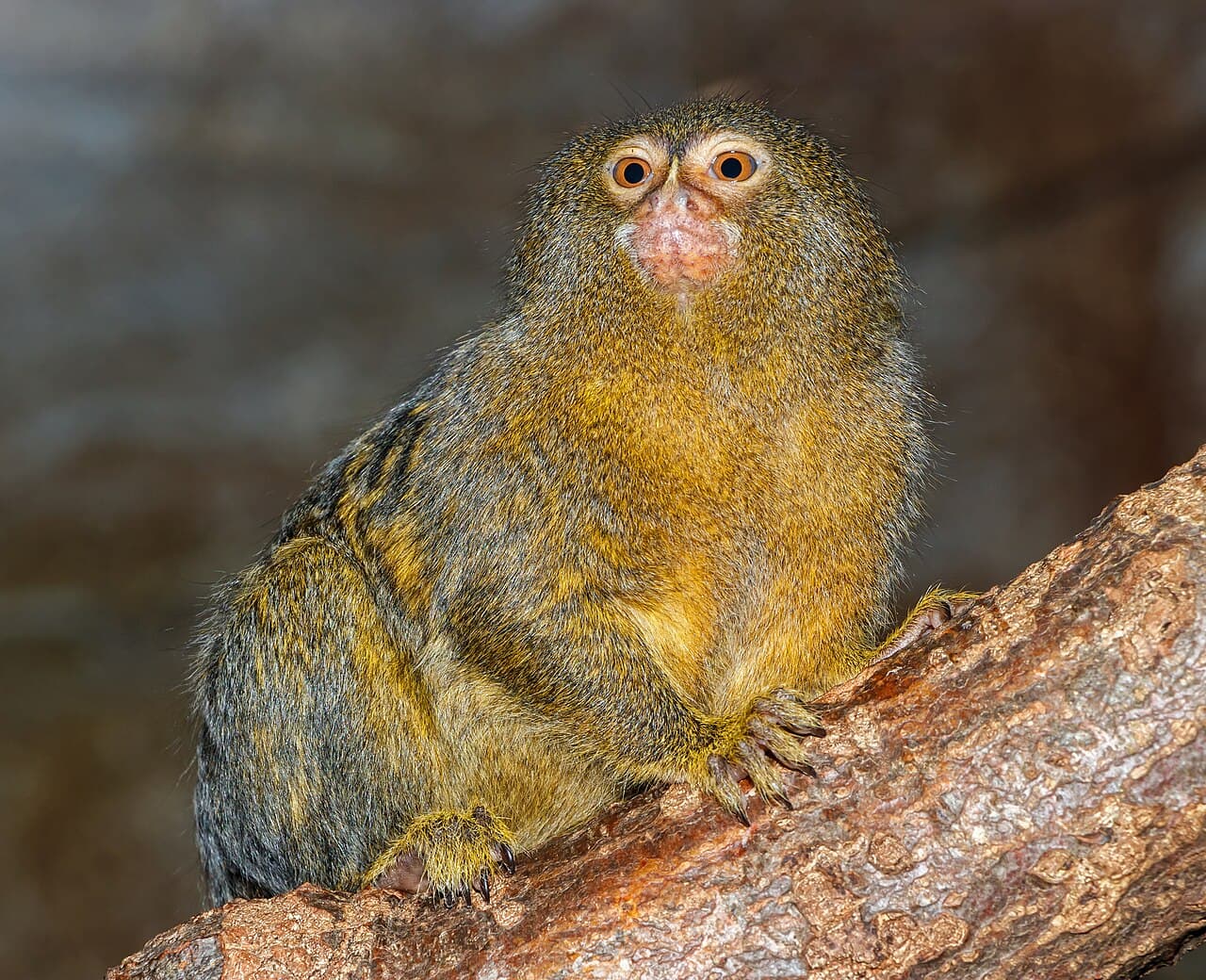
A pygmy marmoset can make small holes in tree bark and return to feed on the sap and gum that collect there.
Its tiny size attracts attention, but its feeding system is the more revealing story. This is a monkey with a specialized relationship to the trees around it.
Small does not mean simple
Pygmy marmosets belong to the genus Cebuella and live in the Amazon region of South America. Different species and populations need to be identified carefully rather than treated as one interchangeable animal.
The New England Primate Conservancy describes the western pygmy marmoset, Cebuella pygmaea, as a tree-dwelling primate with a highly specialized feeding routine.
Calling it one of the smallest monkeys is accurate. Calling it the smallest primate would overlook smaller lemurs.
A feeding hole becomes a repeat destination
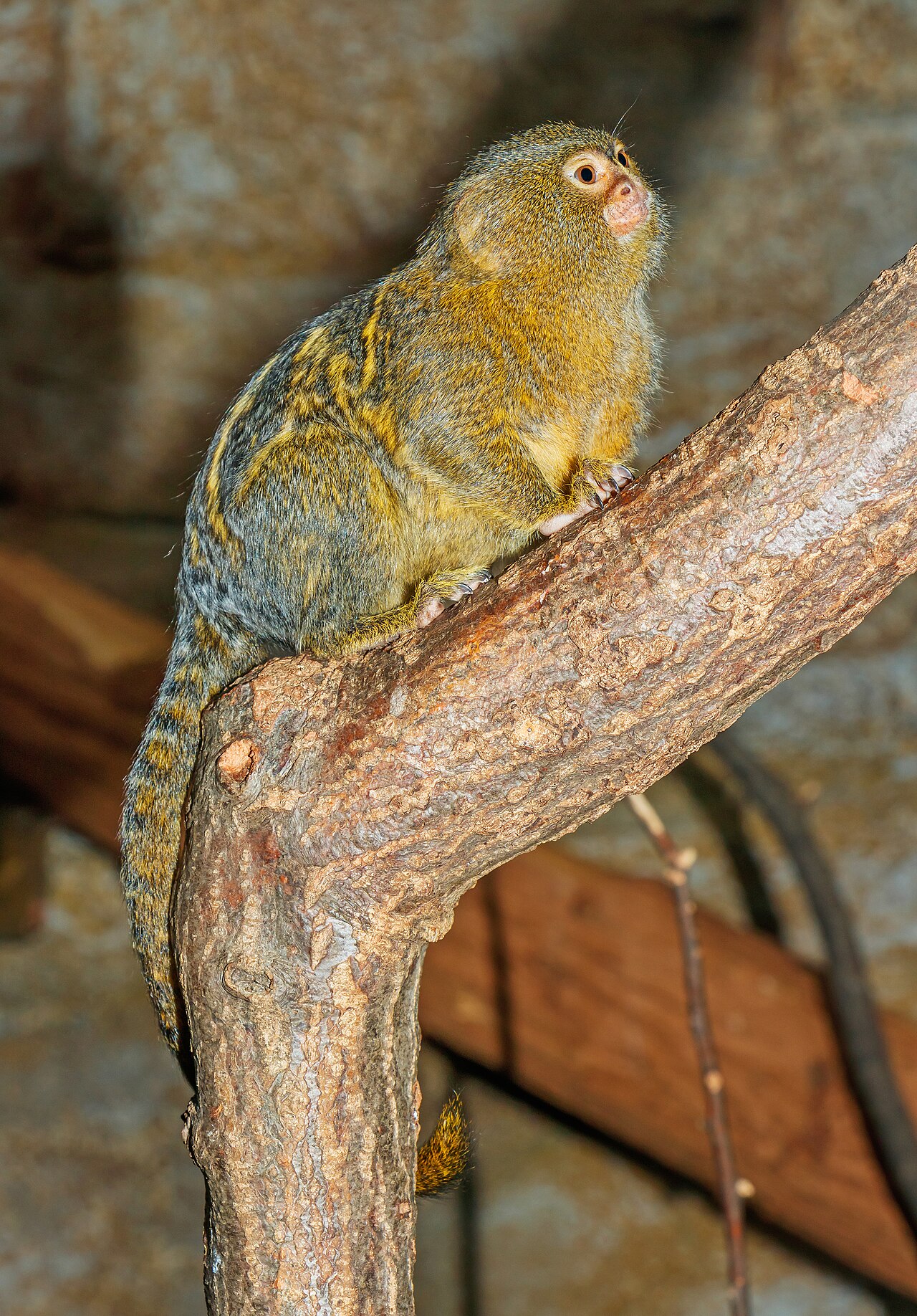
San Diego Zoo Wildlife Alliance describes sharp lower teeth used to gouge bark and a tongue used to collect the resulting exudates.
Claw-like nails help the animal cling to trunks as it works. The teeth, hands, and climbing behavior support the same task.
A useful feeding tree can be revisited. The small holes are evidence of activity that might otherwise be difficult to see in dense vegetation.
Insects and other foods also form part of the diet. A specialization does not imply that every meal is identical.
Family members share the work
Pygmy marmosets live in family groups. Care of young involves more than the mother alone.
The zoo’s historical account of its pygmy marmosets describes a father carrying youngsters. The conservancy also explains cooperative care within the group.
For such a small primate, transport and protection by other family members can be an important part of early life.
A forest animal, not a “finger monkey” accessory
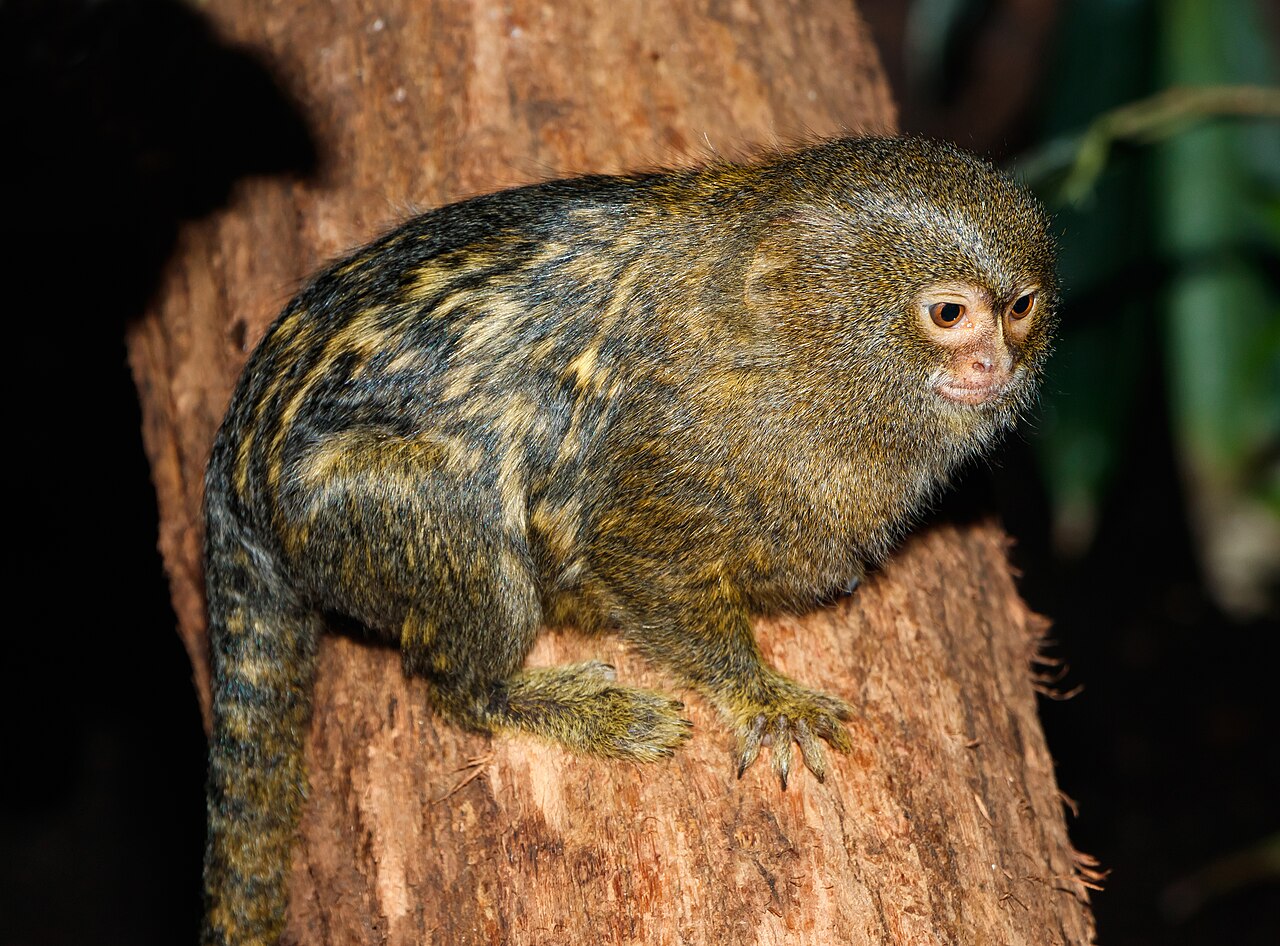
The conservancy identifies habitat disruption and capture for the pet trade among concerns facing western pygmy marmosets.
Popular nicknames can make these monkeys sound like objects designed to sit on a person’s hand. Their real lives depend on feeding trees, movement through vegetation, and social companions.
The pygmy marmoset offers a better kind of fascination: a tiny monkey using specialized teeth and a family network to live within the immense Amazon forest.
Photo credits
Featured image: H. Zell — CC BY-SA 3.0.

Body image 1: H. Zell — CC BY-SA 3.0.

Body image 2: H. Zell — CC BY-SA 3.0.

Photographs are illustrative. Captive animals, regional landscapes, and research specimens are identified in their captions. Image adaptations retain their respective source licenses.