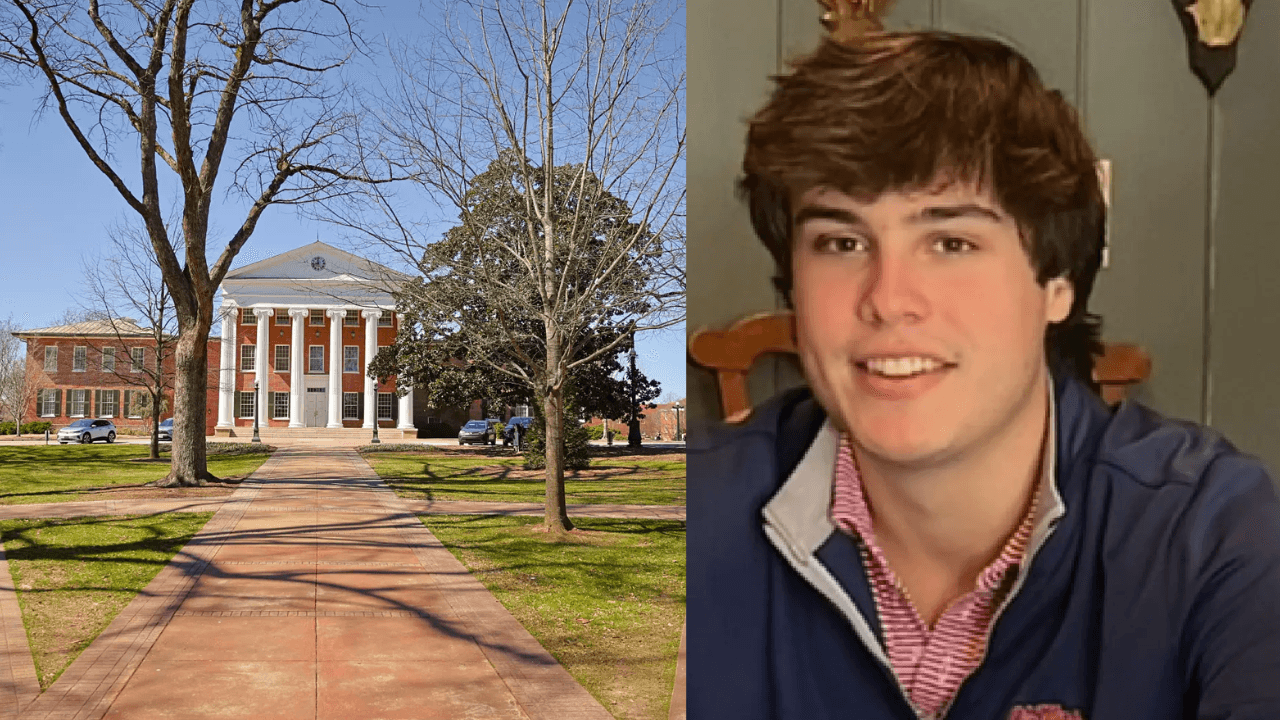
The University of Mississippi has identified two students who died in separate incidents on Sept. 21 as authorities investigate what caused their deaths.
Aidan Hamilton, 18, was a freshman from Englewood, Colorado. Robert Strang, 20, was a junior from Atlanta, Georgia.
Packaged kratom purchased from a retail store was discovered during both investigations, according to the Lafayette County Metro Narcotics Unit. However, authorities have not determined that kratom or any other substance contributed to either death.
Students Found in Separate Locations
Hamilton was found unresponsive at Stewart Hall, a residence hall on the University of Mississippi campus in Oxford.
Emergency dispatch audio obtained by WMC Action News 5 described a possible overdose call at a dormitory. A dispatcher said the person was not believed to be breathing and that callers were attempting to begin CPR.
Authorities have not publicly confirmed whether the person discussed in that call was Hamilton.
Strang was found at an off-campus home on Van Buren Avenue, according to local reporting and the Lafayette County Coroner’s Office.
Investigators are treating the deaths as two separate cases. The narcotics unit said it had no confirmed evidence showing that the deaths were connected.
University Releases Students’ Names
Ole Miss released the students’ names after receiving permission from their families.
Vice Chancellor for Student Affairs Shawnboda Mead said the university had contacted both families to offer condolences, resources and support.
“We offer heartfelt condolences to the families, friends and classmates of Aidan and Robert,” Mead said in a message to the university community.
The university also encouraged students and employees to remember that two families were grieving the loss of their children and asked the community to respect their requests for privacy.
Families Remember Two Young Lives
Strang’s family described him as a deeply loved son while thanking relatives and friends for their support.
“We are heartbroken by the loss of our dear son,” the family said in a statement provided through a spokesperson.
Strang was involved with the Phi Delta Theta fraternity and served as a co-chairman for its 2026 recruitment activities, according to the organization’s social media posts.
Hamilton’s family remembered him as “a bright, wonderful young man who was taken too soon.” The family said he was greatly missed and requested privacy while relatives processed the loss.
Kratom Found During Both Investigations
Investigators reported finding commercially packaged kratom at both locations. They have not disclosed the product names, quantities or whether the packages were open.
The discovery prompted public concern because kratom can produce stimulant or opioid-like effects depending on the product, concentration and amount consumed.
However, the presence of a substance at a scene does not establish that it caused or contributed to a death. Medical examiners generally rely on autopsies, toxicology testing, medical histories and other evidence before determining a cause and manner of death.
Lafayette County Metro Narcotics said it did “not have confirmed information indicating that kratom or any other substance was a contributing factor in either death.”
The unit nevertheless advised people to avoid kratom and any medication or substance that was not prescribed or obtained from a trusted, regulated source.
What Is Kratom?
Kratom comes from Mitragyna speciosa, a tropical tree native to Southeast Asia. Its leaves contain psychoactive compounds, including mitragynine and 7-hydroxymitragynine, commonly called 7-OH.
Products sold in the United States can include powders, capsules, gummies, drink mixes and concentrated shots. The strength and chemical makeup can differ significantly between products.
The Food and Drug Administration says it has not approved kratom or its compounds for any medical use. The agency has warned about possible serious effects, including seizures, liver toxicity and substance-use disorder.
The FDA has expressed particular concern about concentrated or enhanced 7-OH products. The agency describes 7-OH as a potent opioid compound and advises consumers to avoid products containing elevated or added levels.
Those federal warnings provide general safety information. They do not establish what happened in the Ole Miss cases or identify the contents of the packages recovered by investigators.
Toxicology Results Remain Pending
Official causes and manners of death had not been released for Hamilton or Strang as of Sept. 25.
Authorities are awaiting toxicology reports, which can identify alcohol, prescription medications, illegal drugs and other substances present in a person’s body. The results may also show the concentrations detected, although interpreting whether a substance contributed to a death can require additional medical evidence.
Mississippi officials were working to expedite the testing, according to CBS News. Investigators have not announced when final results will become publicly available.
Until those findings are completed, claims that either student died from kratom or an overdose remain unconfirmed.
Campus Mourns While Investigators Search for Answers
The two deaths have prompted grief across the Ole Miss community as friends, classmates and relatives remember the students.
University officials are offering support resources while urging people to avoid spreading speculation about the circumstances of the deaths.
The central questions remain unanswered: what caused each student’s death, whether any substance contributed and whether the timing of the two cases was more than a coincidence.
Investigators say the cases remain separate while toxicology testing and other evidence are reviewed.