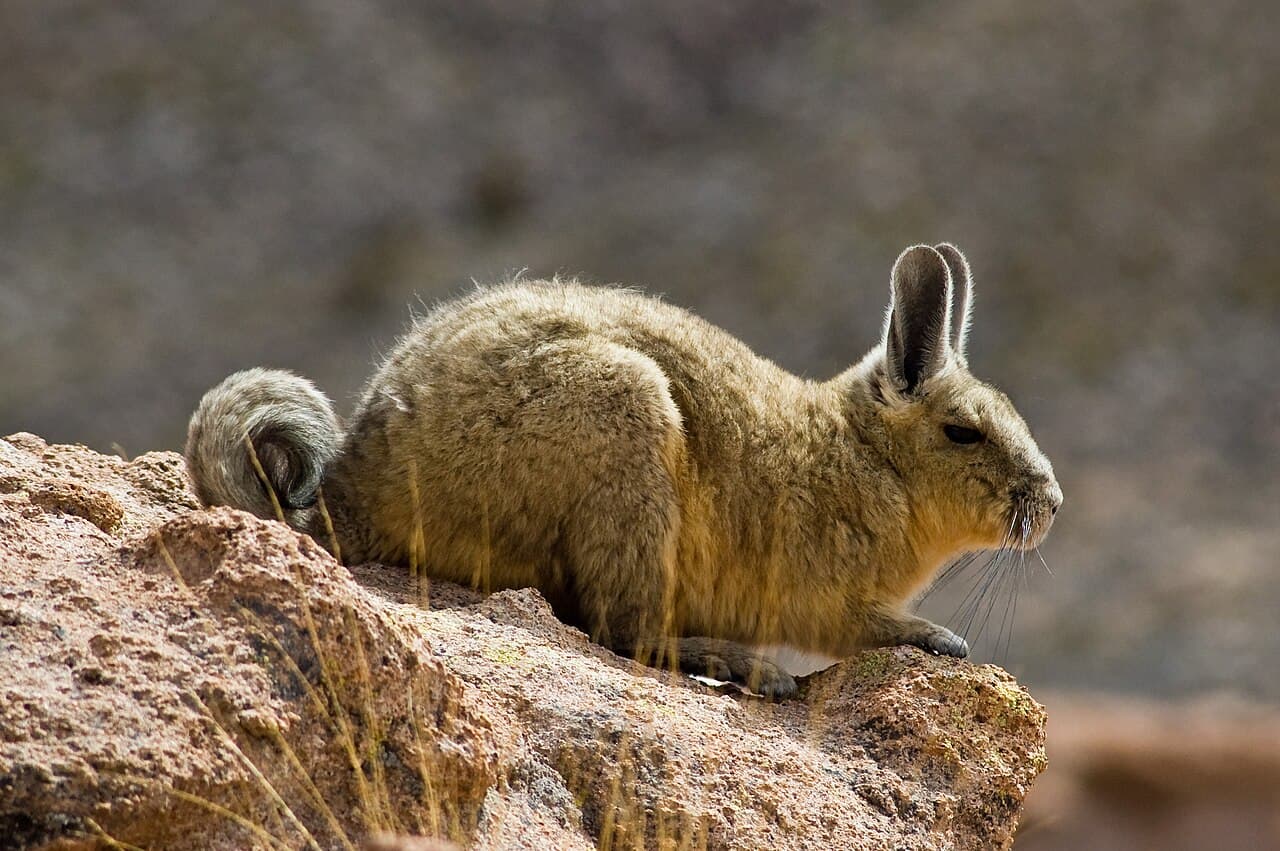
A mountain viscacha resting in the sun can look like a long-tailed rabbit taking a break. The resemblance is misleading: it is a rodent related to chinchillas.
Its soft fur and strong hind legs belong to a life among Andean rocks.
A family beyond rabbits
Mountain viscachas belong to the genus Lagidium. The animals pictured here are catalogued as southern viscachas, Lagidium viscacia.
Animal Diversity Web describes their rugged mountain habitat and plant-based diet.
Rabbits belong to a different mammal order. Similar ears and body shapes can evolve in unrelated groups facing some of the same challenges.
Rocks provide routes and refuge
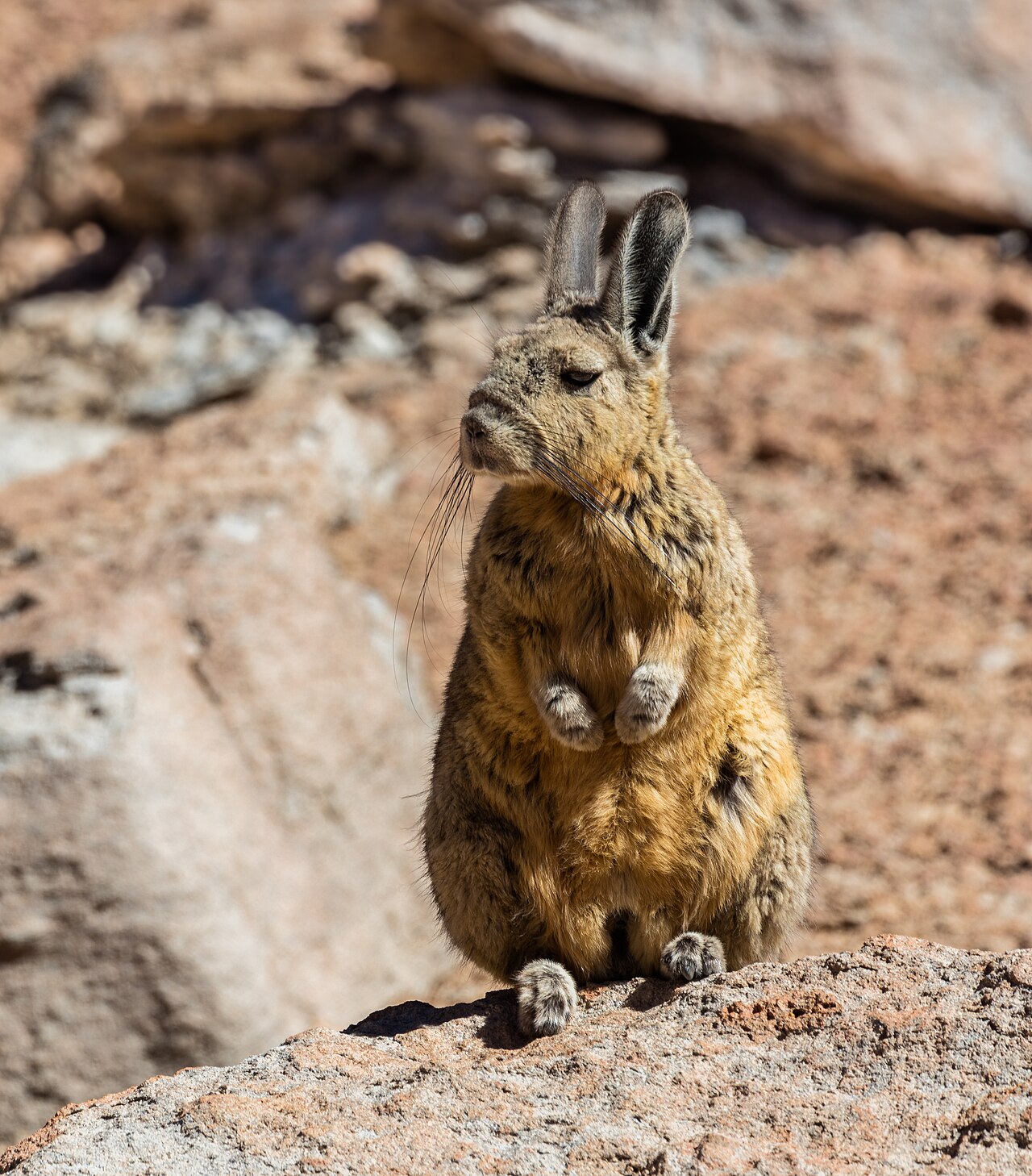
Strong hind limbs help viscachas move over uneven surfaces. Crevices provide places to retreat and shelter.
A rocky slope that looks barren from a distance can contain feeding patches, resting ledges, and many connected hiding places.
The animal's long tail and body posture become especially useful when it changes position on those irregular supports.
Fur in a changing climate
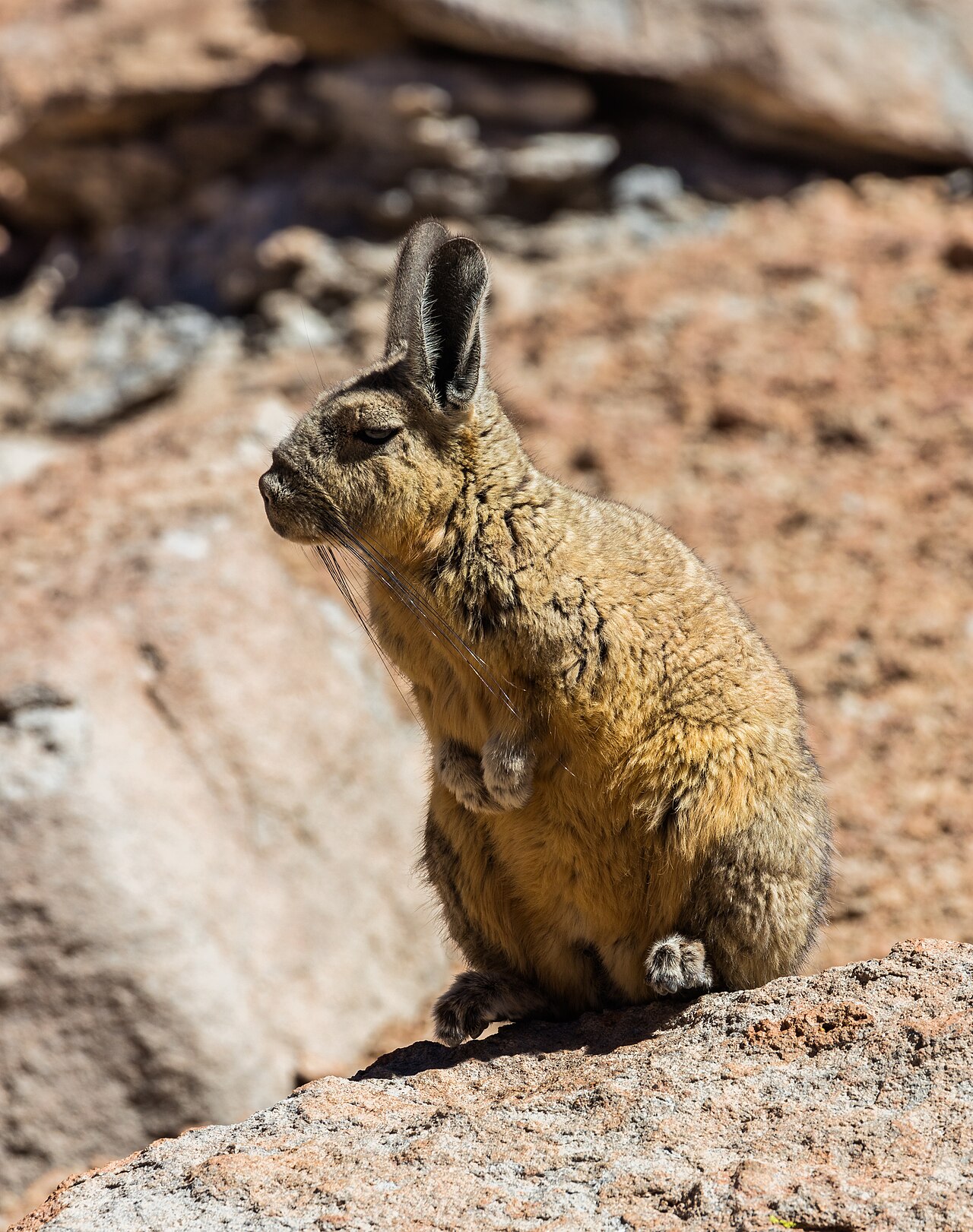
Dense fur provides insulation in mountain conditions. Sunlight, shade, wind, and sheltered crevices create different temperatures within a small area.
A resting photograph shows only one moment of that daily balancing act. An animal with half-closed eyes should not automatically be assigned a human feeling such as boredom.
The chinchilla-family account places viscachas within their wider rodent relationships.
A habitat made of details
Plants growing between rocks supply food, while the structure of the slope provides escape opportunities. Both matter.
Protecting mountain wildlife means recognizing how much habitat can exist in places that seem sparse to us.
The viscacha's appeal is easy to see. Understanding its feet, fur, and rocky surroundings reveals something more lasting: a mammal fitted to a landscape where a small ledge can make all the difference.
Photo credits
Featured image: Alexandre Buisse (Nattfodd); Source; CC BY-SA 3.0. Resized for web display.

Body image 1: Diego Delso; Source; CC BY-SA 4.0. Resized for web display.

Body image 2: Diego Delso; Source; CC BY-SA 4.0. Resized for web display.
