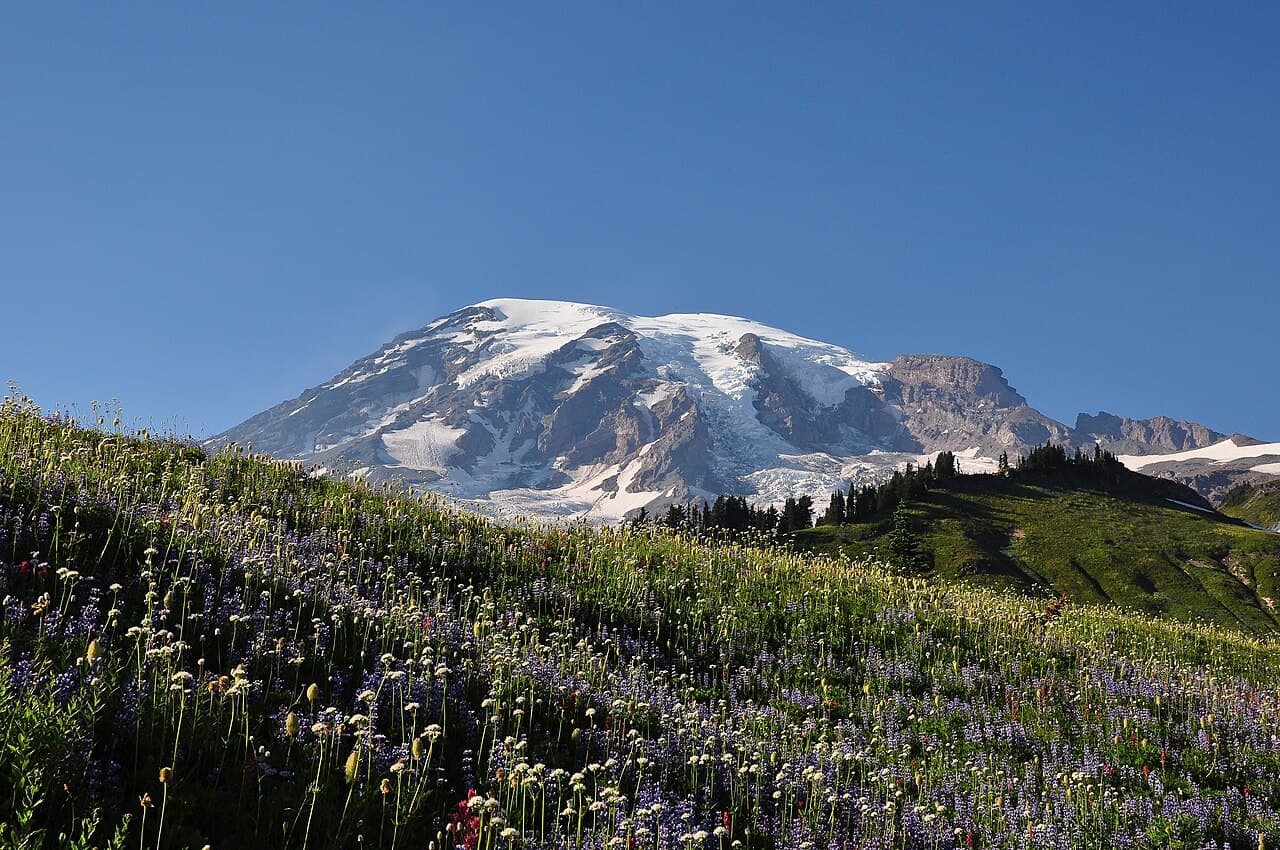
Mount Rainier is a volcano whose glacier-covered summit rises above forests and mountain meadows. Its size can dominate a clear view, but the environments around its base are just as important to the park’s character.
A rewarding visit combines an appreciation of the peak with careful attention to weather and seasonal access.
Choose an area that fits your dates
Different parts of Mount Rainier National Park have different road and facility seasons. Begin with what is accessible rather than a photograph of a place that may be snow-covered or closed.
The official park website provides current roads, operating hours, and recreation guidance. Check the details close to departure.
Notice the landscape below the summit
Paradise and other mountain areas offer views of slopes, surrounding ranges, and seasonal vegetation. Choose a suitable route and take time to observe the changing plant communities.
Wildflower photographs can be beautiful, but bloom timing varies. Never leave a trail to reach flowers or create a new photo spot.
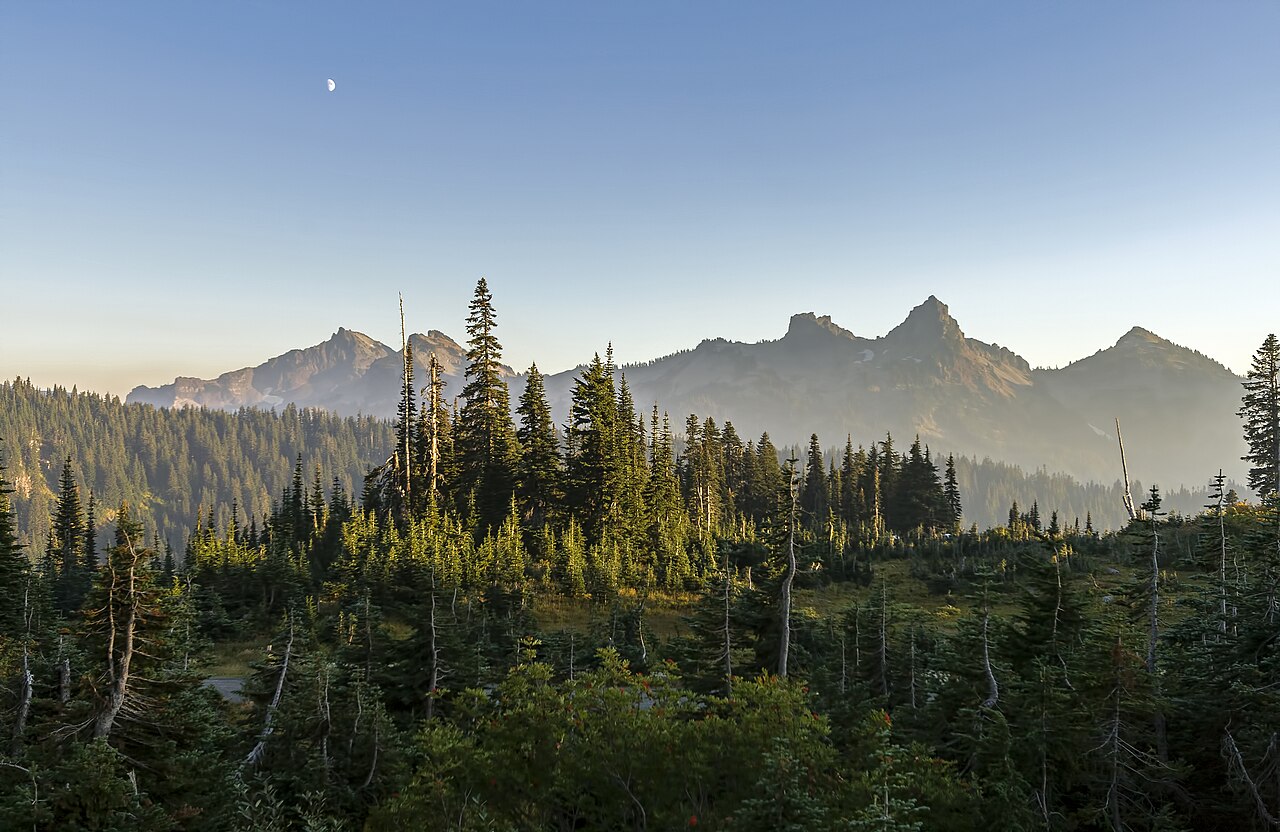
Understand the mountain’s scale
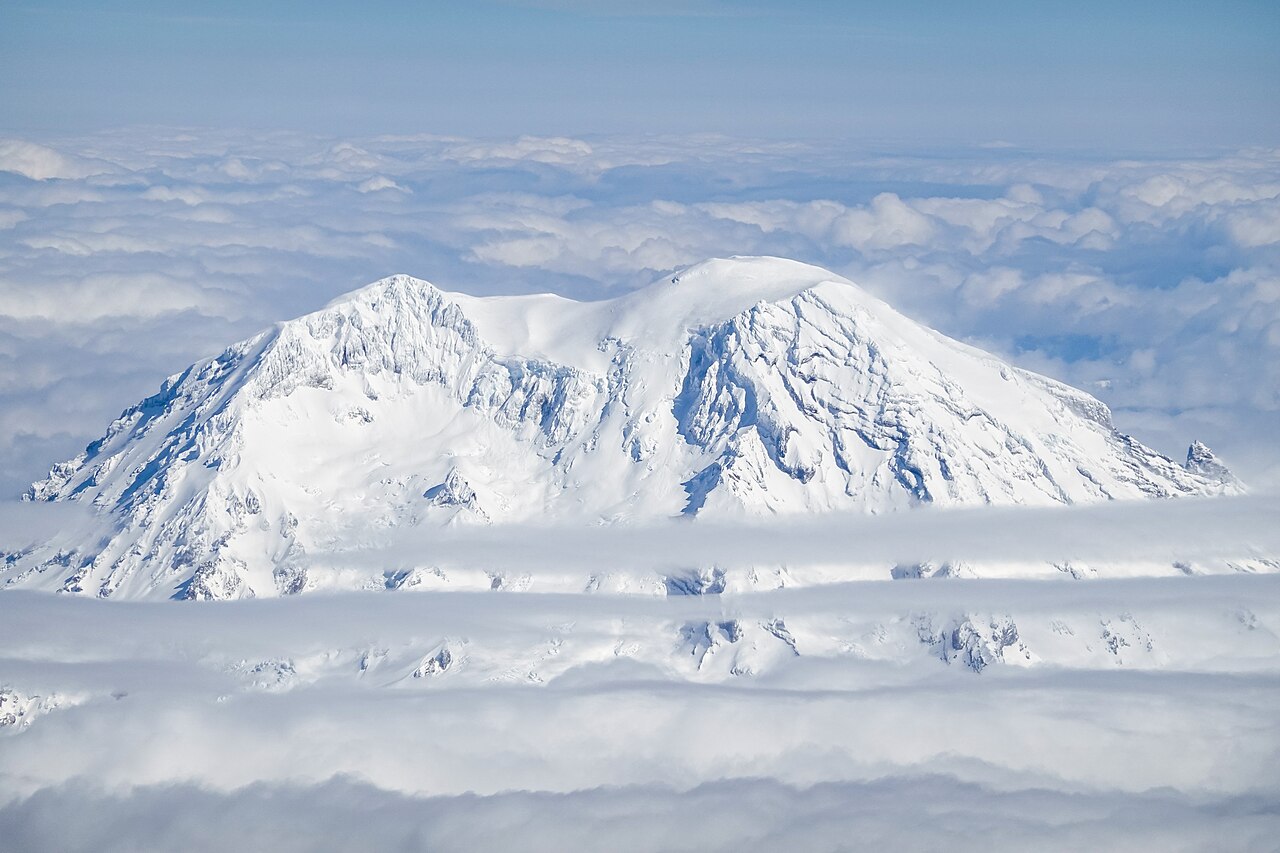
A distant or aerial view shows Rainier’s broad form, while a walk reveals smaller features such as streams and forest edges. Both perspectives help explain why the park contains so much variety.
Clouds can hide the summit. Keep another activity in mind so a day remains rewarding even when the mountain is not fully visible.
Respect mountain conditions
Snow, cold, and rapid weather changes can affect visits outside what travelers might consider winter. Some activities require specialist skills and equipment.
Read current safety guidance, choose routes within your experience, and stay out of closed areas. Keep wildlife wild and follow food-storage rules.
Mount Rainier’s beauty includes the places that surround its famous summit. A thoughtful visit leaves room for the forest, the meadows, and the possibility that a changing sky will reveal the peak in its own time.
Part of Visit America’s 100 places to visit in the USA.
Photo credits
Featured image: Mount Rainier above flowering meadows at Paradise. Photo: Bob Collowan. Original photograph; CC BY-SA 3.0. Resized for web display.

Body image 1: Tatoosh Range seen from Paradise in Mount Rainier National Park. Photo: Acroterion. Original photograph; CC BY-SA 4.0. Resized for web display.

Body image 2: Aerial view of Mount Rainier from the west. Photo: This Photo was taken by Timothy A. Gonsalves . Feel free to use my photos, but please mention me as the author. I would much appreciate if you send me an email [email protected] or write on my talk page , for my information. Please contact me before commercial use. Please do not upload an edited image here without consulting me. I would like to make corrections only at my own source to ensure that the changes improve the image and are preserved. Otherwise you may upload an edited image with a new name. Please use one of the templates derivative or extract .. Original photograph; CC BY-SA 4.0. Resized for web display.
