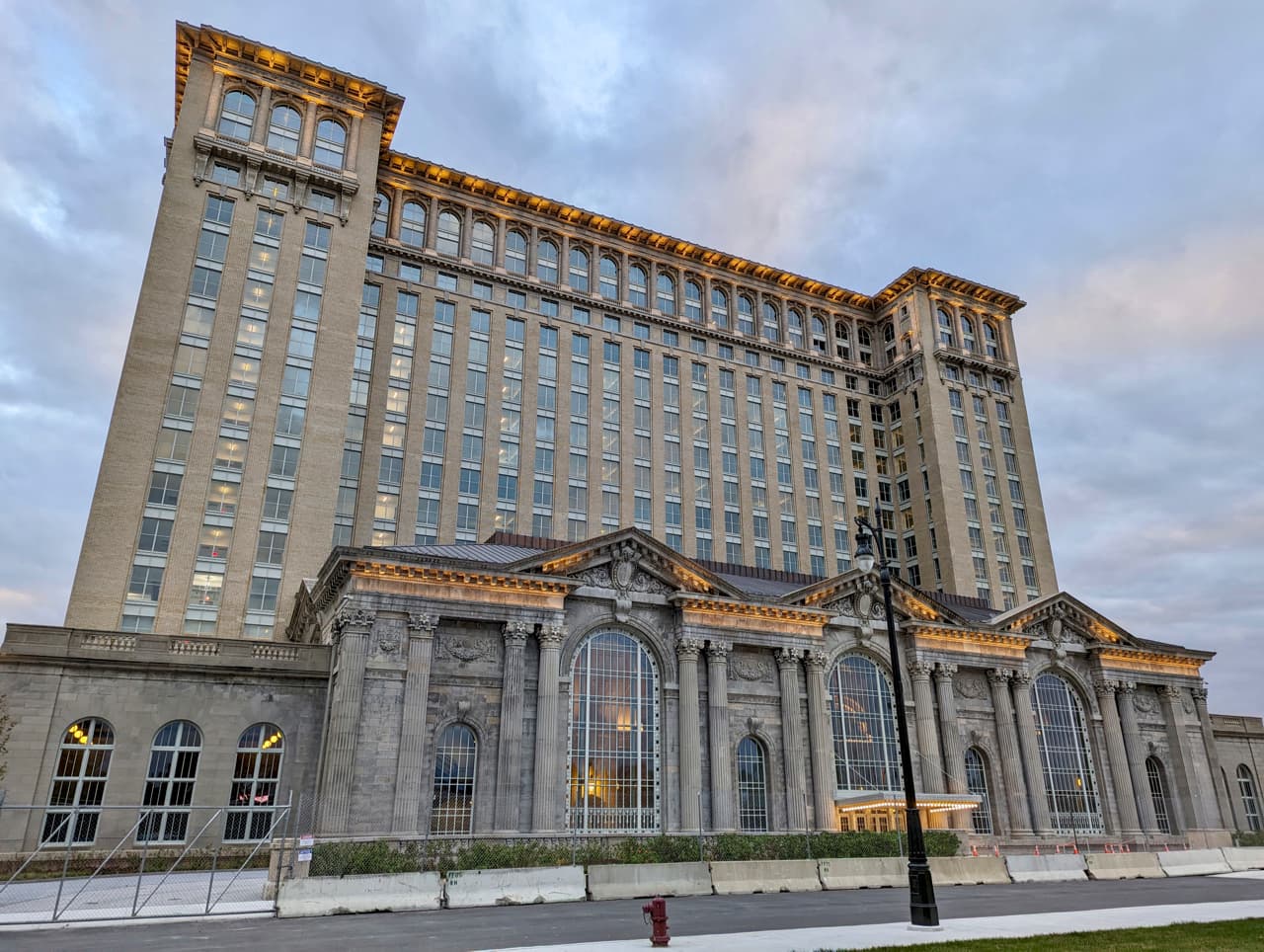
Detroit’s most famous empty station is no longer empty.
Michigan Central Station reopened in June 2024 after a major restoration led by Ford. The former passenger depot in Corktown now anchors a technology and cultural campus, with public access to designated areas. Photographs of shattered windows and empty halls describe an earlier chapter, not the building’s current identity.
That change makes the station especially interesting for anyone drawn to abandoned places. Here, the story continues beyond decay, raising a different question: what survives when a building returns to use?
A grand entrance to a growing city
Michigan Central Station began serving passengers in December 1913. A fire at the older depot forced the new building into use before its planned opening.
The project combined a substantial passenger station with a tall office block. Its architects, Warren & Wetmore and Reed & Stem, were also associated with New York’s Grand Central Terminal. The scale reflected the importance of rail travel to Detroit’s growth. Detroit Historical Society
The facade still makes that ambition easy to understand. The long lower section and the rising tower serve different purposes, yet read as one monumental gateway.
For arriving passengers, the building was both transportation infrastructure and a first impression of Detroit. That explains why its later vacancy became such a widely photographed image: an entrance designed to welcome crowds had lost its original traffic.
When the trains stopped coming
Passenger rail faced growing competition from road and air travel in the decades after World War II. Maintaining a large station became harder as the transportation system around it changed.
Michigan Central’s final passenger train departed on January 5, 1988. The structure remained, but its original job had ended. Detroit Historical Society station history
It is tempting to compress the following decades into one word: abandonment. Yet the building’s future was repeatedly debated, and decisions about its survival continued even when its public spaces were closed.
Ford’s historical timeline records a 2009 demolition push and the installation of new windows under the previous ownership in 2015. Ford purchased the station in 2018, beginning the restoration phase that led to reopening six years later. Ford’s station timeline
The rescue did not happen in a single dramatic moment. It depended on ownership, construction, preservation, and a new purpose substantial enough to fill the place.
What the older photographs actually show
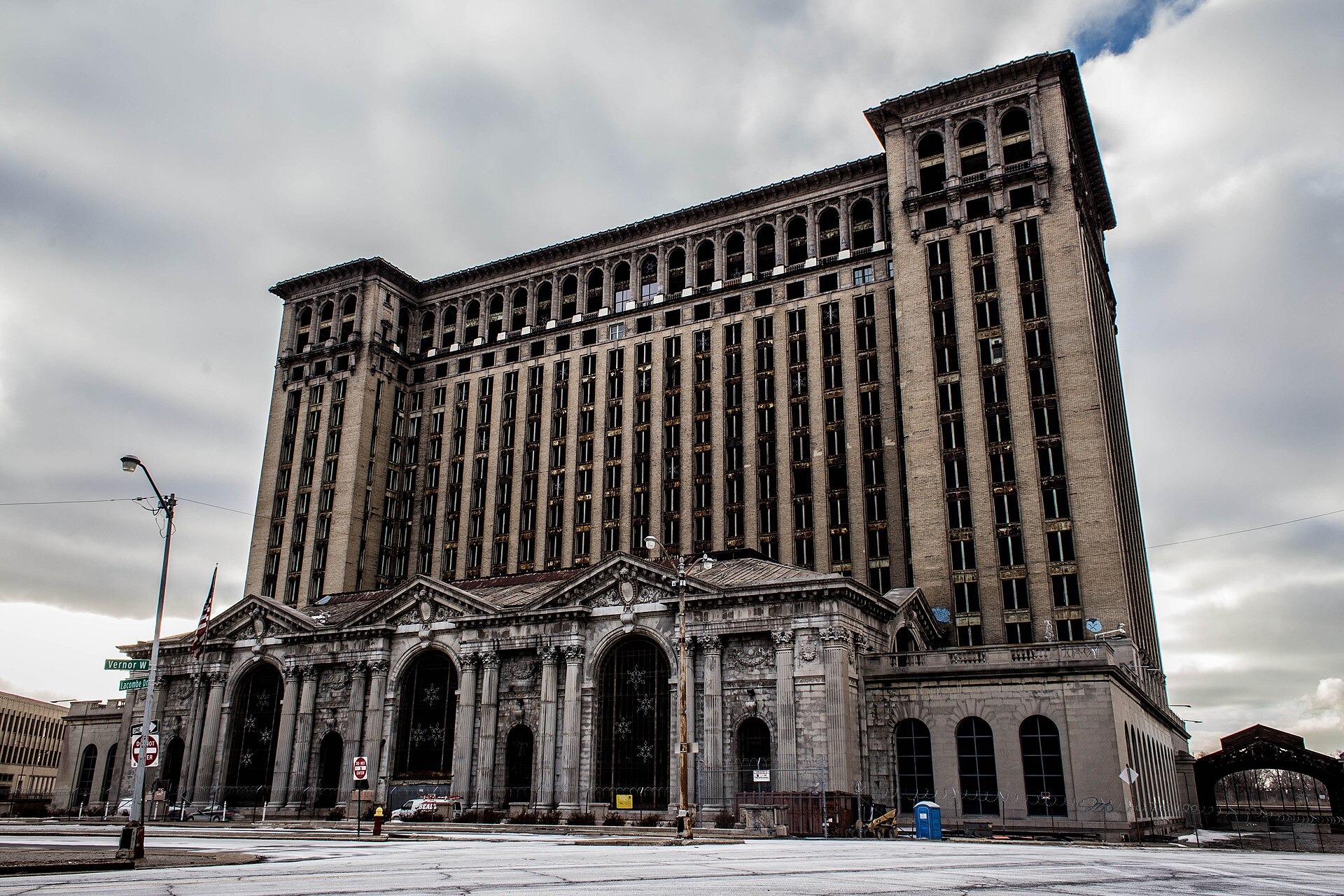
The 2013 photograph above records the station before Ford’s restoration. Empty window openings make the tower appear almost transparent in places.
The featured photograph was taken in 2023, during the restoration period. Its illuminated windows show change already underway, but it predates the 2024 reopening. Keeping those dates visible prevents an attractive image from becoming misleading evidence.
Compare the outline of the tower in both views. The overall form remains recognizable even though the building’s condition and use changed sharply.
That continuity helps explain why restoring the station matters beyond the structure itself. People who knew it only through images of vacancy can recognize the same landmark in a new phase. The earlier photographs remain valuable records without needing to define Detroit indefinitely.
What Michigan Central Station is now
The restored station forms part of Michigan Central’s approximately 30-acre district. The organization describes a campus bringing together work on mobility and technology with cultural activity and public spaces. Michigan Central overview
Its reopening should not be confused with the return of scheduled passenger rail service to the old platforms. The current identity is a restored building within an active campus.
That distinction also helps visitors plan. A public lobby, a guided tour, offices, and event areas can exist in one building without every floor being freely accessible.
How to visit the restored station
Michigan Central’s official visitor page lists public lobby hours and guided experiences. Check it shortly before traveling because special events and other activities can affect access.
Tours provide a structured way to learn about the station’s history and restoration. The operator also lists parking at the Bagley Mobility Hub and asks visitors to respect surrounding neighborhood parking. Michigan Central visitor information
Plan enough time to view the exterior from a comfortable distance, then explore whichever interior areas are open that day. The relationship between the low station building and the tower is easier to appreciate outside; the public rooms offer a different sense of scale.
Photography rules distinguish personal use from commercial work. Obtain the required approval for commercial photography and follow restrictions on equipment. An open lobby does not mean an unrestricted production location.
If you are comparing old and new images, choose the same architectural feature rather than trying to recreate an unsafe exploration photograph. A window bay or entrance is enough to show the transformation.
Michigan Central’s story now asks visitors to update their picture of the place. The empty station was real. So is the building that has returned to everyday use.
Frequently asked questions
Is Michigan Central Station still abandoned?
No. It reopened in June 2024 after restoration and now anchors an active technology and cultural campus.
Can you catch a passenger train there?
The reopening was not a restoration of scheduled passenger rail service at the historic station. Consult current rail operators for Detroit train travel.
Can visitors enter every floor?
No. Public access applies to designated areas and booked experiences. Offices and other spaces may remain restricted.
Are old photographs of the ruined station inaccurate?
They document a real period in its history. They become misleading only when presented as the station’s current condition.
Image credits
Featured image: PunkToad, CC BY 2.0.

Body image: Bartosz Brzezinski, CC BY 2.0.
