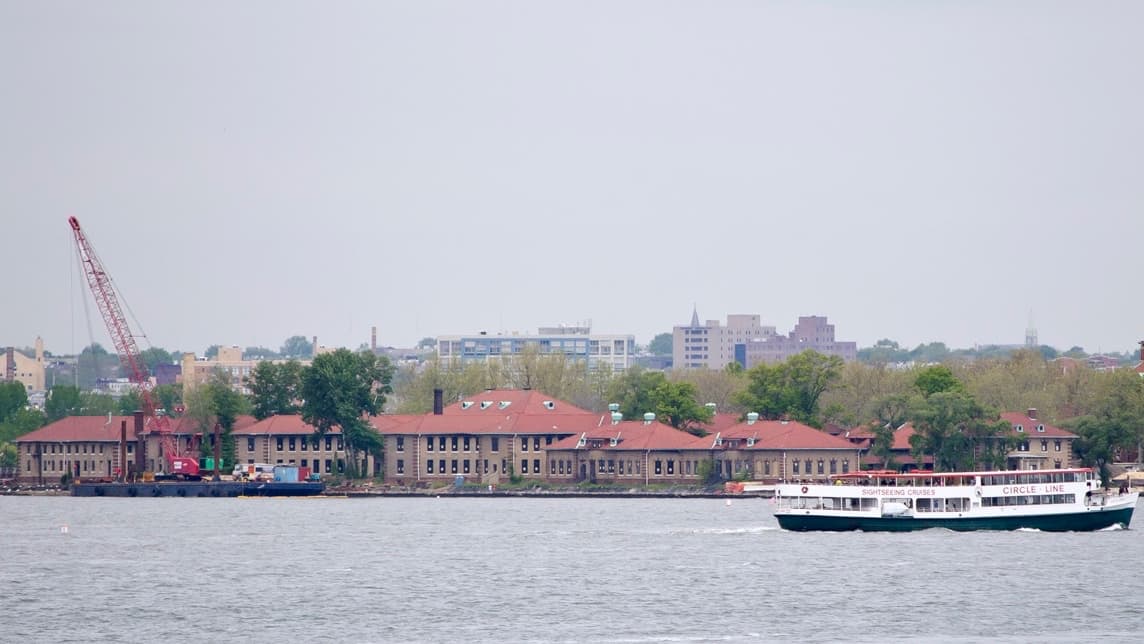
Across from Ellis Island’s famous museum, empty hospital buildings tell another part of the immigration story.
Ellis Island Immigrant Hospital occupied the island’s southern buildings, where medical staff treated people whose journey could not immediately continue. Hospital operations ended in 1951, and the island closed in 1954. Today, selected areas can be visited through authorized guided hard-hat tours.
The setting is familiar, but the perspective changes. Instead of a public hall built around movement and inspection, the hospital introduces waiting, care, uncertainty, and the ordinary work needed to support patients.
Why Ellis Island needed its own hospital
Immigration processing and medical care were connected, but they were not the same activity. A person who needed treatment required beds, staff, food, laundry, and appropriate space.
The general hospital opened on Island 2 in 1902. A separate contagious-disease complex on Island 3 was completed in 1909 and opened in 1911. These were parts of an expanding medical campus rather than one building with a single opening date. National Park Service administrative history
That layout explains the scale visible from the harbor. Rows of buildings and connecting spaces reflect different functions, not simply an oversized ward.
It also helps correct a common impression. The hospital was part of Ellis Island’s processing system, but not every immigrant passed through it as a patient. Hospitalization is one thread in a much larger history of arrival.
The work behind the patient rooms
A hospital depends on rooms that rarely appear in family stories. Kitchens prepare meals, laundries process linens, and staff maintain systems that keep the rest of the institution functioning.
Save Ellis Island’s tour information includes these service spaces alongside wards and other medical areas. Reading the complex through that range of uses makes its scale easier to understand. Hard-hat tour information
A corridor might once have connected several kinds of work. Its present emptiness should not make those jobs disappear from the story.
The National Park Service’s collections preserve medical objects, dishes, diaries, oral histories, and building fragments. Such evidence provides a more grounded picture than imagining an unnamed patient’s thoughts or inventing a dramatic scene at a particular window. NPS history and collections
The details are powerful enough without adding fictional voices. An object used daily can reveal how people ate, worked, or received care.
Why the hospital became empty
Changes in immigration policy reduced the role Ellis Island had played during its busiest years. The 1924 immigration restrictions were a major turning point in that longer transition.
The Public Health Service closed the hospital in 1951. Other federal use continued before the island’s final closure in 1954. Those dates explain why “the hospital closed” and “Ellis Island closed” are not interchangeable statements. NPS chronology
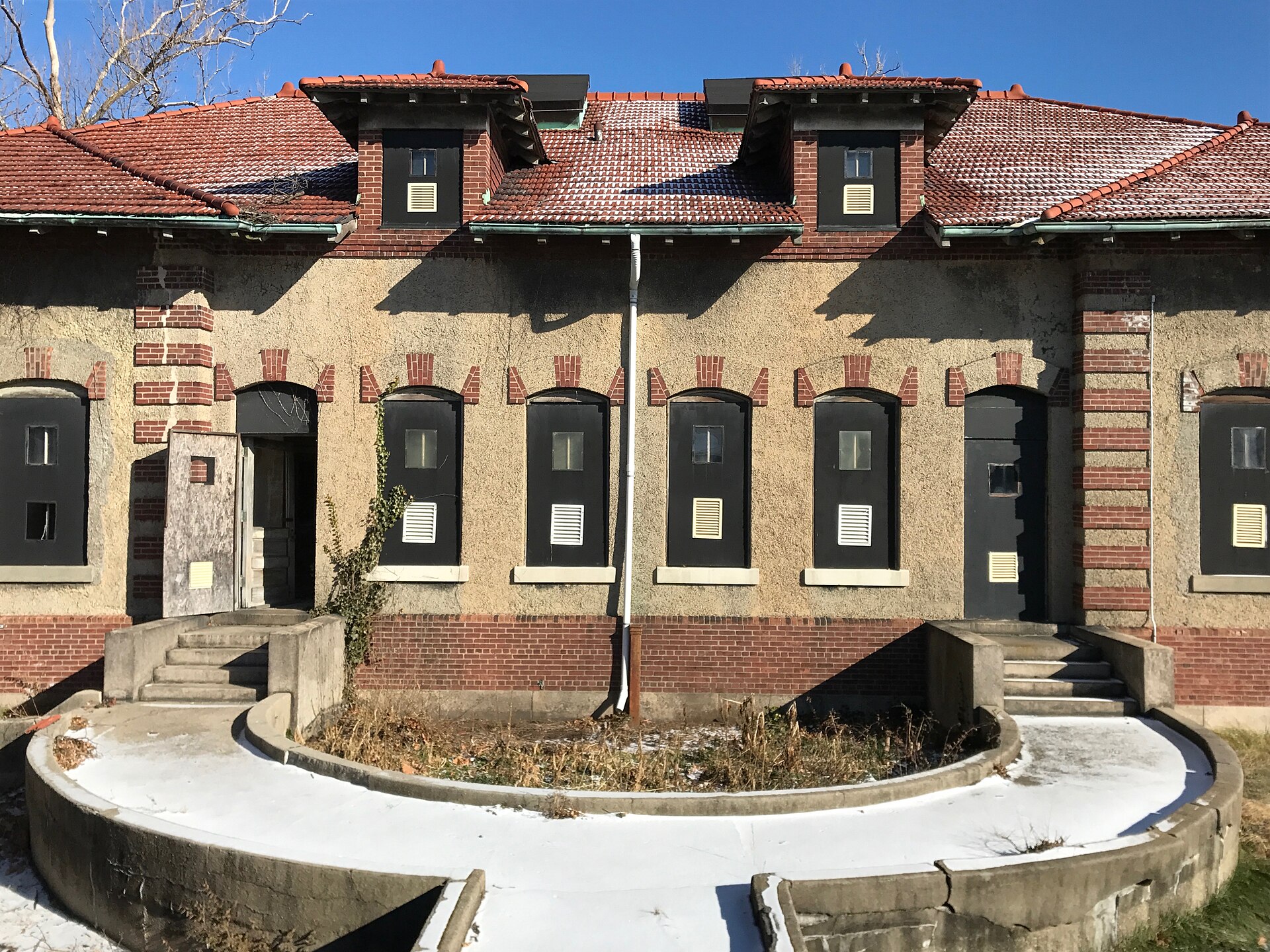
The featured harbor photograph shows the medical campus in 2012. The supporting image records an isolation-ward exterior in 2018. Neither should be read as a promise that every pictured building is on today’s tour route.
Unlike a single ruined facade, this is a campus where preservation work can proceed at different speeds in different buildings.
Saving the south side, one project at a time
The famous main immigration building and the hospital complex have had different restoration histories. A visit to a polished museum does not mean the surrounding medical buildings have all reached the same condition.
New Jersey Historic Trust records describe grants for work within the contagious-disease hospital complex. They show preservation as a sequence of specific projects, rather than one completed rescue of the entire south side. New Jersey Historic Trust
Save Ellis Island works with the National Park Service to preserve and interpret the buildings. Its public tours support an encounter with the site while restoration remains an ongoing effort. Save Ellis Island
How to visit the hospital legally
Book the authorized hard-hat tour and arrange the required ferry journey separately. The hospital experience is distinct from ordinary admission to Ellis Island’s main museum.
The operator describes the tour as approximately 90 minutes, with about 1.5 miles of walking. Participants must be at least 10 years old, wear closed-toe shoes, and follow the hard-hat requirements. Review all current conditions before booking, especially if mobility or uneven surfaces could affect your visit. Tour requirements
The National Park Service identifies the hospital tour as access to selected areas of the historic complex. Do not expect every ward or building to be included. Routes and availability can change with preservation needs. NPS guided tours
Allow room in the day for ferry schedules and the main immigration museum. The two experiences explain each other: one emphasizes entry and processing, while the other makes time spent waiting for care more visible.
The hospital’s strongest impression comes from that pause in the larger journey. For some arrivals, America began with a bed and a period of uncertainty rather than an immediate departure from the island.
Frequently asked questions
Can visitors enter the hospital without a guide?
No. Use an authorized guided hospital tour and remain with the group in approved areas.
When did the hospital close?
Hospital operations ended in 1951. Ellis Island itself remained in federal use until its closure in 1954.
Does a hospital tour include the ferry?
The operator states that ferry transportation is separate. Confirm both arrangements before traveling.
Is the entire hospital restored?
No. Preservation continues across the southern complex, and tours cover selected areas rather than every building.
Image credits
Featured image: InSapphoWeTrust from Los Angeles, California, USA, CC BY-SA 2.0.

Body image: Z22, CC BY-SA 4.0.
