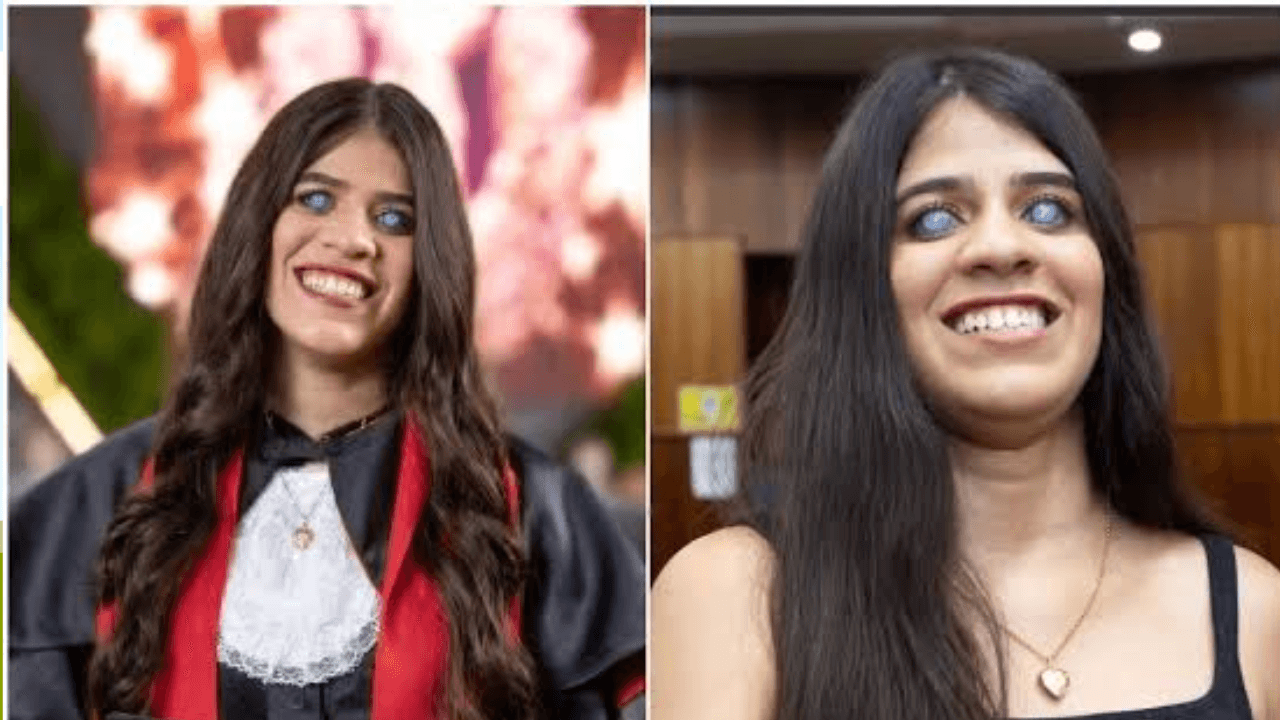
At 13, Maria Vitória Gomes da Silva knew she wanted to become a lawyer.
Growing up in Goianésia, Brazil, she loved debating ideas and learning how the law worked. But she also faced a challenge that made conventional textbooks and exams difficult to access.
Maria was born with a visual impairment caused by congenital glaucoma.
Eleven years after choosing her dream, she passed Brazil's bar examination on her first attempt. At 24, she was officially welcomed into the legal profession.
Her achievement was not just about determination. It was also about education, technology, family support and having the tools to demonstrate what she knew.
She Chose Her Future at Just 13
Maria grew up in the Brazilian state of Goiás, where she attended mainstream schools.
She learned Braille as a child with support from a specialist teacher. Her parents, classmates and educators also helped her throughout her schooling.
At 13, she became interested in studying law. She liked arguments, discussion and the challenge of understanding legal rules.
That interest developed into a clear ambition: to become an attorney.
Her visual impairment meant that reading printed material required different approaches. But it did not change the subject she wanted to pursue.
Technology Helped Her Study Independently
As Maria continued her education, assistive technology became central to her daily work.
Screen-reader software converted written material on computers and phones into speech, allowing her to navigate documents and study legal texts.
At Centro Universitário Evangélico de Goianésia, known as UniEGO, her instructors introduced accommodations for examinations.
Initially, teachers read questions aloud. Later, Maria was able to complete assessments on a computer, giving her more independence.
She graduated in law in December 2025.
Her university later described the achievement as an example of what can happen when students receive the accessibility support necessary to study on equal terms.
She Gained Real Experience Before Qualifying
Maria did not spend her university years learning only from textbooks.
She completed internships at a police station and the Goiás Public Prosecutor's Office.
Those placements allowed her to encounter legal work in practice and develop experience alongside her academic training.
Her interest in criminal law became especially important as she prepared for the Brazilian Bar Examination.
Passing the exam is required for graduates who want to register as lawyers with Brazil's professional bar association, the Ordem dos Advogados do Brasil, or OAB.
She Passed Brazil's Bar Exam on Her First Attempt
Maria sat the 46th OAB examination and passed on her first attempt.
The examination has two stages. The second includes a practical legal writing task and written questions in a selected field.
Maria chose criminal law.
She used approved accessibility resources that enabled her to work through the examination requirements.
On September 28, 2026, she took the professional oath and received her registration at the Goiás chapter of the OAB.
She was now officially a lawyer.
The OAB-GO confirmed her qualification in an announcement published October 7.
Another Young Woman Shared the Milestone
Maria was not the only newly qualified lawyer with a visual impairment at the ceremony.
Laura Soares Ferreira, 23, from Rubiataba, also passed the bar examination on her first attempt.
The two had not previously known one another. Yet they were seated next to each other during the ceremony.
They discovered that both had selected criminal law for their second-stage exams.
Laura has low vision caused by retinitis pigmentosa, while Maria has a visual impairment from congenital glaucoma.
They used different accessibility methods during their preparation and exams, but both earned their professional registration.
Their shared achievement drew attention to the importance of removing barriers to legal education.
The Bar Association Welcomed Both New Lawyers
The OAB-GO publicly celebrated the achievements of Maria and Laura.
Its president, Rafael Lara Martins, welcomed the two women and expressed the association's commitment to supporting their careers and professional rights.
For Maria, the ceremony marked the end of one demanding chapter and the beginning of another.
The young lawyer has expressed interest in working in criminal and civil law.
Her story also offers an important perspective on accessibility: the tools she used did not reduce the legal knowledge required to pass the exam. They made that knowledge accessible and allowed her to demonstrate her abilities.
Her Achievement Is About More Than One Examination
Maria's journey took years of study, accessible materials, family assistance, practical experience and her own sustained effort.
She set her goal at 13. She earned a law degree. Then she passed the professional examination at 24.
Her achievement shows why opportunity matters alongside personal dedication.
Maria did not need to see printed pages the same way as other students to understand the law. She needed a fair opportunity to learn it, master it and prove what she knew.
This story is based on announcements and interviews published in October 2026.
Sources: Brazilian Bar Association, Goiás — official announcement; UniEGO — Maria's educational journey; Mais Goiás — interview and background.