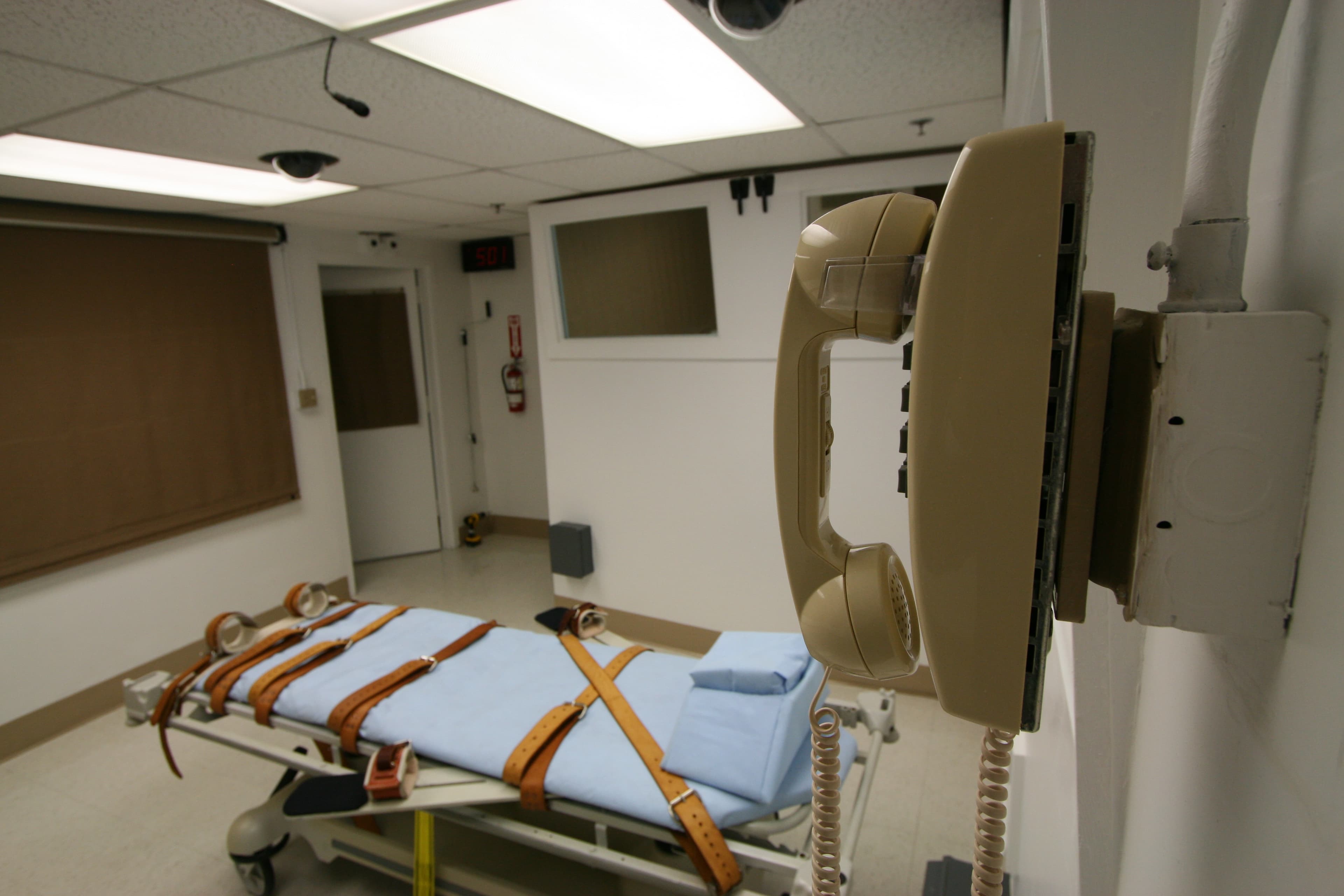
A prisoner survives an execution attempt. Should the state try again, or should the sentence become life in prison?
That question is dividing Americans after a failed lethal injection in Tennessee.
A new Reuters/Ipsos poll found that about one in three U.S. adults support a second execution attempt, while 39% would prefer life imprisonment. Another 26% said they were unsure.
The numbers reveal a difficult divide over punishment, the government's responsibility, and what should happen when an execution does not go as planned.
A Failed Execution Put an Unusual Question Before the Public
Christa Pike, 50, survived Tennessee's attempts to execute her by lethal injection in September 2026.
Pike was convicted in the killing of Colleen Slemmer, a fellow student, in 1995. Her conviction and death sentence remain central to the case.
According to Reuters, the state used pentobarbital during the unsuccessful procedure. Pike was hospitalized unconscious afterward and did not regain consciousness for several days.
Her survival created a new legal question: whether Tennessee could, or should, attempt to carry out the death sentence again.
For the family of the murder victim, the case concerns a punishment ordered for a serious crime. For Pike and her attorneys, it also raises questions about the risks and legality of another attempt.
What the Reuters/Ipsos Poll Found
The four-day national survey was completed October 19, 2026, and included 1,679 U.S. adults. Reuters reported an approximate two-percentage-point margin of error.
Respondents were asked what should happen after an execution attempt fails.
- About one-third supported trying again.
- 39% preferred allowing the prisoner to serve life in prison.
- 26% were unsure.
The results suggest that Americans do not have a single agreed-upon response to a failed execution.
They also show that support for capital punishment in general does not necessarily translate into support for repeating an unsuccessful execution.
Support for the Death Penalty Has Declined
The same poll found that 55% of Americans support capital punishment for people convicted of the most serious crimes.
That compares with 63% in a 2017 Reuters/Ipsos survey.
Another 31% opposed the death penalty, while about 13% were unsure or did not respond.
The figures reflect different questions: whether capital punishment should exist at all, and what governments should do when an attempt to carry it out fails.
Some supporters say the death penalty provides accountability in the most serious murder cases. Opponents question its fairness, reliability, and the risk of unnecessary suffering.
These disagreements become especially pronounced when an execution does not proceed as intended.
This Has Happened Before in Alabama
Tennessee is not the first state to face the question of a second attempt.
In 2022, Alabama prison officials tried to execute Kenneth Eugene Smith by lethal injection but could not establish intravenous access.
Smith survived the attempt.
In January 2024, Alabama executed him using nitrogen gas, a method that drew international attention and criticism from human rights advocates.
The experience demonstrated that a failed execution does not automatically cancel a death sentence.
However, legal challenges differ by jurisdiction, the circumstances of the original attempt, and the method proposed for any subsequent procedure.
Why States Are Reconsidering Execution Methods
States that retain the death penalty have faced persistent difficulties obtaining drugs used for lethal injections.
Pharmaceutical restrictions, problems establishing intravenous lines, and legal challenges have prompted some states to consider or adopt other execution methods.
These include nitrogen hypoxia and firing squads.
Supporters of alternative methods argue that states need lawful procedures for carrying out sentences. Critics warn that changing methods does not necessarily remove the risk of suffering or constitutional challenges.
The debate is about more than equipment or drugs. It concerns the limits of state power and how those limits apply when a punishment goes wrong.
Most Americans Oppose Broadcasting Executions
The Reuters/Ipsos poll also examined whether executions should be shown publicly on television or the internet.
Seventy-one percent said public broadcasts were inappropriate, including majorities of both Democratic and Republican respondents.
The question gained attention after Defense Secretary Pete Hegseth suggested livestreaming the planned execution of Nidal Hasan, the former Army major convicted of killing 13 people at Fort Hood in 2009.
President Donald Trump later canceled the livestream plan, though the execution remained scheduled for December 3, according to Reuters.
On a separate question, 46% of respondents said execution by firing squad would be appropriate for Hasan.
Those findings indicate that even among Americans who accept capital punishment, many oppose turning executions into public broadcasts.
A Legal Decision With Human Consequences
The issue of trying again after a failed execution affects several groups.
Victims' families may have waited years for a sentence to be carried out. Prisoners face the possibility of undergoing another execution procedure after surviving the first. Prison staff and witnesses can also experience the consequences of a failed attempt.
Courts must weigh applicable law, constitutional protections, and the facts of each case.
The polling figures cannot answer those legal questions on their own. They do show the range of public opinion that officials are confronting.
What Happens Next?
Tennessee faces questions about Pike's sentence after her survival.
Legal arguments over failed executions are likely to continue, particularly as states experiment with different methods.
Meanwhile, the Reuters/Ipsos poll points to a broader shift: Americans remain divided over capital punishment, and a substantial share are unsure what should happen when an execution fails.
The government may have a death sentence to carry out. But a failed attempt raises a question that the public, courts, and officials have yet to resolve with one answer.
Reporting reflects information available as of October 21, 2026. Polling percentages are rounded. Legal proceedings and scheduled executions may change.
Sources: Reuters — October 20 poll report; Reuters — September execution report; Reuters syndicated reporting.