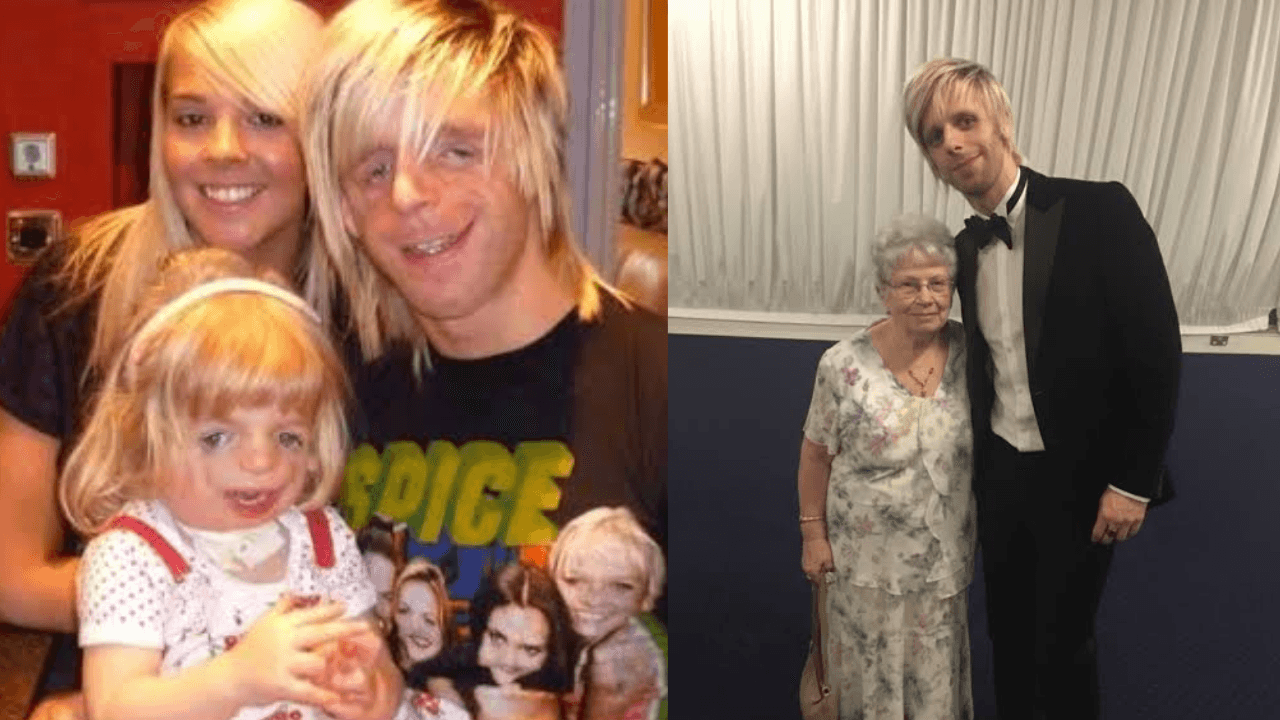
Jono Lancaster was only 36 hours old when his birth parents left the hospital without him.
He had been born with Treacher Collins syndrome, a genetic condition affecting the development of bones and tissues in the face. According to the adoption records Jono later read, his appearance had deeply distressed his birth parents.
He grew up knowing they had left. Years later, he found the courage to contact them.
Their response brought another painful rejection.
But there was another person in his story, a woman named Jean, who had chosen to welcome him when he was just two weeks old. Her love would help shape everything that came next.
The Baby Jean Chose to Bring Home
Jono was born in England on October 31, 1984.
Treacher Collins syndrome can affect facial bone development, the outer ears, and hearing. The condition varies widely from person to person and does not determine someone's intelligence or potential.
After Jono entered care, Jean Lancaster became his foster mother.
He was two weeks old when she welcomed him into her home. She formally adopted him in May 1990, when he was five.
Jono later spoke about Jean with deep affection. She answered difficult questions about his appearance and his birth family rather than avoiding them.
She gave him a home where he was loved without having to change how he looked.
Childhood Wasn't Always Easy
Jean's support did not mean other children always treated Jono kindly.
At school, he faced staring, cruel remarks, and teasing about his facial features.
As he grew older, the comments affected how he saw himself. He sometimes felt that his appearance might prevent him from finding friends, relationships, and happiness.
In later interviews, Jono explained that he spent years struggling with his confidence.
He also remembered the pain of wondering why the people who had brought him into the world had decided not to raise him.
Those questions stayed with him into adulthood.
He Reached Out to His Birth Parents
In his twenties, Jono decided he wanted to contact his biological parents.
He was beginning to feel more secure in his own life. He hoped to tell them that he was doing well and, if they were willing, meet them.
Through an adoption service, he sent them a letter.
A reply arrived roughly two weeks later.
According to Jono's account, they declined contact and said further attempts would be ignored.
He was hurt by the response. He had hoped the years between his birth and adulthood might have changed their minds.
Instead, he had to accept that they did not wish to build a relationship with him.
Jean's Love Had Already Given Him a Family
Although the rejection was painful, Jono did not face it alone.
Jean had supported him through his childhood, adolescence, and adult life. Friends and others close to him had also become part of his support system.
Over time, he came to understand that the people who cared about him were more important to his sense of belonging than the people who chose not to have contact.
He began speaking publicly about his experiences and learning to appreciate his appearance.
In a 2021 interview featured by LADbible, Jono explained that he once believed his face would hold him back from friendships, relationships, and work.
His experiences gradually challenged that belief.
A Conversation With Children Changed His Direction
Jono began visiting schools to discuss Treacher Collins syndrome, bullying, and living with facial differences.
After one school talk, children approached him with questions about his hearing aid and personal experiences.
Others opened up about challenges in their own lives, including bullying and family difficulties.
Jono realized that sharing his story could make it easier for young people to talk about theirs.
What began as public speaking developed into a broader effort to create understanding and connection.
He wanted children with facial differences to meet someone who understood some of the experiences they were having.
Helping Children Feel Comfortable With Their Faces
Jono became a co-founder of Love Me Love My Face, a charity supporting people with Treacher Collins syndrome and other craniofacial conditions.
His work includes meeting children and families, speaking at schools, and helping people build confidence.
He also wrote the book Not All Heroes Wear Capes, describing his journey and the people who helped him along the way.
His message is not that every difficulty disappears with a positive attitude. Bullying, social barriers, and exclusion can have lasting effects.
Instead, he encourages people to recognize their worth and helps others understand why acceptance and support matter.
What Jono Wants Other Children to Know
Jono's relationship with his birth parents remains part of his story. So does the hurt he felt when they rejected his attempt to reconnect.
But he has also spoken about being grateful for the life they gave him.
Today, he spends time with families who may be facing some of the same worries Jean helped him navigate years ago.
He can tell children about the bullying he experienced, the confidence he eventually developed, and the relationships that helped him feel valued.
Above all, he can show them an adult living openly and confidently with a facial difference.
The Love That Changed His Life
Jono Lancaster's life began with a separation he could not understand or control.
At two weeks old, Jean welcomed him into her family. Years later, she continued standing beside him when he faced another rejection.
That foundation helped him build a life filled with friendships, purpose, and opportunities to support others.
The face that once made Jono feel unwanted is now part of the story he shares to help children feel seen, accepted, and loved.
This article is based on Jono Lancaster's public interviews, documentary appearances, and published biographical information. His experiences are presented through his own accounts.
Sources: The Independent — Jono's childhood and adoption; BBC documentary transcript — Jono: Finding My Family on Facebook; LADbible interview as reported by Live Action; Penguin Random House — Jono Lancaster biography; Joe.co.uk — Jono on contacting his birth parents.