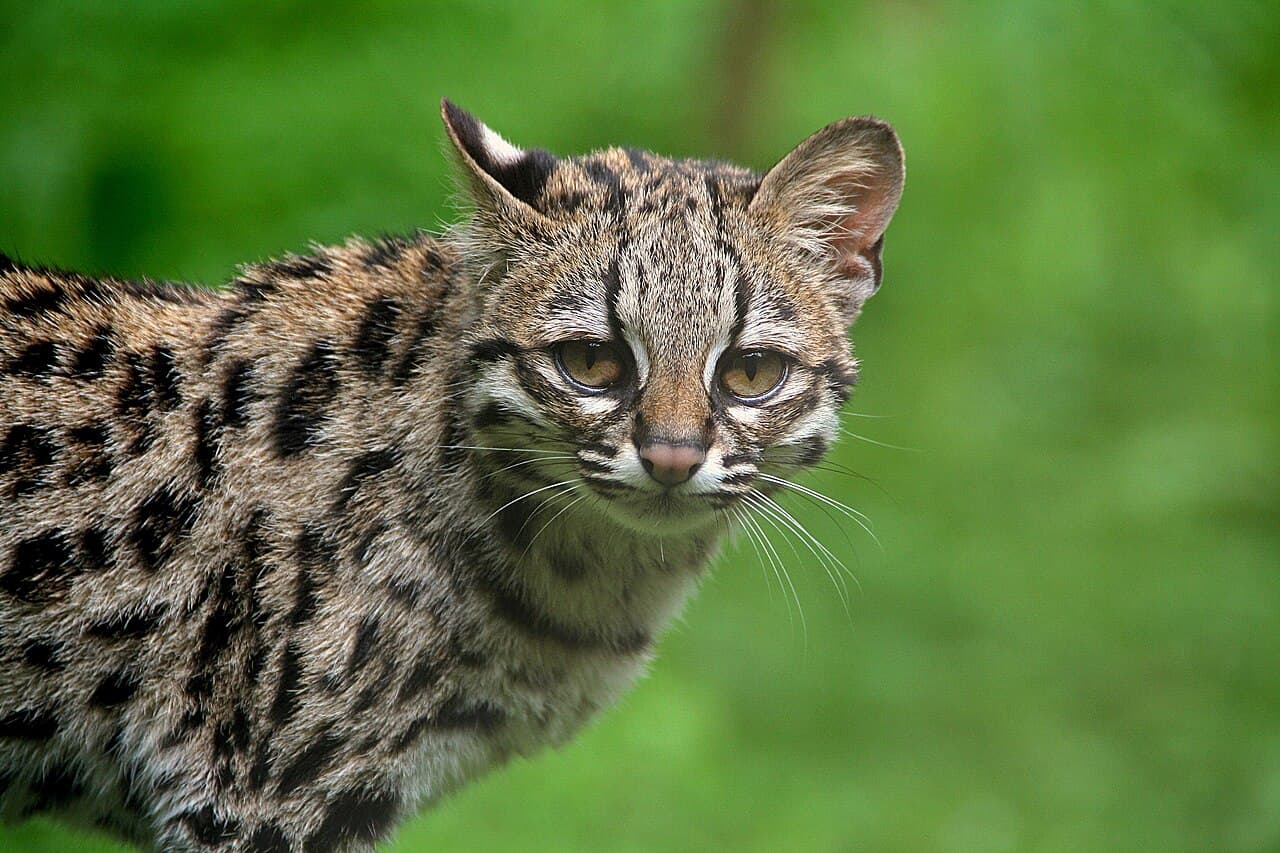
Most cats face an awkward problem when it is time to climb down a tree. The margay has a remarkable solution: it can descend headfirst, gripping the trunk with feet that turn far more freely than ours.
This small spotted cat, Leopardus wiedii, lives across parts of Mexico, Central America, and South America. Its climbing ability is extraordinary, but there is more to its life than treetop acrobatics.
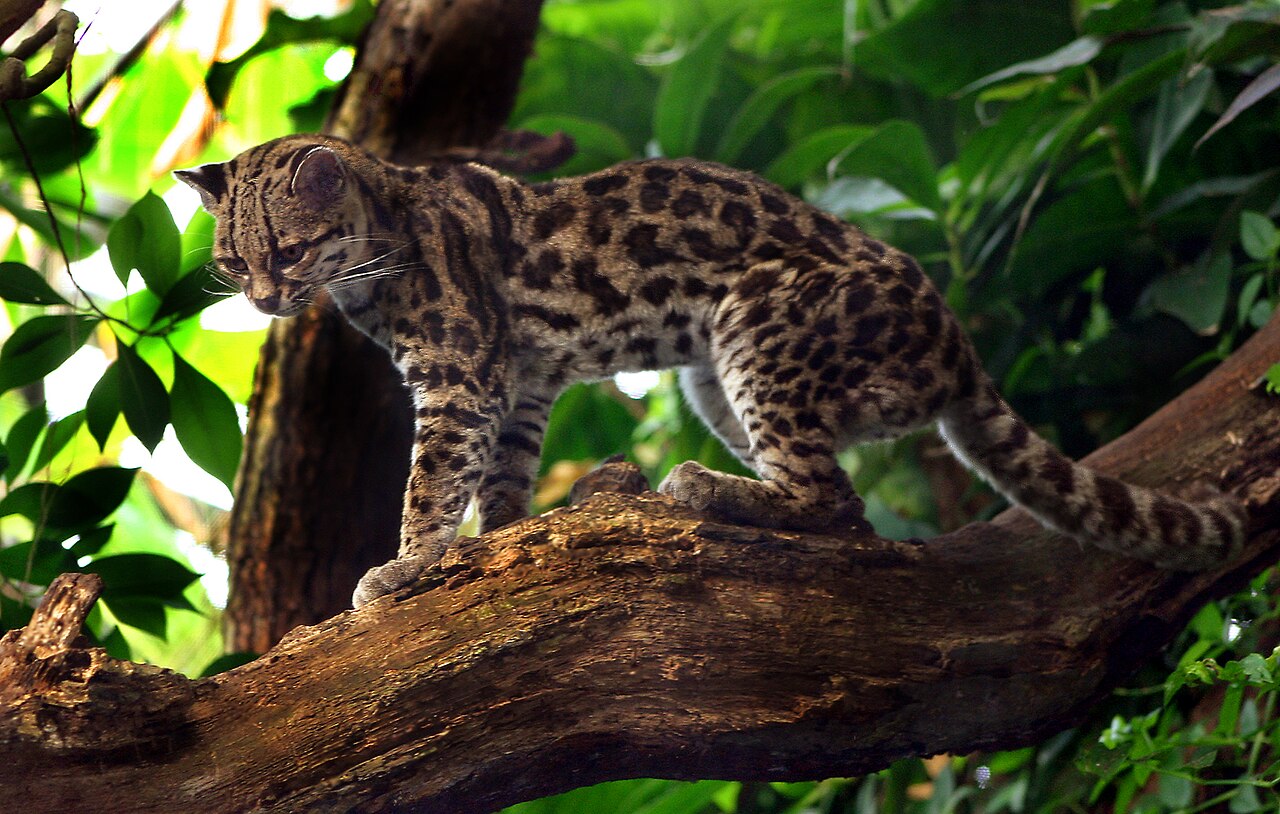
Feet that can change direction
The margay's hind feet can rotate through about 180 degrees. That allows it to hold a trunk while pointing downward. Broad paws help it grip, and its long tail acts as a counterweight.
The IUCN Cat Specialist Group also describes margays hanging from a branch by a single hind foot. Together, those features make the animal an unusually skilled climber.
A little cat with a bold pattern
A margay has large eyes, rounded ears, and soft fur marked with dark spots and rosettes. Rosettes are markings with darker edges around a lighter center.
Its looks can cause confusion with the larger ocelot and the smaller tiger cats. The long tail and large paws are useful clues, though identifying a wild cat from a brief view can still be difficult.
The forest floor matters too
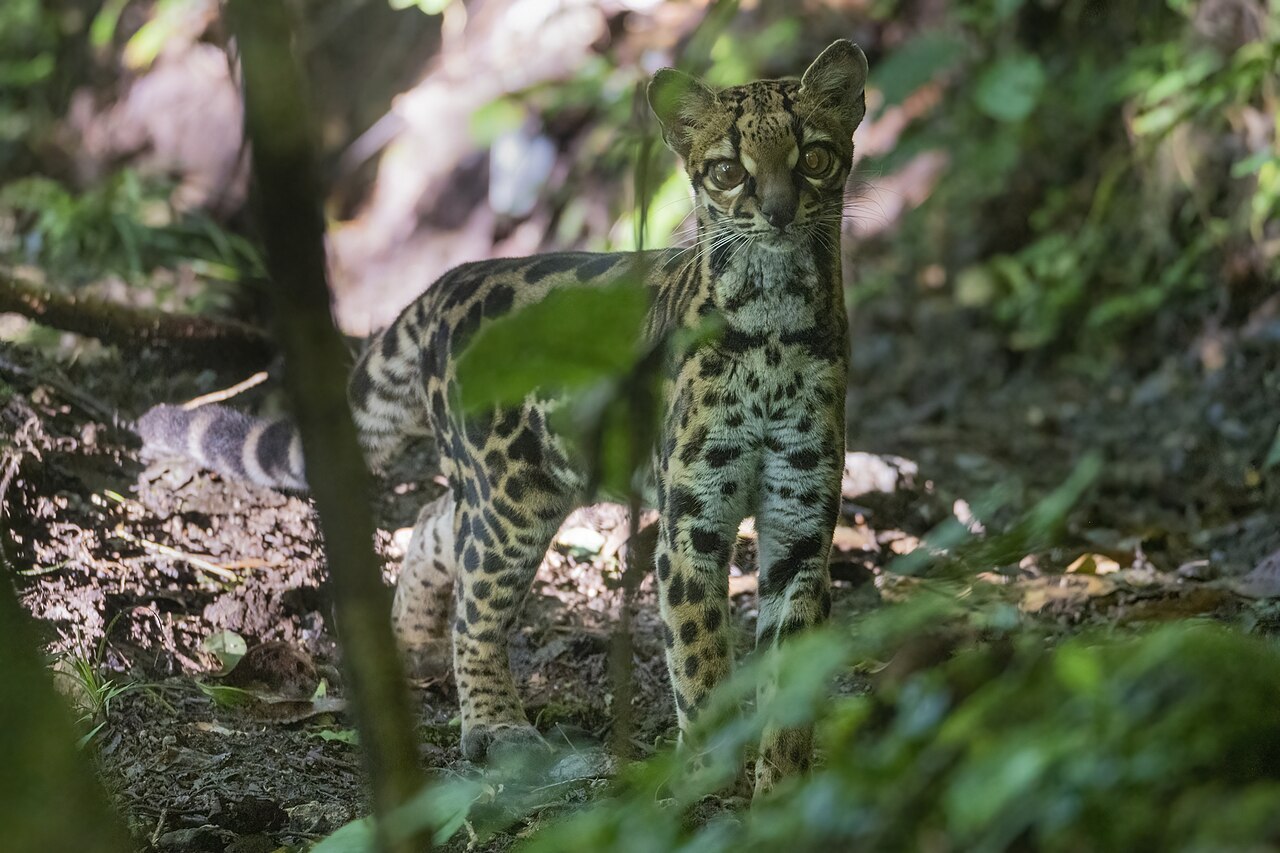
A margay's climbing skills do not mean it spends every moment in the canopy. It also travels and hunts on the ground. Small mammals are important prey, alongside birds and other animals.
The International Society for Endangered Cats describes a mainly nocturnal, solitary hunter strongly associated with forest cover. Even altered forests are useful only when enough trees remain.
Protecting more than a climbing frame
Forest loss and fragmentation remove habitat. Road deaths, illegal capture, and hunting add further pressure. Margays also have small litters, usually a single kitten, so replacing lost animals is a slow process.
Keeping forest patches connected matters for the whole animal: its resting places, its food, and its movements.
The next time you see a tree trunk, imagine a spotted cat walking straight down it. The margay turns an ordinary surface into a display of balance, grip, and evolution.
Photo credits
Featured image: Margay.jpg — Clément Bardot, CC BY-SA 3.0.

Body image 1: Margaykat Leopardus wiedii.jpg — Malene Thyssen, User:Malene, CC BY-SA 2.5.

Body image 2: Leopardus wiedii 239567366.jpg — Sam Eberhard, CC BY 4.0.

Images supplied at up to 1,280 pixels wide for web display; smaller originals are retained at their original size. Crops or rotations are identified in their credits and captions.