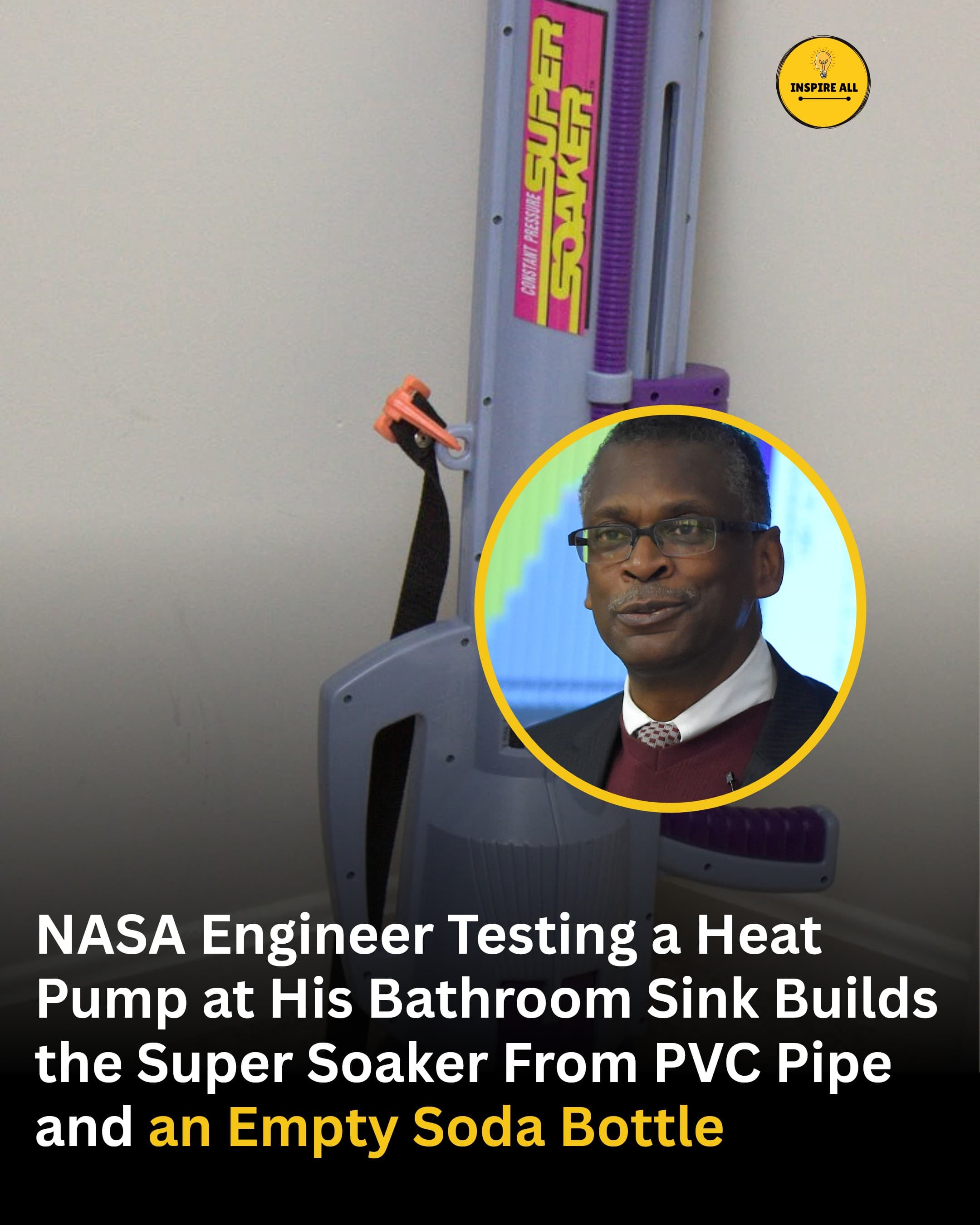
An engineer working on a heat pump noticed that a stream of water might have a playful second use.
Lonnie Johnson’s Super Soaker story began with an experiment at home, rather than a brief from a toy company.
The Strong National Museum of Play’s account describes Johnson working on a heat pump while employed on NASA’s Galileo mission. Connecting a nozzle to his bathroom faucet produced a stream of water that suggested a high-powered water blaster.
Building the first model
Johnson improvised with PVC pipe and an empty soda bottle, combining an air-pressure chamber with a water reservoir.
The National Inventors Hall of Fame’s account of his work also connects the invention to the heat-pump experiment.
These accounts support a specific sequence: engineering work produced an observation, and Johnson explored a different application for it.
The first model was a way to test an idea. It was not yet the finished toy that later reached shop shelves.
The name before Super Soaker
The Strong records an earlier name, Power Drencher, and says a trademark claim prompted the change to Super Soaker.
It dates the product’s launch to 1990 through a deal with Larami.
The naming detail is a reminder that invention extends beyond a mechanism. A product also needs manufacturing arrangements, a name it can use and a way to reach customers.
An engineer’s broader identity
Calling Johnson a toy inventor captures one achievement but leaves out the technical work that helped make it possible.
The heat-pump story shows him experimenting across different kinds of problems. A result that mattered in one setting suggested a possibility in another.
This account does not repeat cumulative sales figures as though they were newly verified totals. Its focus is the documented origin and transition from improvised model to manufactured toy.
The enduring appeal is concrete: familiar materials became a way to explore an unexpected idea, and further work turned that experiment into something many families recognized.
Based on the Strong National Museum of Play and National Inventors Hall of Fame. Featured graphic supplied by Inspire All.
Related reading: Momofuku Ando’s instant-noodle experiments and Michael Faraday’s route from bookbinding into science.